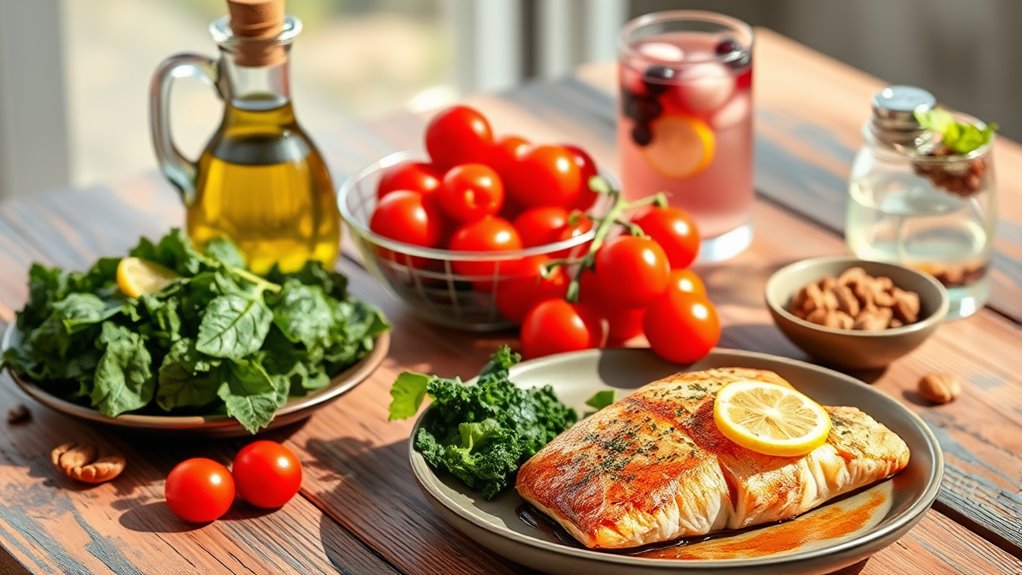

To boost your heart health, focus on meals rich in plant-based proteins like beans, lentils, and tofu, seasoned with Mediterranean spices like oregano, cumin, and turmeric. Swap red meats for hearty salads, soups, or stir-fries filled with colorful vegetables and whole grains. Use herbs and spices to add flavor without extra salt, making your dishes both tasty and nutritious. Keep exploring options that support your heart, and you’ll discover even more delicious ways to stay healthy.

Get coffee and tea gear delivered free — and shop member deals
- Fast, free delivery on millions of items
- Access to Prime Big Deal Days deals on October 6–7
- Prime Video, Amazon Music and more included
Key Takeaways
- Incorporate plant-based proteins like beans, lentils, and tofu to support artery health and reduce saturated fats.
- Use Mediterranean spices such as oregano, basil, turmeric, and cumin to add flavor and anti-inflammatory benefits.
- Focus on whole grains, fruits, vegetables, and healthy fats to lower LDL cholesterol and improve blood circulation.
- Replace red meats with nutritious, low-fat options like chickpeas and lentils in salads and stews.
- Season dishes with lemon, herbs, and spices for flavor without excess salt, encouraging sustainable heart-healthy eating habits.

Eating heart-healthy recipes can substantially improve your cardiovascular health and boost your overall well-being. When you focus on incorporating vibrant flavors like Mediterranean spices and plant-based proteins, you’re not only making meals more enjoyable but also supporting your heart in meaningful ways. Mediterranean spices, such as oregano, basil, cumin, and turmeric, are rich in antioxidants and anti-inflammatory compounds. These spices can help reduce inflammation in your arteries, lower blood pressure, and improve blood circulation. Using them generously in your cooking adds depth to your dishes without relying on excess salt or unhealthy fats. Pairing these spices with plant-based proteins like beans, lentils, chickpeas, or tofu creates nutritious, low-fat meals that are heart-friendly. These proteins are naturally low in saturated fats and cholesterol, which means they help keep your arteries clear and your blood flowing smoothly.
In your kitchen, you can make simple swaps to enhance your recipes’ heart health. For instance, replace red meats with lentils or chickpeas in salads, stews, and even pasta sauces. Not only do these plant-based proteins provide fiber, but they also contain beneficial phytochemicals that support your cardiovascular system. When you season your dishes with Mediterranean spices, you amplify their health benefits and create vibrant, flavorful meals that keep you satisfied. For example, a chickpea salad seasoned with cumin, lemon juice, and fresh herbs becomes a delicious, nutrient-dense option. You can also experiment with herbs like oregano and basil in tomato-based sauces or roasted vegetable dishes, adding both flavor and heart-boosting antioxidants. Incorporating mindful cooking techniques and portion control further enhances these benefits.
Cooking with Mediterranean spices and plant-based proteins encourages you to adopt a diet rich in fruits, vegetables, whole grains, and healthy fats—all of which contribute to better heart health. These ingredients help lower bad LDL cholesterol and triglycerides while increasing good HDL cholesterol. The combination of spices and plant proteins makes your meals more appealing, so you’re more likely to stick with heart-healthy eating habits. furthermore, these ingredients are versatile and can be incorporated into breakfast, lunch, and dinner. Think of a savory tofu scramble with turmeric and cumin, or a hearty lentil soup seasoned with oregano and garlic. Over time, these small changes can greatly reduce your risk of heart disease and improve your overall vitality. Additionally, being aware of emotional alignment can motivate and reinforce your healthy choices, making it easier to sustain them.
heart-healthy plant-based protein products
As an affiliate, we earn on qualifying purchases.
As an affiliate, we earn on qualifying purchases.
Frequently Asked Questions
Can These Recipes Be Adapted for Specific Dietary Restrictions?
Yes, you can adapt these recipes for specific dietary restrictions. For gluten-free options, swap out wheat-based ingredients for gluten-free grains like quinoa or rice. For vegetarian modifications, replace meat with plant-based proteins such as beans, lentils, or tofu. You’ll find it easy to customize these recipes to suit your needs while maintaining their heart-healthy benefits. Just be mindful of ingredient substitutions to guarantee flavor and nutritional value stay intact.
How Do Portion Sizes Affect Heart Health Benefits?
Think of portion sizes as the steering wheel of your heart health journey. When you practice portion control and watch serving sizes, you keep your heart from overloading like a traffic jam. Smaller, mindful servings help lower bad cholesterol and blood pressure, giving your heart room to breathe and beat stronger. So, be the captain of your plate—smaller servings steer you toward better heart health every time.
Are There Quick Meal Options for Busy Schedules?
If you’re busy, quick meal options are a lifesaver. You can do meal prep on weekends to have healthy, heart-friendly dishes ready in minutes. For snacks, try ideas like nuts, fruit, or whole-grain crackers. These options are easy to grab and packed with nutrients. Planning ahead helps you stick to your heart health goals without sacrificing time, ensuring you maintain a nutritious diet even on hectic days.
What Are Some Common Ingredient Substitutions for Heart-Healthy Cooking?
Did you know that replacing just 5% of saturated fats with healthier options can lower heart disease risk by 10%? You should consider fats alternatives like olive oil or avocado instead of butter, and sugar replacements such as honey or stevia to cut added sugars. These substitutions make your meals heart-healthy without sacrificing flavor, helping you maintain good cardiovascular health and enjoy delicious, nutritious dishes every day.
How Can I Incorporate These Recipes Into My Daily Routine?
To incorporate heart-healthy recipes into your daily routine, start by planning your meals ahead with meal prep. This helps you stay on track and avoid unhealthy options. Make a grocery shopping list focused on these nutritious ingredients, and adhere to it while shopping. Incorporate these recipes into your breakfast, lunch, and dinner to ensure consistent heart health benefits. Consistency is key to making healthy changes stick.
Conclusion
By choosing heart-healthy recipes, you’re taking a powerful step toward better cardiovascular health. Did you know that eating just five servings of fruits and vegetables daily can reduce heart disease risk by up to 20%? Incorporate these delicious, nutritious meals into your routine, and you’ll not only enjoy great flavor but also support your heart’s well-being. Small changes make a big difference—start today for a healthier tomorrow!
Fall Picks
fall essentials
As an affiliate, we earn on qualifying purchases.