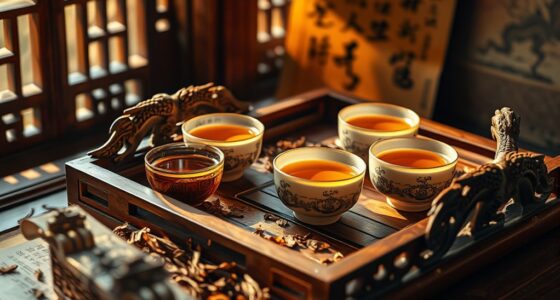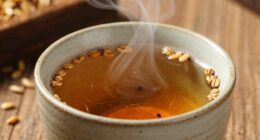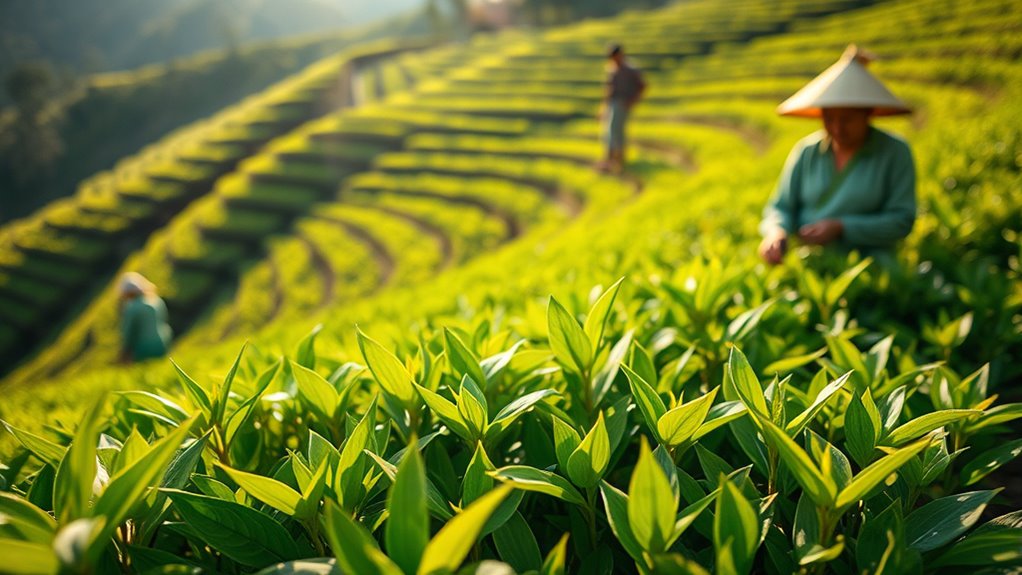
By choosing Chinese tea that’s sustainably cultivated and ethically sourced, you help protect the environment, support fair wages for farmers, and preserve cultural heritage. Organic farming reduces chemicals, promotes biodiversity, and guarantees cleaner leaves for you. Fair trade certification guarantees fair pay and safe working conditions. Your choices drive positive change in the industry and encourage transparent sourcing. To discover how these practices impact the tea you enjoy, explore further insights below.
Open a free Amazon Business account
Business pricing, bulk buying and tax-exempt orders.
As an affiliate, we earn on qualifying purchases.
Key Takeaways
- Organic farming practices in Chinese tea cultivation preserve soil health, biodiversity, and reduce synthetic chemical use.
- Fair trade certification ensures fair wages, safe working conditions, and supports farmers’ sustainable development.
- Consumer purchase of certified tea promotes industry transparency, ethical sourcing, and encourages eco-friendly practices.
- Sustainable cultivation safeguards Chinese tea heritage by maintaining ecological balance and promoting long-term environmental health.
- Ethical sourcing empowers farmers, improves livelihoods, and fosters responsible consumption to protect future tea resources.

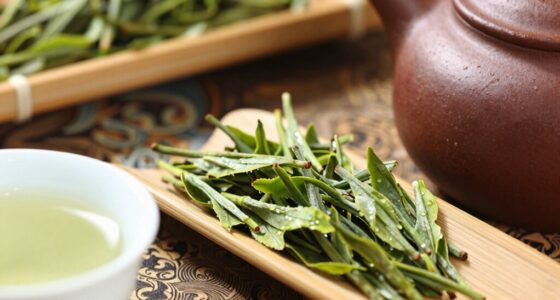
Chinese tea has long been prized worldwide for its rich flavors and cultural significance, but guaranteeing its future requires a shift toward sustainable cultivation and ethical sourcing. As a tea enthusiast or consumer, you hold the power to influence how tea is grown and distributed. Supporting practices like organic farming and fair trade certification ensures that tea production minimizes environmental impact and promotes fair treatment of workers. Organic farming avoids synthetic chemicals and pesticides, which not only preserves soil health and biodiversity but also results in cleaner, healthier tea leaves for you to enjoy. When you choose organic Chinese tea, you’re advocating for farming methods that respect nature and prioritize long-term ecological balance.
Supporting organic Chinese tea protects the environment and promotes sustainable farming for a healthier future.
Fair trade certification complements organic practices by guaranteeing that farmers receive fair compensation and work under safe conditions. It helps lift small-scale farmers out of poverty and provides them with resources to improve their farming techniques sustainably. By purchasing fair trade Chinese tea, you’re ensuring that the farmers and workers involved in the supply chain are treated ethically and that their communities benefit from the trade. This creates a ripple effect, encouraging more farmers to adopt responsible farming methods and fostering a more equitable global tea industry.
You can make a tangible difference by being selective about the brands and labels you support. Look for certifications that explicitly endorse organic farming and fair trade standards. These labels are more than just marketing tools; they’re proof that your purchase aligns with sustainable and ethical principles. When you buy from companies committed to these standards, you’re contributing to a positive shift in the tea industry, encouraging farmers to adopt environmentally friendly practices and ensuring fair wages for laborers.
Moreover, your awareness can extend beyond just the labels. Research the origins of the tea you buy, and seek out producers who prioritize sustainability. Engage with brands that openly share their sourcing stories and demonstrate transparency. By doing so, you reinforce the demand for ethically sourced tea and help build a market where sustainable practices become the norm rather than the exception.
In essence, your choice to support organic farming and fair trade Chinese tea isn’t just about enjoying a good cup—it’s about advocating for a more sustainable, ethical future for tea cultivation. Every purchase can help protect the environment, empower farmers, and preserve the cultural heritage of Chinese tea. When you understand the importance of these practices, you become part of a movement that values both quality and responsibility, ensuring that future generations will also experience the richness of Chinese tea.

Ginseng Five Treasures Kidney Tea, Traditional Chinese Herbal TeaBags, Natural Kidney Cleanse Detox Tea for Women & Men, 7 Precious Ingredients Formula(1 Pack/25 Bags)
- Supports Kidney Health: Promotes kidney function and vitality
- Natural Ingredients: No additives, carefully selected herbs
- Boosts Energy & Rejuvenation: Helps alleviate fatigue and support kidney detox
As an affiliate, we earn on qualifying purchases.
As an affiliate, we earn on qualifying purchases.
Frequently Asked Questions
How Do Chinese Tea Farmers Ensure Biodiversity in Their Cultivation Areas?
You can guarantee biodiversity in Chinese tea cultivation by practicing biodiversity conservation through traditional farming methods. Farmers often plant native trees and maintain natural habitats around tea fields, promoting diverse plant and animal life. They avoid chemical pesticides and fertilizers that harm ecosystems, instead using organic practices. By preserving local flora and fauna, they create a balanced environment that supports healthy tea growth while conserving the region’s natural biodiversity.
What Certifications Verify Ethical Sourcing of Chinese Tea?
You can verify the ethical sourcing of Chinese tea through certifications like Fair Trade and Organic Certification. Fair Trade guarantees farmers receive fair wages, safe working conditions, and support for community development. Organic Certification confirms that the tea is grown without synthetic pesticides or fertilizers, promoting environmental health. Look for these labels on packaging to trust that you’re supporting sustainable practices and ethical sourcing in Chinese tea production.
How Does Traditional Farming Impact the Environment Compared to Modern Methods?
Traditional farming often positively impacts the environment by prioritizing soil preservation and water management, reducing chemical use, and maintaining biodiversity. You’ll notice fewer soil erosion issues and healthier water sources compared to modern methods, which sometimes rely on intensive chemical inputs and monoculture practices. These sustainable practices help protect ecosystems, ensuring the land remains fertile and water resources are conserved. Overall, traditional farming supports a more balanced, eco-friendly approach to tea cultivation.
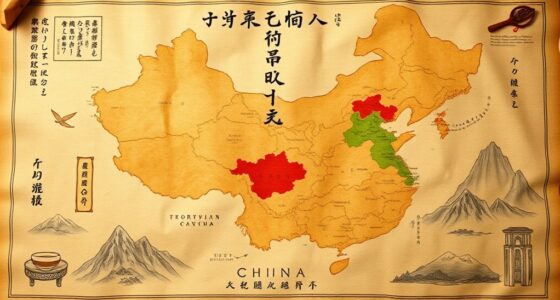
Are There Specific Regions in China Known for Sustainable Tea Production?
You’ll find that regions like Yunnan and Fujian are shining stars in sustainable tea production, much like emeralds in a lush garden. These areas are celebrated for their unique tea varietals and commitment to organic practices, ensuring eco-friendly cultivation. By choosing teas from these regions, you support farmers who prioritize preserving the environment while offering you authentic, high-quality Chinese teas that are as pure as mountain springs.
How Do Climate Change Effects Influence Chinese Tea Cultivation Practices?
Climate change impacts Chinese tea cultivation by forcing you to adapt through climate adaptation strategies. You might need to adjust planting times or varieties to cope with unpredictable weather patterns. Water management becomes vital as droughts or heavy rains affect tea growth. By embracing these practices, you can guarantee your tea plants thrive despite changing conditions, helping sustain production and maintain quality in the face of climate challenges.
Conclusion
By choosing sustainably cultivated, ethically sourced Chinese tea, you’re supporting local farmers and protecting the environment. Some might think that eco-friendly options are more expensive or less flavorful, but that’s not true. When you prioritize quality and ethics, you get a richer, more satisfying tea experience. So, next time you sip your favorite brew, remember you’re making a positive impact—one cup at a time. Your choices truly matter for a healthier planet and better tea.
Labor Day sales Picks
labor day deals
As an affiliate, we earn on qualifying purchases.