Chinese tea holds deep cultural significance in local traditions, shaping social customs and rituals that emphasize respect, harmony, and mindfulness. When you participate in tea ceremonies, you engage in carefully crafted rituals that foster calm and reverence among participants. These traditions vary across regions, reflecting diverse styles and local histories. By exploring these customs, you’ll gain a richer understanding of how tea connects people through centuries-old practices that continue to evolve today.

Get coffee and tea gear delivered free with Prime
- Fast, free delivery on millions of items
- Prime Video, Amazon Music and more included
- Member-only deals all year
Key Takeaways
- Tea ceremonies embody core values like respect, harmony, and mindfulness, reinforcing social customs and cultural identity.
- Regional variations in tea practices reflect local history, climate, and community values, showcasing China’s diverse cultural expressions.
- Tea traditions are intertwined with rituals, festivals, and daily life, serving as symbols of social bonding and community cohesion.
- Proper brewing and serving techniques highlight the cultural importance and craftsmanship associated with Chinese tea.
- Participating in tea customs fosters cultural understanding, preserving historical practices while adapting to modern societal contexts.
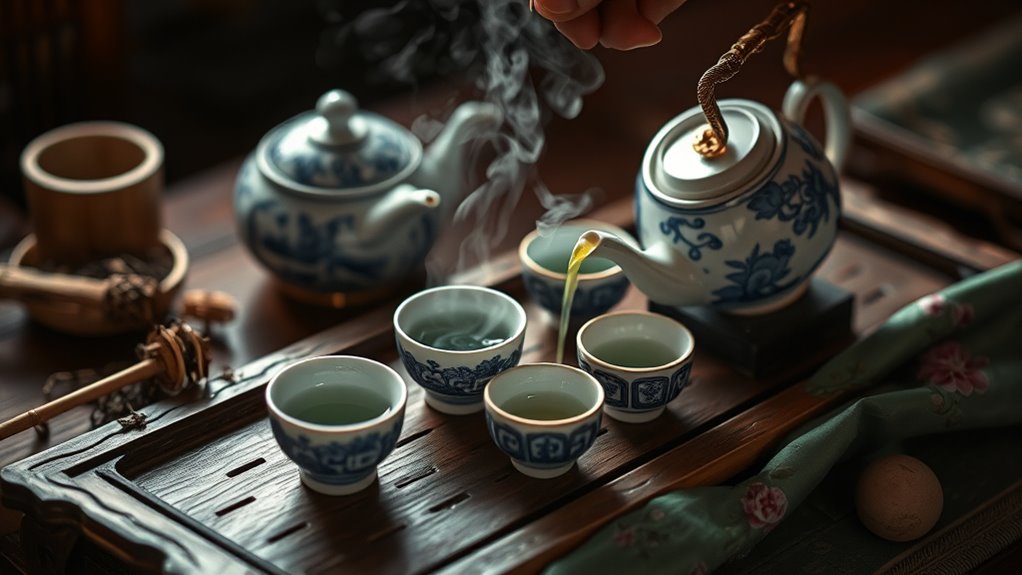
Chinese tea has long played an essential role in local traditions, shaping social customs, rituals, and daily life across the country. When you participate in tea ceremonies, you connect with centuries of cultural heritage that emphasize respect, harmony, and mindfulness. These ceremonies are more than just drinking tea; they are carefully crafted rituals that reflect Chinese values and social etiquette. You’ll notice how every movement, from warming the teapot to pouring the tea, is deliberate and meaningful, fostering a sense of calm and reverence. Tea ceremonies vary across regions, each with its unique approach and style, highlighting the diversity within China’s rich tea culture.
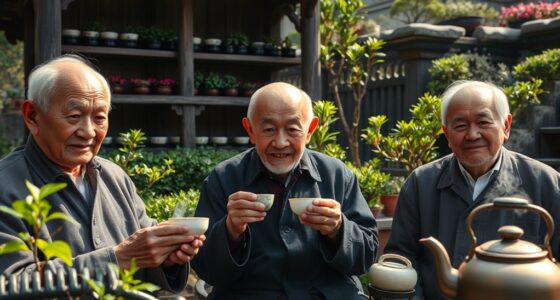
In places like Fujian, you might experience Gongfu tea ceremonies, which involve small teapots and multiple infusions, allowing you to savor the complex flavors of regional varieties like Oolong and Tieguanyin. These ceremonies emphasize skill and patience, creating an immersive experience that deepens your appreciation for the tea and its cultural significance. Moving to Guangdong, you’ll find a more relaxed style of tea service, often centered around convivial gatherings with Pu-erh and other robust teas. Here, the focus is on social bonding, and the ceremony becomes a way to strengthen relationships and show hospitality. In Yunnan, the birthplace of many tea varieties, the traditions often involve sharing large, communal teapots, emphasizing collective enjoyment and community bonding.
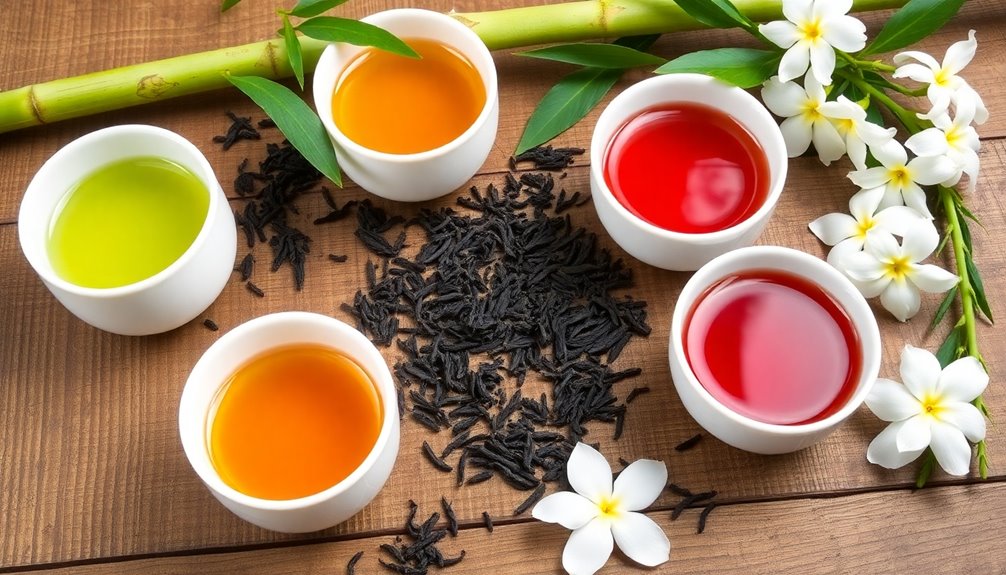
Regional varieties of Chinese tea are as diverse as the traditions they inspire. You may taste delicate green teas like Longjing, renowned for its freshness, or explore the smoky depth of Lapsang Souchang. Each variety carries its own story, climate, and processing method, making your experience with Chinese tea uniquely local wherever you go. The regional differences influence not only the flavors but also the way tea is integrated into daily life. For example, in some areas, tea is a staple at every meal, while in others, it’s reserved for special occasions or rituals. Understanding these regional varieties allows you to appreciate how deeply intertwined tea is with local customs, history, and identity. Additionally, proper brewing techniques are essential to fully experience the flavors and cultural significance of each tea type.
Whether you’re participating in a formal tea ceremony or simply enjoying a cup with friends, Chinese tea’s cultural significance remains crucial. It’s a living tradition that continues to evolve while preserving the essence of centuries-old customs. As you explore these regional varieties and partake in their ceremonies, you become part of a broader cultural tapestry that celebrates harmony, respect, and the simple pleasure of a well-prepared cup of tea.
As an affiliate, we earn on qualifying purchases.
Frequently Asked Questions
How Did Chinese Tea Originate Historically?
You might find it interesting that Chinese tea originated over 2,000 years ago, with early tea cultivation in regions like Yunnan. Ancient brewing methods involved simple processes, but over time, they developed sophisticated techniques for processing and flavoring. Tea cultivation expanded, and it became deeply integrated into Chinese culture. Your appreciation for tea’s history starts with understanding these ancient practices, which laid the foundation for the global tea tradition you enjoy today.
Are There Specific Teas Associated With Particular Festivals?
You might wonder if specific teas are linked to festivals, and the answer is yes. During the Dragon Boat Festival, you often enjoy Zongzi paired with fragrant jasmine or green tea, while the Mid-Autumn Festival features mooncakes with Pu-erh or oolong. These festive tea customs, celebrated at tea festivals, deepen your connection to traditions, making each celebration more meaningful through chosen teas that symbolize good fortune and harmony.
How Is Tea Used in Chinese Traditional Medicine?
You use Chinese tea in traditional medicine by harnessing its medicinal properties and incorporating it into herbal remedies. Different teas, like green or oolong, are believed to help with digestion, improve circulation, or boost immunity. You might drink specific teas to treat ailments or prepare herbal blends that leverage tea’s natural health benefits. This practice reflects a deep understanding of tea’s role in promoting wellness and balancing the body.
What Are Common Tea Etiquette Practices in China?
Like a dance rooted in tradition, you should follow proper tea pouring and serving etiquette. When serving, hold the teapot with both hands, and pour gently to avoid splashing. Offer tea with a slight bow as a sign of respect, and wait for the guest to take their sip before pouring more. Respect the hierarchy and avoid sticking your chopsticks or fingers into the teapot, maintaining harmony and politeness.
How Has Modern Culture Influenced Traditional Tea Customs?
Modern culture, especially tea globalization and social media influence, has transformed traditional Chinese tea customs. You now see more diverse tea styles and innovative brewing methods shared online, encouraging experimentation. Social media also promotes tea appreciation among younger generations, blending old traditions with modern trends. While some authenticity remains, these influences make tea culture more dynamic, accessible, and globally connected, shaping how you experience and value tea today.
Conclusion
As you sip your tea, remember it’s more than just a beverage—it’s a bridge to centuries of tradition, like a secret playlist from an ancient playlist. Chinese tea embodies respect, harmony, and community, connecting generations in a timeless dance. So, next time you indulge, think of it as a sacred ritual that’s weathered empires and tech revolutions, proving that some traditions are forever, even when the world feels like it’s stuck in a perpetual beta test.
Halloween Picks
halloween
As an affiliate, we earn on qualifying purchases.