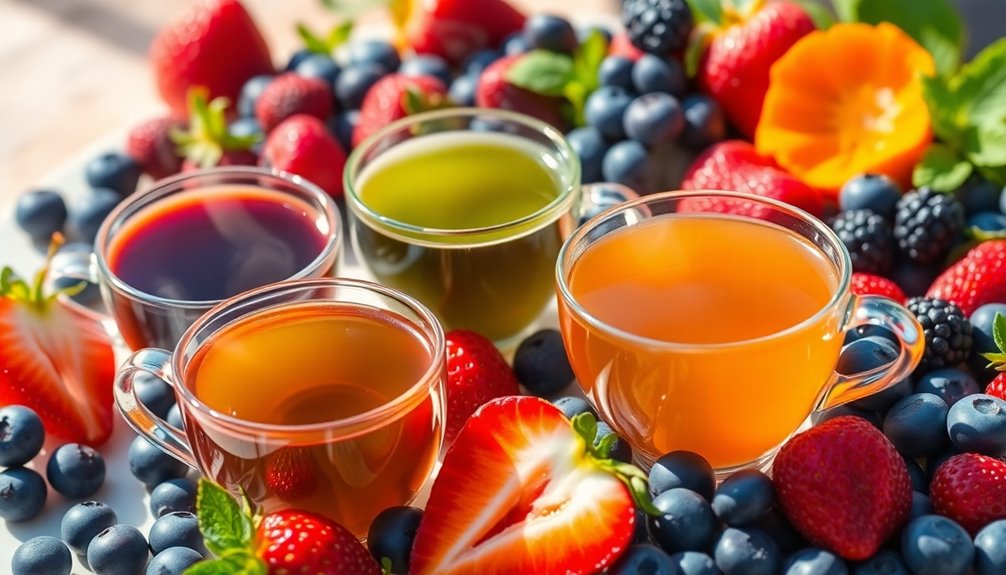
When comparing antioxidant benefits of matcha and blueberry smoothies, both pack a punch but offer different perks. Matcha provides concentrated catechins like EGCG, helping boost metabolism and reduce inflammation, while blueberries deliver anthocyanins and flavonoids for heart health and oxidative stress relief. Your choice depends on whether you want a bold, energizing flavor or a naturally sweet, fruity taste. Keep exploring to discover which superfood aligns best with your health goals.
Key Takeaways
- Matcha contains high concentrations of catechins like EGCG, offering potent antioxidant properties, while blueberries provide diverse phytochemicals like anthocyanins.
- Both boost antioxidant capacity but target different health benefits: matcha supports metabolism and focus; blueberries promote heart health and memory.
- Matcha’s concentrated superfood benefits come from fine green tea powder; blueberries offer a broad profile with fiber, vitamins, and minerals.
- The earthy, grassy flavor of matcha suits those seeking an energizing, bold taste; blueberries offer a naturally sweet, mildly tart flavor for versatile smoothies.
- Regular consumption of either enhances oxidative stress reduction and overall health, with choice depending on flavor preference and specific health goals.
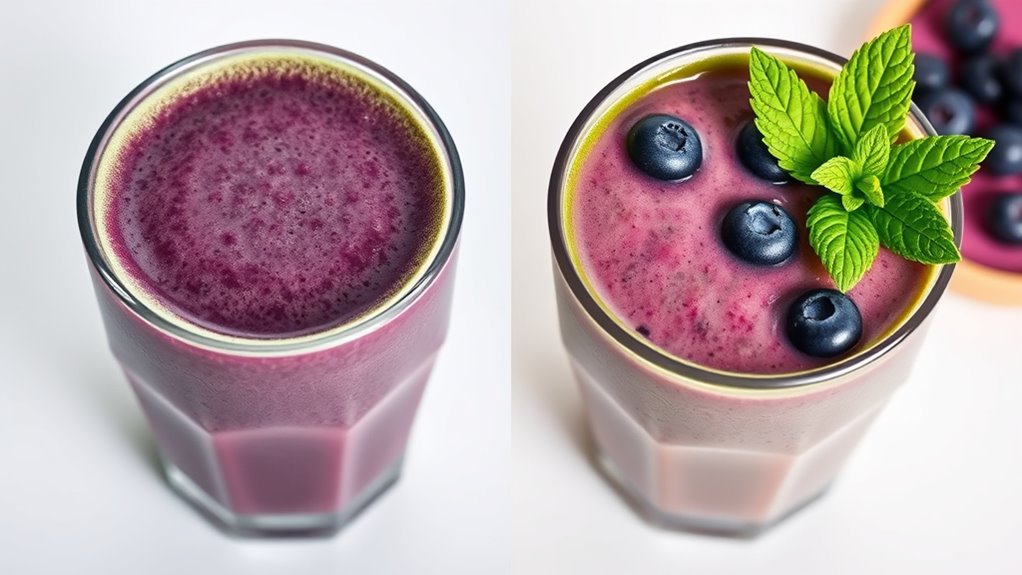
Antioxidants are often hailed as the body’s natural defense against free radicals, but with so many options available, it can be hard to know which ones truly pack a punch. When comparing matcha and blueberry smoothies, you’re fundamentally weighing two powerful antioxidant sources, each offering unique superfood benefits and flavor profiles. Matcha, a finely ground green tea powder, is celebrated for its concentrated superfood benefits. It’s packed with catechins, particularly epigallocatechin gallate (EGCG), which have been linked to improved metabolism, enhanced brain function, and reduced inflammation. Drinking matcha provides a steady release of caffeine, giving you a calm yet focused energy boost. Its flavor profile is distinct—earthy, grassy, with subtle umami notes—making it a favorite for those who enjoy bold, vegetal tastes. Pairing matcha with ingredients like almond milk or honey can mellow its natural bitterness, creating a smooth, creamy beverage that’s both satisfying and nourishing. Additionally, the process of preparing matcha involves digital sound synthesis, reflecting the modern techniques used in creating immersive audio experiences that can elevate the sensory enjoyment of your beverage.
On the other hand, blueberry smoothies bring a different kind of antioxidant power to the table. Blueberries are rich in anthocyanins, flavonoids that give them their vibrant color and potent antioxidant capacity. These compounds are known for supporting heart health, reducing oxidative stress, and improving memory. Blueberries also provide dietary fiber, vitamins C and K, and manganese, making them a complete superfood choice. Their flavor profile is naturally sweet and mildly tart, making blueberry smoothies versatile and appealing. When blended into smoothies, blueberries pair well with ingredients like bananas, Greek yogurt, or spinach, enhancing both taste and nutritional value. The natural sweetness means you often don’t need added sugars, making it a healthier, more flavorful option for many.
Ultimately, your choice between matcha and blueberry smoothies depends on what you’re looking for. If you want an energizing drink with a robust, earthy flavor and concentrated superfood benefits, matcha might be your best pick. If you prefer a naturally sweet, fruity flavor with broad antioxidant support and added fiber, blueberries are an excellent choice. Both options deliver impressive antioxidant content, but their flavor profiles and superfood benefits cater to different tastes and health goals. Whether you opt for the grassy depth of matcha or the sweet tang of blueberries, you’re fueling your body with potent antioxidants that help fight oxidative stress and promote overall well-being. The key is to enjoy these superfoods regularly, appreciating their unique qualities in your health journey.
Frequently Asked Questions
Which Antioxidant Source Has the Longest Shelf Life?
When considering shelf stability, you want to know which antioxidant source lasts longer. Generally, antioxidants in dried matcha tend to preserve better because of effective preservation techniques like vacuum sealing and airtight containers, which slow oxidation. Fresh blueberries, however, are more perishable and require refrigeration or freezing to extend their shelf life. So, dried matcha has the advantage for longer storage, thanks to these preservation techniques.
Are There Any Allergens in Matcha or Blueberries?
Think of these superfoods as characters with their own quirks. Matcha contains caffeine, so if you’re sensitive, it might cause jitters or insomnia. Blueberries are less likely to trigger allergies, but if you’re pollen-sensitive, be cautious during high pollen seasons. While both are generally safe, watch for potential allergens—matcha’s caffeine and blueberries’ natural compounds—so you can enjoy their benefits without surprises.
Can These Smoothies Be Suitable for a Keto Diet?
You’re wondering if these smoothies fit into your keto diet. Both can be keto-compatible if you choose low-carb ingredients. Matcha itself is low in carbs, and blueberries are relatively low compared to other fruits, but watch your portion size. For a true low-carb option, consider blending with unsweetened almond milk or adding keto-friendly ingredients. This way, you enjoy antioxidant benefits while staying within your keto macros.
How Do Preparation Methods Affect Antioxidant Levels?
Preparation techniques substantially impact antioxidant preservation in smoothies. When you blend ingredients gently and avoid excessive heat or prolonged exposure to oxygen, you help retain more antioxidants. Using fresh, high-quality ingredients and consuming the smoothie immediately also boosts antioxidant levels. So, to maximize antioxidants, focus on quick preparation methods, minimal processing, and proper storage, ensuring you get the most nutritional benefits from your matcha or blueberry smoothie.
Are There Any Age Restrictions for Consuming Matcha or Blueberries?
You might wonder about age restrictions for consuming matcha or blueberries. Generally, both are safe for most ages, but young children should consume matcha in moderation due to caffeine, and allergy considerations are essential since some people might be allergic to blueberries. Always check with a healthcare provider if you have specific health concerns or allergies, especially for infants, pregnant women, or those with sensitivities.
Conclusion
As you sip your matcha or blueberry smoothie, remember they’re like guardians—each shields your body with vibrant, powerful armor. Matcha’s deep green hue symbolizes calm strength, while blueberries’ rich color embodies sweet resilience. Both serve as your personal shield against oxidative stress, turning everyday moments into acts of self-care. Choose your armor wisely today, knowing that every sip fuels your inner battlefield, turning health into a beautiful, ongoing symbol of strength and resilience.