
You should pay close attention to tea trade and economics because they reveal how this ancient crop influences global markets, policies, and millions of lives. Factors like climate, farming methods, and political stability directly impact prices and supply, shaping economies worldwide. Understanding these dynamics helps you see beyond your cup to the complex forces at work. If you’re curious, you’ll discover how tea’s journey from leaf to market impacts everything from trade agreements to local communities.
Key Takeaways
- Tea trade significantly influences global economies through pricing, market fluctuations, and trade policies.
- Understanding tea cultivation reveals its impact on sustainability, regional livelihoods, and economic stability.
- Market dynamics and geopolitical factors cause price volatility, affecting producers and consumers worldwide.
- The industry’s growth drives investments, employment, and regional development in tea-producing areas.
- Analyzing tea economics offers insights into broader global trade, cultural exchange, and economic interconnectedness.

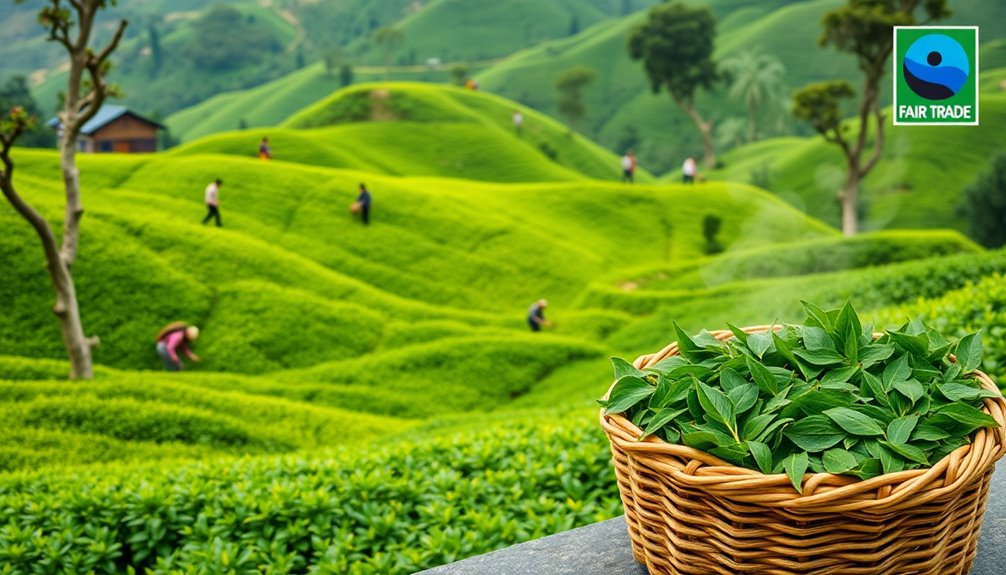
Have you ever wondered how tea has become an essential force in global trade and economics? It’s a fascinating journey that starts with tea cultivation, which involves more than just planting tea bushes. The process is deeply tied to climate, soil quality, and farming practices, all of which influence the quality and quantity of the harvest. As a grower, you know that the timing of harvests, the methods used, and the regional conditions shape the overall output. This, in turn, impacts how much tea is available on the market and the prices it commands. Tea cultivation isn’t just about producing leaves; it’s a complex dance between nature and human effort that directly influences the broader economic landscape. Recognizing the importance of sustainable farming practices can help ensure the longevity of tea production and its economic stability.
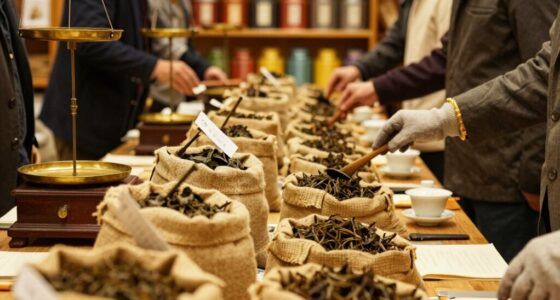
Market pricing is another critical piece of the puzzle. When you look at how tea is priced, you see a system that reflects supply and demand, quality, and geopolitical factors. Prices fluctuate based on crop yields, weather conditions, and even trade policies. If a major tea-producing country faces droughts or political instability, the global market feels the ripple effects, causing prices to soar or plummet. This sensitivity makes tea a valuable commodity for traders and investors alike, who constantly monitor market pricing to predict future movements. Understanding how prices are set and what influences them helps you grasp why tea plays such a significant role in the world economy. Additionally, market volatility can create opportunities for strategic investments in the sector. The interconnected nature of these factors highlights how global trade networks facilitate the flow of tea across borders, impacting economies worldwide. Moreover, the economic impact of tea extends beyond just the price fluctuations, affecting local communities and national economies in profound ways. The fluctuations in tea prices can also be influenced by international trade agreements, which shape the flow of goods and tariffs across regions.
Tea prices fluctuate with supply, demand, weather, and politics, making it a vital commodity for traders and investors.
Beyond the farm and market, the economics of tea influence entire industries—from packaging and branding to transportation and retail. When prices rise, producers might invest in better cultivation techniques or expand their plantations, seeking to capitalize on higher market values. Conversely, if prices drop, producers may cut costs or even halt production, which can lead to job losses and economic shifts in regions dependent on tea farming. These changes ripple through economies, affecting millions of livelihoods and shaping trade policies. Recognizing this interconnectedness underscores why tea trade isn’t just about a simple beverage but a vital economic driver.
In essence, tea trade and economics deserve a closer look because they reveal the intricate links between agriculture, market forces, and global commerce. By understanding how tea cultivation impacts supply, and how market pricing reflects broader economic trends, you gain insight into a global industry that’s both historically rich and economically vital. It’s a story of how a humble leaf has grown into a powerful economic force shaping economies, influencing policies, and connecting cultures across continents.

Tiesta Tea – Top 8 Favorites Sampler Set, Loose Leaf, Up to 80 Cups, High to No Caffeine, Hot & Iced, Tea Variety Pack with Green, Herbal, & Black, 8 Sample Pouches
- Diverse Tea Selection: Popular handcrafted blends with fruits, herbs, spices
- Perfect for Hot or Iced: Enjoy bold flavors hot or iced
- Low to No Caffeine Options: High to zero caffeine teas
As an affiliate, we earn on qualifying purchases.
As an affiliate, we earn on qualifying purchases.
Frequently Asked Questions
How Has Climate Change Impacted Global Tea Production?
Climate change has profoundly impacted global tea production by causing unpredictable weather patterns, droughts, and increased pests. You need to focus on climate adaptation strategies to protect crop resilience, such as developing heat-tolerant tea varieties and improving irrigation techniques. These efforts help guarantee that tea farmers can maintain yields despite changing climate conditions, securing the industry’s future and supporting local economies that depend on tea cultivation.
What Are the Ethical Concerns in Tea Supply Chains?
You’re walking on thin ice when it comes to ethical concerns in tea supply chains. Fair trade practices and labor rights often get overlooked, leading to exploitation and unsafe working conditions. Companies may prioritize profits over workers’ well-being, resulting in unfair wages and poor treatment. By supporting ethically sourced tea, you help promote fair wages, safe working environments, and transparency—ensuring your favorite brew doesn’t come at someone else’s expense.
How Do Tariffs Influence Tea Trade Prices?
Tariffs considerably impact tea trade prices by increasing costs for importers and exporters. These tariff impacts can lead to higher retail prices, affecting consumer choices and demand. You might notice producers adjusting their pricing strategies to offset these costs, sometimes sourcing from alternative regions or innovating with cheaper packaging. Overall, tariffs influence the entire supply chain, shaping market dynamics and making you more aware of the economic forces behind your favorite tea.
What Role Do Small Farmers Play in the Tea Economy?
Small farmers play a crucial role in the tea economy by maintaining farmer livelihoods and promoting crop diversification. For example, in Sri Lanka, many smallholders supplement tea with spices or fruits, reducing dependency on a single crop. This diversification enhances resilience against price fluctuations and climate impacts, ensuring steady income and food security. Their efforts sustain local economies, preserve traditional cultivation methods, and contribute markedly to global tea supply.
How Does Tea Trade Affect Local Economies?
Tea trade crucially impacts local economies by boosting export growth and fostering tea cultural practices. When you engage in or support tea exports, you help create jobs, improve local infrastructure, and promote cultural heritage. This trade encourages small farmers and communities to thrive, strengthening economic stability. As export growth rises, it attracts more investment, which further develops the region’s economy, making tea trade an essential factor in local prosperity.
Conclusion
By taking a closer look at the tea trade and its economics, you’ll see how interconnected this humble beverage is with global markets and cultures. Understanding these dynamics helps you appreciate the bigger picture and the ripple effects on economies worldwide. Don’t forget, sometimes the devil is in the details, so it’s worth brewing your curiosity and exploring further. After all, a little knowledge goes a long way—so don’t let this opportunity steep away!