
The real story behind tea trade and economics shows how this industry impacts your everyday life. It’s more than just a beverage—it reflects complex global networks involving farmers, corporations, and governments. Market prices shift with weather, politics, and demand, affecting incomes and international relations. Large companies hold power, but fair trade efforts aim to improve conditions for small farmers. Keep exploring to uncover how these forces shape your favorite cup of tea and the world economy behind it.

Get coffee and tea gear delivered free with Prime
- Fast, free delivery on millions of items
- Prime Video, Amazon Music and more included
- Member-only deals all year
Key Takeaways
- The global tea trade impacts national economies, international relations, and reflects broader political and economic dynamics.
- Cultivation factors like climate and labor practices directly influence supply, quality, and market stability.
- Price fluctuations result from weather, political unrest, and demand, affecting farmers and traders differently.
- Large corporations and smallholders hold unequal power, with fair trade initiatives aiming to promote ethical sourcing.
- Sustainable practices are vital for long-term economic stability, cultural exchange, and responsible consumption in the tea industry.

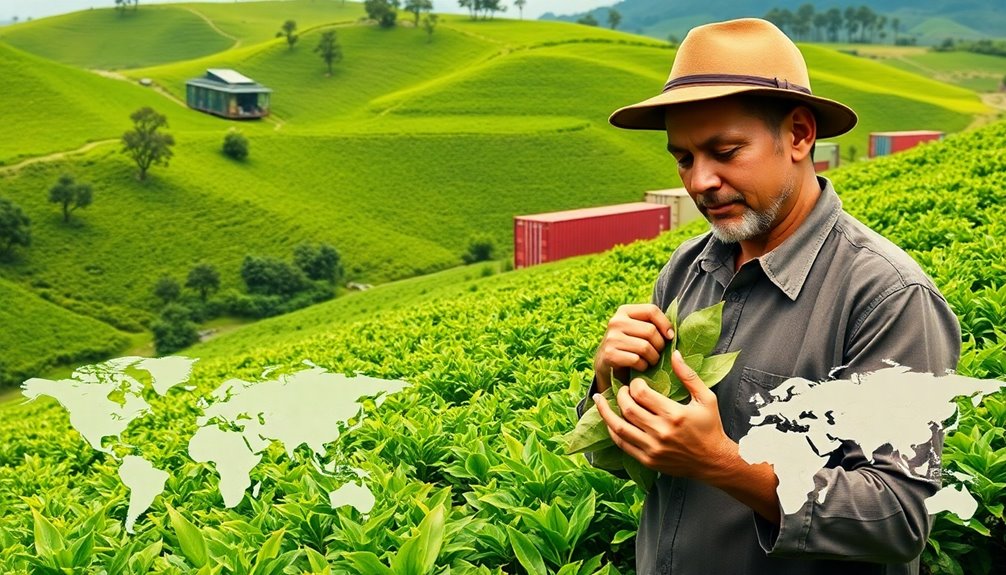
The global tea trade plays a pivotal role in shaping economies and influencing international relations. When you look at how tea moves from farms to your cup, you’re witnessing a complex network driven by factors like tea cultivation and market pricing. Tea cultivation isn’t just about planting and harvesting; it’s a delicate balance involving climate, soil, and labor practices that directly impact the supply chain. Countries with ideal growing conditions, such as India, Sri Lanka, and Kenya, have developed specialized techniques to maximize yield while maintaining quality. This focus on cultivation determines not only how much tea is produced but also the quality that reaches consumers worldwide. Additionally, the market pricing system is influenced by various unpredictable factors, making it a dynamic and often volatile aspect of the trade. These factors also highlight the importance of sustainable and responsible practices to ensure long-term viability for producers and ecosystems alike.
Tea cultivation relies on climate, soil, and labor practices that shape global supply and quality.
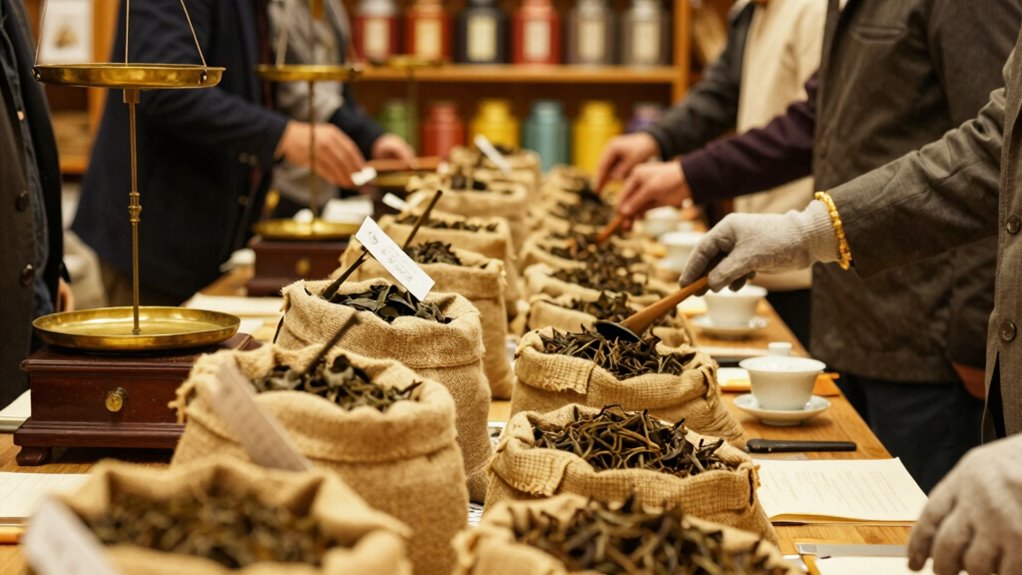
Market pricing sits at the heart of this global system. As you might expect, market prices fluctuate based on various elements—weather conditions, political stability, and global demand all play a role. When a major tea-producing country experiences a drought or political unrest, it can reduce supply, leading to higher prices on the international market. Conversely, an oversupply because of favorable weather or increased production can drive prices down, affecting farmers’ income and economies dependent on tea exports. These price shifts influence decisions at every level, from smallholders deciding whether to expand or cut back production to multinational corporations setting retail prices. Understanding market dynamics is crucial for grasping how global trade impacts local communities and economies. This interconnectedness also underscores the need for diversification in markets and crop varieties to mitigate risks associated with climate change and political instability.
Understanding market pricing also reveals the power dynamics within the global tea trade. Large corporations often have significant influence over prices, leveraging their scale to negotiate better deals or stabilize volatile markets. Meanwhile, small-scale farmers and laborers frequently face challenges because price swings impact their livelihoods directly. Governments and trade organizations try to intervene with policies or subsidies, but the market remains sensitive to unpredictable factors. Recognizing how market fluctuations can impact different stakeholders helps highlight the need for fair trade initiatives. As a consumer, you might not realize how your purchasing choices can ripple through this intricate system, affecting farmers’ income and national economies. Recognizing this interconnectedness emphasizes the importance of fair trade practices and ethical sourcing.
Ultimately, the story behind the tea trade isn’t just about brewing a warm beverage; it’s about the interconnectedness of cultivation practices, market forces, and political influences. Every cup you enjoy is part of a larger economic story involving international trade policies, commodity pricing, and cultural exchanges. Recognizing this complexity gives you a new appreciation for the journey tea takes before reaching your hands. It’s a story of resilience, negotiation, and adaptation, where every factor—from the fields of tea cultivation to the fluctuations in market pricing—shapes the global economy and the lives of millions involved in the trade. This broader perspective highlights the importance of sustainable practices and responsible sourcing to support long-term stability in the industry.
As an affiliate, we earn on qualifying purchases.
Frequently Asked Questions
How Did Tea Become a Global Commodity?
You see, tea became a global commodity through its widespread tea cultivation and deep cultural significance across societies. European traders, especially the British, started importing large quantities, boosting demand. As tea’s popularity grew, trade routes expanded, and colonial plantations increased production. Its cultural importance in countries like China, Japan, and Britain fueled its global reach, turning tea into an essential, traded commodity that connects diverse cultures worldwide.
What Are the Environmental Impacts of Tea Cultivation?
You might not realize it, but tea cultivation can have serious environmental impacts. Unsustainable farming practices often lead to deforestation, harming ecosystems, while water pollution from pesticides and fertilizers threatens local water sources. If you’re concerned about the planet, look for brands that prioritize sustainable farming. By choosing eco-friendly options, you help reduce water pollution and support practices that protect the environment, ensuring future generations can enjoy their favorite tea.
How Do Tariffs Affect International Tea Trade?
Tariff policies and trade barriers markedly influence international tea trade by making imported tea more expensive, which can reduce demand and shift trade dynamics. When tariffs increase, you might find higher prices on your favorite teas, prompting countries to seek alternative suppliers or boost domestic production. Conversely, lower tariffs facilitate smoother trade flows, encouraging global exchange. These policies directly impact prices, market competition, and the overall economics of tea trading worldwide.
Who Are the Top Tea-Exporting Countries Today?
Imagine a lush green tapestry woven with tea leaves—this is where the top tea-exporting countries thrive. Today, China leads, followed by India, Kenya, and Sri Lanka. Their success stems from extensive tea cultivation and strategic market regulation, which boost exports and global demand. These nations craft a vibrant picture of the tea trade, showcasing how effective policies and rich plantations keep them at the forefront of international markets.
How Does Fair Trade Influence Tea Prices?
Fair trade certification influences tea prices by ensuring producers get fair compensation, which can lead to higher costs for consumers. It promotes price stabilization, protecting farmers from market fluctuations and securing their income. When you buy fair trade tea, you’re supporting ethical practices that prioritize fair wages and sustainable farming. While prices might be slightly higher, you contribute to more equitable economic conditions and better quality for farmers and workers.
Conclusion
You now see how the tea trade isn’t just about sips but a complex web of economics shaping nations. Did you know that over 3 billion cups of tea are consumed daily worldwide? This statistic highlights tea’s global influence, fueling economies and cultures alike. By understanding its trade dynamics, you appreciate how a simple beverage can carry such profound economic and social weight. Next time you sip, remember you’re part of a vast, interconnected story.
Halloween Picks
halloween
As an affiliate, we earn on qualifying purchases.