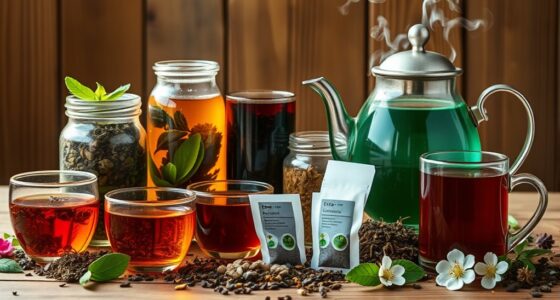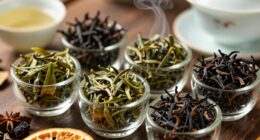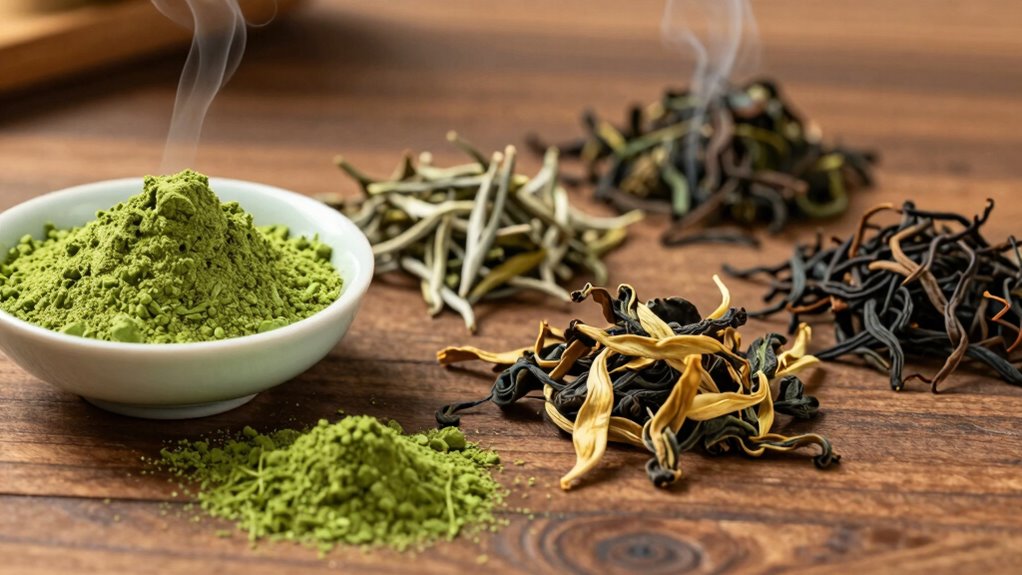
The story behind tea types shows how climate, region, and cultivation methods shape their flavors. Black teas thrive in warm, humid areas, offering bold, robust notes, while green teas grow in cooler, mountainous regions with delicate, fresh tastes. Processing and harvesting techniques further influence their aroma and qualities. Each cup reflects centuries of craftsmanship and tradition, making every sip unique. Keep exploring to discover how each step in production enhances your tea experience.
Key Takeaways
- Different tea types originate from specific regions, climates, and cultivation methods, shaping their unique flavors.
- Processing techniques, such as oxidation and drying, transform fresh leaves into distinct tea categories like black, green, and oolong.
- Cultivation practices, including leaf age and plucking methods, significantly influence taste and quality.
- Traditional brewing methods and cultural practices enhance and reveal the nuanced flavors of each tea type.
- The craftsmanship from cultivation to brewing elevates each tea’s sensory experience and cultural significance.
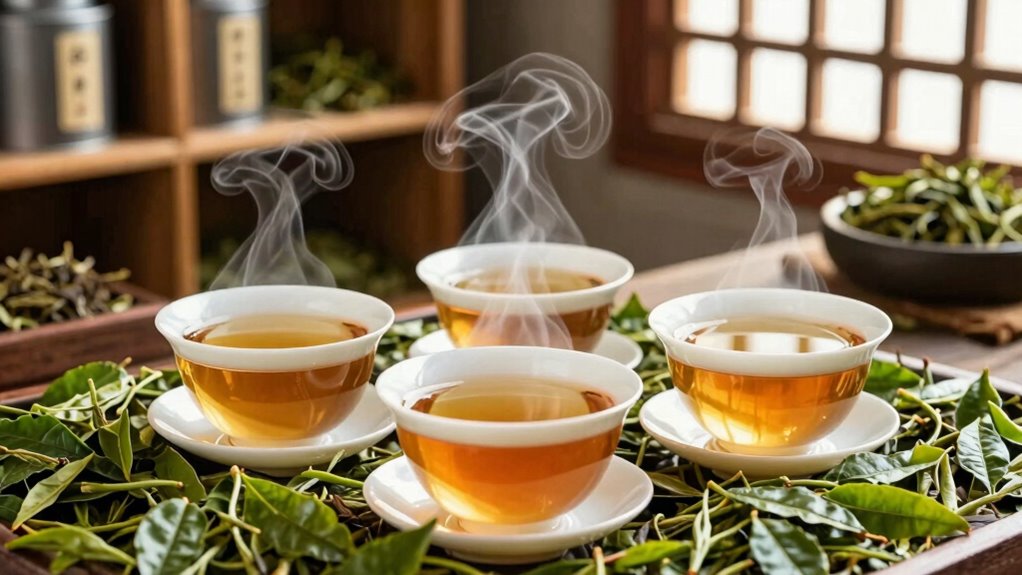
Stepping into the world of tea reveals a rich variety of types, each with unique flavors and traditions. As you explore, you’ll discover that the journey begins with tea cultivation. Different tea types come from specific regions, climates, and cultivation methods. For instance, black teas often thrive in warmer, humid areas where tea plants grow tall and lush, while green teas flourish in cooler, mountainous regions that allow for careful hand-picking and gentle processing. The way tea is cultivated—how the leaves are harvested, how they’re processed—directly influences the flavor and quality of the final product. You might notice that some teas are made from young, tender leaves, while others incorporate older leaves or even stems, which all contribute to distinct taste profiles. Understanding tea cultivation helps you appreciate the origins of each unique flavor profile and the craftsmanship involved.
Once you’ve appreciated how tea is cultivated, you’ll realize that brewing techniques are just as crucial in shaping your tea experience. Different types require specific methods to bring out their best flavors. For example, black tea typically brews best with boiling water for 3-5 minutes, releasing bold, robust flavors. Green tea, on the other hand, needs slightly cooler water—around 160-180°F—and shorter steeping times to prevent bitterness. Oolong teas often demand a delicate balance, with water just below boiling and multiple infusions to extract complex layers of aroma. The temperature and steeping time aren’t just trivial details; they’re essential to unlocking the nuances of each tea type. Additionally, understanding tea processing techniques can deepen your appreciation for how different flavors are developed and preserved. Exploring traditional brewing methods from various cultures can also enhance your overall tea experience. Recognizing the different brewing techniques used worldwide can inspire you to experiment and find your preferred style.
You’ll also find that brewing techniques can vary based on tradition and personal preference. Practicing different methods, like using a gaiwan for Chinese teas or a teapot for English blends, helps you understand how each process impacts flavor. Proper technique allows the tea’s aroma, body, and finish to shine through, transforming a simple leaf into a sensory experience. Whether you prefer a quick infusion or multiple steepings, learning to adjust variables like water temperature and steeping duration makes a noticeable difference.
Ultimately, the story of tea isn’t just about the leaves but how you handle them. From careful cultivation to precise brewing, each step shapes the flavor, aroma, and overall enjoyment of your tea. As you deepen your understanding, you’ll gain a greater appreciation for the craftsmanship behind each cup, making every sip a reflection of centuries of tradition and careful artistry.

Harney and Sons English Breakfast Loose Black Tea – 4oz Loose Leaf Tin, Pure China Keemun, Bold, Full-Bodied Flavor, Great for Hot, Iced, or Teapot Brewing, Caffeinated
Allergen information: gluten_free
As an affiliate, we earn on qualifying purchases.
As an affiliate, we earn on qualifying purchases.
Frequently Asked Questions
Which Tea Type Has the Highest Antioxidant Content?
White tea has the highest antioxidant content among tea types. You’ll find it packed with tea antioxidants and polyphenols, which offer numerous health benefits. These polyphenol benefits include fighting free radicals and reducing inflammation. When you drink white tea, you’re getting a potent source of antioxidants that can help support your immune system and overall health. So, if you’re after maximum polyphenol benefits, white tea is your best choice.
Are There Health Benefits Unique to Each Tea Type?
Each tea type offers unique health benefits, like a tailored bouquet of wellness. Herbal infusions boost your immune system and soothe digestion, while green and black teas provide antioxidants and improve focus. Caffeine effects vary—herbal teas are caffeine-free, making them great for relaxation, whereas black and green teas give you a gentle energy lift. So, choosing your tea is like selecting a personal health ally, each with its own special powers.
How Does Processing Affect Tea Flavor and Quality?
Processing profoundly impacts your tea’s flavor and quality through steps like tea fermentation and drying techniques. Fermentation develops complex flavors in teas like black and oolong, adding depth and richness. Drying methods, such as sun-drying or oven-drying, preserve freshness or enhance aroma. These processes alter chemical compounds, influencing taste, aroma, and overall quality, so understanding them helps you choose teas that match your preferred flavor profile.
What Are the Best Brewing Methods for Different Teas?
You should tailor your brewing methods to each tea type for the best flavor. For black teas, steep at 200-212°F for 3-5 minutes. Green teas need a lower temperature of 150-180°F, steeped for 2-3 minutes. Oolong and white teas require intermediate temps around 185-200°F, steeping for 4-6 minutes. Adjust tea steeping times and brewing temperature to enhance aroma, flavor, and overall quality.
Can Tea Types Be Blended for New Flavors?
Yes, you can blend tea types for new flavors, embracing flavor experimentation and tea blending. You might combine green and mint for a revitalizing twist or black tea with spices for warmth. By mixing different teas, you create unique profiles that suit your taste. Embrace creativity, trust your palate, and enjoy discovering exciting, personalized tea blends that enhance your tea-drinking experience.

Tiesta Tea – Top 8 Favorites Sampler Set, Mother's Day Loose Leaf, Up to 80 Cups, High to No Caffeine, Hot & Iced, Tea Variety Pack with Green, Herbal, & Black, 8 Sample Pouches
DIVERSE TEA SELECTION: Dive into Tiesta Tea’s premium Loose Leaf Tea Set, featuring our most popular handcrafted blends….
As an affiliate, we earn on qualifying purchases.
As an affiliate, we earn on qualifying purchases.
Conclusion
Now that you know the wild, fascinating stories behind each tea type, you’ll never look at your cup the same way. It’s not just a drink—it’s a world of adventure, mystery, and centuries of secret recipes packed into every sip. Next time you brew a cup, remember you’re opening a treasure chest of history and magic. So, sip boldly—because the incredible story of tea is waiting to blow your mind!

Reinmoson Tea Strainers for Loose Tea, Extra Fine Mesh Tea Infuser, 304 Stainless Steel & Updated Slim Threaded Lid, Loose Leaf Tea Steeper for Black Tea, Rooibos, etc
Upgraded Micron Mesh: loose leaf tea steeper is Ideal to hold tea leaves, particles, or ground coffee. Compared…
As an affiliate, we earn on qualifying purchases.
As an affiliate, we earn on qualifying purchases.

LURRIER Porcelain Chinese Gongfu Tea Set,Portable Teapot Set with 360 Rotation Tea maker and Infuser,Portable All in One Gift Bag for Travel,Home,Gifting,Outdoor and Office (Floral Blue)
Patented Distinctive Design: Officially licensed product. Tired of "just brewing and pouring" your lovely tea in the same…
As an affiliate, we earn on qualifying purchases.
As an affiliate, we earn on qualifying purchases.