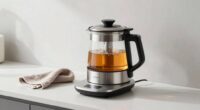
Searching for a glass samovar tea maker often leads to a wide array of options, each promising durability, style, and robust performance. The best overall pick, the Electric Glass Samovar with Auto Shut Off, offers advanced safety features and a reliable brewing experience. The Glass Samovar with LED Display stands out for its large capacity and modern controls, while some models prioritize traditional design or affordability. Choosing the right glass samovar involves balancing capacity, ease of use, safety features, and price. Keep reading to see the full breakdown of the top options and find the perfect fit for your tea rituals.

Get coffee and tea gear delivered free with Prime
- Fast, free delivery on millions of items
- Prime Video, Amazon Music and more included
- Member-only deals all year
Complete the kit


Key Takeaways
- The top-ranked models combine large capacities with modern safety features like auto shut-off and overheat protection.
- High-quality glass construction is essential for durability and aesthetic appeal, but some models sacrifice features for a traditional look.
- Capacity varies significantly, with some options better suited for small households and others for larger gatherings.
- Price often correlates with advanced features such as digital displays, keep-warm functions, and multiple temperature settings.
- Ease of use and maintenance are key factors; models with removable parts and clear instructions stand out.


| glass samovar tea maker | Material | Capacity | Voltage | Teapot Capacity |
|---|---|---|---|---|
| Electric Glass Samovar | Glass, Metal | 3.2 liters | 110V/120V | 1 liter |
| Electric Samovar Tea Maker | Stainless Steel | 3.2L | — | 1.2L |
| Electric Samovar Russian Persi | Glass, Stainless Steel | — | 110V | 1 liter |
| Electric Digital Samovar Russi | Glass, Stainless Steel | 4.5 liters + 1 liter | 110V | — |
| Electric Samovar Digital Displ | Glass and stainless steel | 5.5 liters | 110V | — |
| Electric Digital Samovar Russi | Glass and stainless steel | 4.5 liters + 1 liter teapot | 110V | — |
| Electric Glass Samovar Tea Mak | Borosilicate glass, stainless steel | — | — | 1.2L |
More Details on Our Top Picks
Electric Glass Samovar – Tea Maker with Auto Shut Off and Overheat Protection (1 Liter Teapot, 3.2 Liter Capacity, White)
This electric glass samovar stands out for its sleek, transparent design that allows you to watch your tea brew, providing a visual appeal that traditional metal models lack. Its smart features, including auto shut-off and overheat protection, make it a safe choice for everyday use. Compared with the stainless steel models, this pick offers a more modern look but sacrifices some durability and may be more fragile if mishandled. The 3.2-liter capacity and the 1-liter glass teapot make it suitable for small to medium gatherings. However, its glass construction limits its robustness, and compatibility is restricted to 110V outlets, potentially requiring a converter for international buyers.Pros:- Modern, transparent glass design enhances visual brewing experience
- Smart functions including auto shut-off and overheat protection
- Removable, washable glass infuser simplifies cleaning
- Large capacity suitable for small gatherings
Cons:- Fragile glass construction requires careful handling
- Limited to 110V power supply, may need a converter
Best for: Design-conscious tea enthusiasts who value safety features and a stylish presentation in their tea making.
Not ideal for: Large families or frequent hosts who need a more durable, higher-capacity unit that withstands heavy use.
- Capacity:3.2 liters
- Teapot Capacity:1 liter
- Voltage:110V/120V
- Power:1200W
- Material:Glass, Metal
- Features:Auto Shut Off, Overheat Protection, Keep Warm, Removable Infuser
Our verdict“This model is perfect for style-focused users who want safety features and are comfortable handling glass equipment.”
Electric Samovar Tea Maker, 3.2L Stainless Steel with 1.2L Porcelain Teapot
This stainless steel samovar pairs tough durability with a classic look, including a porcelain teapot for traditional brewing. Its 3.2-liter capacity makes it suitable for larger groups, and the stainless steel surface is easier to maintain than glass, resisting scratches and corrosion. Compared to the glass models, it might lack the aesthetic charm but compensates with robustness and ease of cleaning. The absence of detailed specs on heating time and power means users must rely on general expectations for similar appliances. Its bulkier design could be a drawback in small kitchens, but it’s well-suited for those prioritizing longevity and straightforward maintenance.Pros:- Stainless steel body offers durability and easy cleaning
- Includes a porcelain teapot for authentic brewing
- Large capacity supports multiple servings
- Traditional look appeals to classic tea drinkers
Cons:- Design may be bulky for small kitchens
- Lack of detailed specs on heating performance
Best for: Families seeking a durable, easy-to-clean tea maker with a traditional touch.
Not ideal for: Users who prefer a modern, transparent aesthetic or have limited counter space.
- Capacity:3.2L
- Material:Stainless Steel
- Teapot Capacity:1.2L
- Material (Teapot):Porcelain
Our verdict“Ideal for those who want a sturdy, traditional-style samovar that can handle frequent use without fragility concerns.”
Electric Samovar Russian Persian Turkish Tea Maker Water Kettle Glass Teapot 6 Liter 110V 1100W Auto Shut Off Keep Warm Black
With its impressive 6-liter water capacity, this model caters to large gatherings, making it suitable for cafes or communal tea sessions. Its glass and stainless steel construction ensures durability while maintaining a traditional aesthetic. The auto shut-off and keep-warm features add convenience for extended use, setting it apart from smaller models like the 3.2-liter options. However, its 110V operation limits international use, and the sizable footprint may be cumbersome in smaller spaces. This pick excels where volume and continuous hot water availability are priorities, rather than compact kitchen compatibility.Pros:- Massive 6-liter capacity for multiple servings
- Durable glass and stainless steel construction
- Automatic shut-off and keep-warm functions for safety and convenience
- Traditional design suitable for authentic tea experiences
Cons:- Limited to 110V power, restricting international use
- Large size may be challenging to fit in small kitchens
Best for: Tea venues, large families, or communal settings where volume is a key concern.
Not ideal for: Small households or users with limited space who need a portable, compact model.
- Water Capacity:4.5 liters
- Teapot Capacity:1 liter
- Voltage:110V
- Wattage:1100W
- Material:Glass, Stainless Steel
Our verdict“Best suited for high-volume environments where continuous hot water is needed without frequent refills.”
Electric Digital Samovar Russian Persian Turkish Tea Maker Water Kettle 4.5 Liter + 1 Liter
This digital model combines a 4.5-liter water capacity with a 1-liter teapot, featuring a digital display that allows precise temperature control—an upgrade over analog models like the black glass version. The automatic shut-off, keep-warm functions, and concealed stainless steel heating element boost safety and efficiency, especially for users who value tech integration. Its capacity makes it versatile for multiple servings, though its 110V operation limits international use. The lack of detailed material info for the teapot is a minor concern, but overall, it offers a modern twist on traditional designs with added convenience for tech enthusiasts.Pros:- Digital display enables precise temperature adjustments
- Large 4.5-liter water capacity supports multiple servings
- Automatic shut-off and keep-warm for safety and continuous hot water
- Concealed stainless steel heating element enhances durability
Cons:- Limited to 110V power sources, restricting international compatibility
- Lack of detailed info about teapot materials
Best for: Tech-savvy tea drinkers and those wanting precise temperature control for different tea types.
Not ideal for: Users preferring minimalist or ultra-simple appliances with manual controls.
- Capacity:4.5 liters + 1 liter
- Voltage:110V
- Wattage:1100W
- Material:Glass, Stainless Steel
- Features:Digital Display, Auto Shut Off, Keep Warm
Our verdict“Ideal for users who want a modern, precise, and feature-rich tea maker with large capacity.”
Electric Samovar Digital Display Water Kettle and Tea Maker, 5.5 Liters, 110V, Auto Shut Off, Keep Warm
This model’s 5.5-liter capacity makes it suitable for larger groups, and its digital display offers exact temperature settings, a feature often missing in simpler models like the stainless steel version. The combination of glass and stainless steel adds a contemporary vibe, making it a stylish addition to modern kitchens. Its auto shut-off and keep-warm functions promote safety and convenience, although the reliance on 110V limits its use outside North America. The high capacity and digital controls make it a top choice for those who frequently host or need hot water on demand, but it consumes more power than smaller units.Pros:- Large 5.5-liter capacity supports multiple servings
- Digital display for precise temperature control
- Automatic shut-off and keep-warm functions for safety
- Aesthetic glass design adds modern appeal
Cons:- Limited to 110V power, reducing international usability
- Higher power consumption due to large capacity
Best for: Home entertainers or communal settings where precise temperature control and large volume are priorities.
Not ideal for: Travelers or those in regions with 220V outlets who prefer more compact, portable units.
- Capacity:5.5 liters
- Voltage:110V
- Power:1100W
- Material:Glass and stainless steel
- Features:Digital display, auto shut off, keep warm
Our verdict“Best suited for users who value a spacious, stylish, and technologically advanced tea maker for frequent use.”
Electric Digital Samovar Russian Persian Turkish Tea Maker Water Kettle Glass Teapot 4.5 Liter 110V 1100W Auto Shut Off Keep Warm
This model stands out for its balanced combination of capacity and digital convenience, making it ideal for households that enjoy frequent tea brewing or entertaining. Compared with the larger 6-liter option, it offers a more manageable size while still providing ample servings. The digital display and automatic shut-off enhance safety and ease of use, though its glass construction requires careful handling and it’s limited to 110V, restricting compatibility in some regions. The sleek glass design adds aesthetic appeal, making it suitable for display in modern kitchens. However, its higher power consumption and fragile components pose practical challenges for everyday use.
Pros:- Large 4.5-liter capacity suitable for multiple servings
- Digital display and auto shut-off for convenience and safety
- Elegant glass design enhances kitchen aesthetics
- Versatile for brewing various types of tea
Cons:- Limited to 110V, not compatible with regions using 220V
- Glass components are fragile and require careful handling
- Relatively high power consumption at 1100W
Best for: Small to medium households that want a stylish, versatile tea maker with digital features.
Not ideal for: Owners of 220V regions or those seeking a more durable, high-capacity unit who prefer metal or porcelain alternatives.
- Capacity:4.5 liters + 1 liter teapot
- Voltage:110V
- Power:1100W
- Material:Glass and stainless steel
- Features:Auto shut off, Keep warm, Digital display
Our verdict“This pick is perfect for users who value digital control and aesthetic appeal in a mid-sized, versatile samovar.”
Electric Glass Samovar Tea Maker – 6L Water Boiler & Warmer with LED Display, 1.2L Glass Teapot with Infuser, Chrome Spout, Auto Keep Warm – Persian Turkish Russian Style
This model makes an excellent choice for larger families or communal settings, thanks to its impressive 6-liter water capacity and built-in infuser for brewing delicate teas. Its transparent borosilicate glass allows users to monitor boiling progress easily, while the LED display provides precise temperature control, which is especially useful for brewing specific teas. Compared to the 4.5-liter digital model, it offers more volume but comes with increased fragility and bulk, which could be a drawback in small kitchens. The safety features like overheat and boil-dry protection add peace of mind, though the high wattage and glass components demand careful handling.
Pros:- Large 6L water capacity ideal for multiple servings
- Transparent borosilicate glass for monitoring boiling and water levels
- LED display offers accurate temperature control
- Automatic keep-warm feature keeps tea ready for hours
Cons:- Glass parts are fragile and require careful handling
- Bulkier design may not fit small kitchen spaces
- Higher power draw at 1100W
Best for: Hosts or large families who need high capacity and precise temperature control in their tea maker.
Not ideal for: Small kitchens or users seeking a more durable, metal-based unit with less fragile glass parts.
- Water Capacity:6L
- Teapot Capacity:1.2L
- Power:1100W
- Material:Borosilicate glass, stainless steel
- Temperature Display:Yes
- Auto Keep Warm:Yes
Our verdict“This unit suits those who prioritize capacity, precise temperature settings, and a stylish transparent design for frequent tea service.”

How We Picked
These products were selected based on a combination of build quality, capacity, safety features, usability, and customer reviews. I prioritized models with durable glass construction and reliable heating elements that suit different household sizes and needs. Features like auto shut-off, keep-warm functions, and ease of cleaning were critical in evaluating overall value. The ranking reflects a balance between price and performance, ensuring options for various budgets and preferences. Models with better safety features and user-friendly controls earned higher placement, as they contribute to a more satisfying and worry-free tea brewing experience.| glass samovar tea maker | Material | Features |
|---|---|---|
| Electric Glass Samovar | Glass, Metal | Auto Shut Off, Overheat Protection, Keep Warm, Removable Infuser |
| Electric Samovar Tea Maker | Stainless Steel | — |
| Electric Samovar Russian Persi | Glass, Stainless Steel | — |
| Electric Digital Samovar Russi | Glass, Stainless Steel | Digital Display, Auto Shut Off, Keep Warm |
| Electric Samovar Digital Displ | Glass and stainless steel | Digital display, auto shut off, keep warm |
| Electric Digital Samovar Russi | Glass and stainless steel | Auto shut off, Keep warm, Digital display |
| Electric Glass Samovar Tea Mak | Borosilicate glass, stainless steel | — |
Factors to Consider When Choosing Glass Samovar Tea Maker
Choosing the right glass samovar tea maker involves understanding several key factors that influence performance, durability, and usability. Beyond aesthetic appeal, consider how capacity matches your household size, and whether safety features like auto shut-off are essential for your routine. The ease of cleaning and maintenance can significantly impact long-term satisfaction. Additionally, weighing the importance of traditional vs. modern controls helps tailor your choice. Being aware of common tradeoffs, such as higher capacity versus increased cost or complexity, ensures you make an informed decision that aligns with your tea habits.Capacity and Size
Capacity directly impacts how many cups of tea you can brew at once. Smaller models, around 1-2 liters, suit individual use or small families, while larger ones, 4 liters or more, are better for entertaining or larger households. Keep in mind that larger models may take longer to heat and require more storage space. Choosing a size that fits your typical tea sessions prevents inconvenience and ensures efficient use of energy. Consider your typical usage to strike the right balance between capacity and practicality.
Safety and Automatic Features
Safety features like auto shut-off and overheat protection are crucial, especially if you tend to forget turning off appliances. These features reduce the risk of accidents and prolong the life of your tea maker. Models with digital controls often include keep-warm functions, which help maintain temperature without constant monitoring. However, higher-tech options may come at a higher price and require more careful cleaning. Prioritizing safety features ensures peace of mind during extended or unattended brewing sessions.
Build Quality and Materials
Glass construction offers aesthetic appeal and allows you to monitor the brewing process visually, but not all glass is equally durable. Look for borosilicate glass, which resists thermal shock and cracking. Metal components like spouts or bases should be corrosion-resistant to maintain appearance over time. Cheaper models may use thinner glass or lower-quality seals, leading to leaks or breakage. Investing in a well-made unit balances beauty and longevity, especially if you plan to use it frequently.
Ease of Use and Maintenance
Features like removable filters, wide opening for cleaning, and clear indicator lights simplify maintenance. Digital displays can help you set and monitor temperature precisely, but they also require careful handling to prevent malfunctions. Look for models with straightforward controls and simple instructions. Avoid overly complicated setups that may frustrate less tech-savvy users. Regular cleaning of the glass and spout ensures optimal performance and keeps your tea tasting fresh.
Price and Value
While budget options are tempting, they may lack advanced safety features or durability. Conversely, premium models often incorporate smart controls, larger capacities, and premium materials, but at a higher cost. Consider how much you plan to use your samovar and what features are non-negotiable. A mid-range model often strikes the best balance, offering reliable performance without unnecessary extras. Remember, investing in a durable, feature-rich model can save money in the long run by avoiding replacements.
Frequently Asked Questions
Is a glass samovar tea maker safer than metal ones?
Glass samovar tea makers are generally safe, especially if made from borosilicate glass, which withstands thermal shocks. They allow you to visually monitor boiling and brewing, reducing the risk of overflows or dry boiling. Metal options may heat faster and are more durable but lack visibility. Safety ultimately depends on the presence of features like auto shut-off and quality construction, regardless of material.
Can I use a glass samovar for brewing herbal or fruit teas?
Yes, glass samovars are well-suited for herbal and fruit teas because the glass material doesn’t impart flavors or odors. They also allow you to observe steeping processes, making it easier to control infusion times. Be cautious with very thick or sticky herbal infusions, which might stain or be harder to clean from the glass. Regular cleaning after each use maintains clarity and hygiene.
What capacity should I choose if I only brew tea for one or two people?
For small households or individual use, a 1-2 liter capacity model is usually sufficient. It heats quickly and is easier to store. Larger models may be unnecessary and could waste energy or take up too much space. If entertaining occasionally, consider a slightly bigger model, but for daily personal use, a compact unit offers more convenience and efficiency.
Are digital controls worth paying extra for?
Digital controls provide precise temperature settings, timers, and keep-warm functions, enhancing consistency and convenience. They are especially useful if you enjoy brewing different types of tea that require specific temperatures. However, they tend to be more complex to operate and may require more maintenance. If simplicity and durability are your priorities, manual controls might be a better fit, but for tech-savvy users, digital features add significant value.
How important is capacity when considering my daily tea routine?
Capacity directly impacts how much tea you can prepare in a single session, which is vital if you regularly serve multiple people or prefer brewing large quantities at once. Smaller models are quick to heat and easier to handle but may require multiple rounds for large gatherings. Larger capacity units are more convenient for social settings but may take longer to heat and use more energy. Match capacity to your typical tea routines for the best experience.
Conclusion
For most users, the Electric Glass Samovar with Auto Shut Off offers the best balance of safety, capacity, and ease of use, making it ideal as the best overall choice. Those seeking a more affordable option or a smaller size might prefer a compact, straightforward model as the best value. If you prioritize modern features and larger volume, the Glass Samovar with LED Display caters well to tech-savvy households. Beginners or casual tea drinkers should look for models with simple controls and easy cleaning, while large households or hosts will benefit from high-capacity, feature-rich options. Ultimately, selecting the right glass samovar depends on your specific tea habits and space constraints.
Halloween Picks
halloween
As an affiliate, we earn on qualifying purchases.