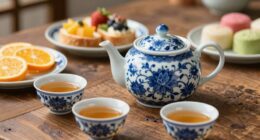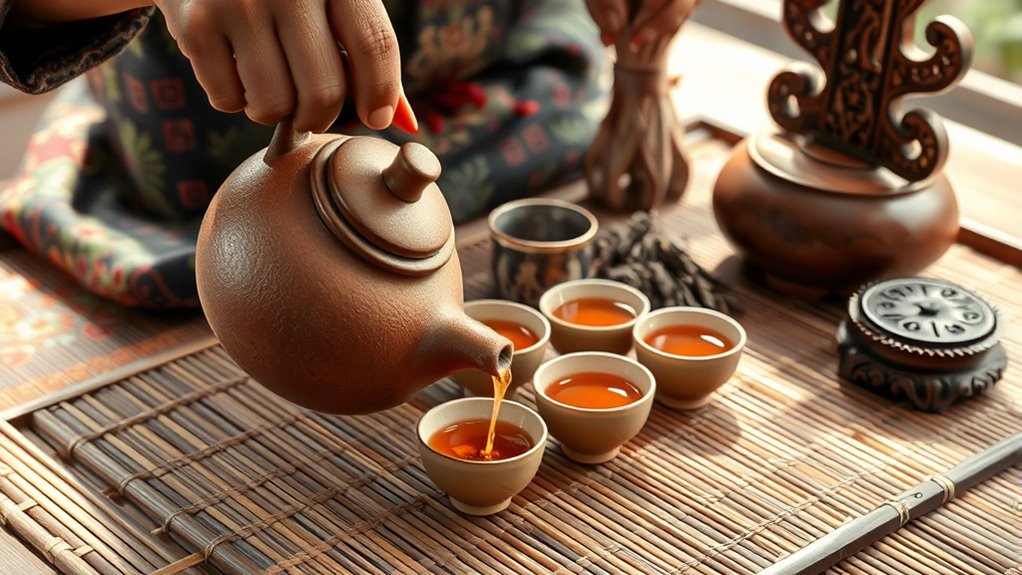
Traditional tea brewing varies greatly across regions, reflecting unique histories and customs. In Japan, you focus on harmony and respect by using precise techniques in tea ceremonies that emphasize mindfulness. Chinese methods often involve multiple infusions to appreciate aroma and flavor, highlighting the art of pouring and tasting. Regional influences shape everything from water temperature to steeping time, elevating everyday routines into cultural rituals. Exploring these traditions will reveal even more about the rich stories behind each cup.
Key Takeaways
- Regional cultures influence tea preparation through specific customs, utensils, and ceremonial gestures that reflect local history and values.
- Traditional methods emphasize mindful handling and precise steps, enhancing appreciation and spiritual significance of the tea ritual.
- Local flavor profiles shape brewing techniques, including water temperature and steeping time, to highlight regional taste characteristics.
- Different regions prioritize aroma, taste, and infusion sequences, creating unique sensory experiences rooted in cultural practices.
- Embracing regional customs and ingredients fosters authentic appreciation, connecting tea drinkers to cultural heritage and land.
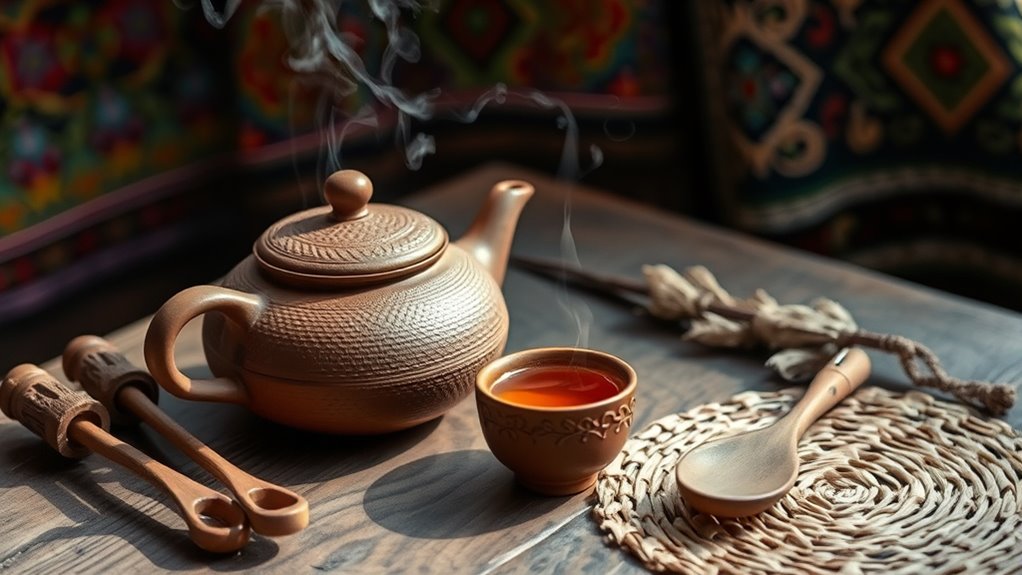
Have you ever wondered how traditional tea brewing preserves the rich flavors and cultural essence of this ancient practice? It’s more than just steeping leaves in hot water; it’s a ritual shaped by centuries of customs and regional influences. Each culture has its unique approach, reflecting its history, values, and local ingredients. When you participate in these traditions, you’re not just making tea—you’re experiencing a piece of the culture itself. Tea ceremony customs vary widely, from the meticulous, meditative steps of the Japanese tea ceremony to the lively, social gatherings of Chinese gongfu tea. These customs often involve specific utensils, precise steps, and ceremonial gestures that honor the tea’s significance. For example, in Japan, the tea ceremony emphasizes harmony, respect, purity, and tranquility, with delicate movements that highlight mindfulness. Conversely, Chinese tea rituals may focus on the art of pouring and tasting, emphasizing the appreciation of aroma and flavor through multiple infusions. These customs aren’t arbitrary; they serve to deepen your appreciation and connect you to the tradition’s spiritual or social roots. Additionally, understanding the regional flavor profiles allows you to tailor your brewing process to enhance the unique characteristics of each tea, ensuring an authentic experience. regional flavor profiles substantially influence how you prepare and enjoy tea. Depending on where you are, you’ll notice distinct taste characteristics that come from local tea leaves, climate, and processing methods. In China, for example, the lush mountains produce teas like Longjing or Tieguanyin, which boast nutty, floral, and sometimes sweet undertones. In India, the robust, malty flavors of Assam or the bright, brisk notes of Darjeeling reflect the diverse terroirs. In Japan, green teas like matcha or sencha highlight grassy, umami flavors due to specific cultivation and steaming techniques. These regional differences shape how you brew your tea—some teas benefit from shorter steeping to preserve delicate flavors, while others require longer infusion to extract bold, complex notes. You’ll often notice that the water temperature, steeping time, and even the type of vessel used are tailored to bring out the best in each regional style. When you follow these regional flavor profiles, you’re not just making a beverage; you’re respecting the land and traditions that define each tea’s character. Embracing these customs and profiles enhances your appreciation of tea as a living art form, connecting you to a global heritage that celebrates diversity through simple, mindful preparation. The next time you brew tea, consider the customs and regional influences—you’ll find that this mindful approach transforms a daily routine into a meaningful cultural experience.

Hdtyyln 4 Pcs Gongfu Tea Set, Chinese Kung Fu Tea Set, Tea Scoop for Loose Tea, Bamboo Tea Ceremony Utensils, Tea Accessories include Tea Scoop Needle Clip Spatula, for Tea House Restaurant Household
You wii get: 4Pcs Gongfu Tea Set Chinese Tea Tool Set. Include tea spoon, tea clip, tea spatula…
As an affiliate, we earn on qualifying purchases.
As an affiliate, we earn on qualifying purchases.
Frequently Asked Questions
What Are the Health Benefits of Traditional Tea Brewing Methods?
Traditional tea brewing methods offer numerous health benefits. When you enjoy herbal infusions, you get an antioxidant boost that helps fight free radicals, supporting your immune system. These methods often preserve beneficial compounds, making your tea more potent. Plus, taking time to prepare tea mindfully reduces stress and promotes relaxation. Overall, traditional brewing not only enhances flavor but also maximizes the health benefits, helping you feel more energized and balanced.
How Do Regional Climates Influence Tea Preparation Techniques?
Imagine a Victorian tea party, where the tea climate shapes how you brew your leaves. In humid regions, you might use shorter steeping to prevent over-extraction, while cooler climates call for longer brewing to enhance flavor. Your brewing adaptation depends on regional temperatures, humidity, and altitude, influencing leaf processing and infusion times. These climate-driven techniques guarantee each cup captures the essence of its environment, making every sip uniquely satisfying.
Are There Specific Utensils Unique to Certain Cultures?
Yes, certain cultures use unique utensils during their tea ceremonies that hold deep symbolism. For example, in Japan, you’ll find the chawan (tea bowl) and chasen (bamboo whisk), which are integral to the ritual. These utensils aren’t just functional—they embody tradition and respect, reflecting the cultural values behind the tea ceremony. Using these specific tools enhances the experience and honors the history and symbolism embedded in each culture’s tea practices.
What Are Common Mistakes to Avoid in Traditional Tea Preparation?
To avoid mistakes in traditional tea preparation, always pay attention to tea leaf quality and water temperature control. Using low-quality leaves can result in a dull flavor, so choose fresh, high-grade tea. Make certain your water is at the right temperature—too hot or too cold can ruin the taste. Steep for the proper time, and don’t rush the process. These steps help you enjoy a flavorful, authentic cup every time.
How Has Traditional Tea Brewing Evolved With Modern Technology?
Modern technology has substantially evolved traditional tea brewing by allowing precise control over fermentation and brewing temperature. You can now use digital kettles and temperature-controlled pots to guarantee ideal steeping conditions, enhancing flavor and aroma. Automated brewing devices even monitor fermentation processes, making it easier to achieve consistent quality. This evolution helps you enjoy traditional tastes with modern convenience, elevating your tea experience while maintaining the cultural essence.

LURRIER Porcelain Chinese Gongfu Tea Set,Portable Teapot Set with 360 Rotation Tea maker and Infuser,Portable All in One Gift Bag for Travel,Home,Gifting,Outdoor and Office (Floral Blue)
Patented Distinctive Design: Officially licensed product. Tired of "just brewing and pouring" your lovely tea in the same…
As an affiliate, we earn on qualifying purchases.
As an affiliate, we earn on qualifying purchases.
Conclusion
Embracing traditional tea brewing connects you to centuries of rich culture and wisdom, turning each cup into a masterpiece of art and history. When you honor these time-honored methods, you don’t just make tea—you craft an experience that awakens your senses and soothes your soul. Remember, every sip carries the power to transport you across borders and eras, making your tea ritual truly a journey of the heart. Revel in it, and let every brew inspire your spirit.

Matcha Whisk – Bamboo Whisk for Matcha Powder, Handcrafted Organic Traditional Japanese Chasen, 100-Prong Matcha Stirrer Wisk Mixer Brush for Authentic Tea Preparation
Exquisite Craftsmanship: Expertly handcrafted from a single piece of natural bamboo, this matcha whisk features OVER 100 finely…
As an affiliate, we earn on qualifying purchases.
As an affiliate, we earn on qualifying purchases.

Organic Gift Set with Portable Kettle – 36 Piece Gift for Tea Lovers – Includes Insulated Mug, Assorted Organic Teas, Honey Sticks & Accessories – Ultimate Brewing Experience
Tea Gift Set with Kettle – Discover the joy of tea with our luxurious Tea Gift Set, thoughtfully…
As an affiliate, we earn on qualifying purchases.
As an affiliate, we earn on qualifying purchases.