Regional tea cultures vary greatly based on local history, climate, and social customs. You’ll notice differences in how people prepare, serve, and enjoy tea—from elaborate ceremonies in Japan to simple, practical practices elsewhere. These traditions reflect cultural values and social bonds unique to each place. Exploring these variations reveals deeper insights into the region’s history and philosophy. If you keep exploring, you’ll discover even more fascinating differences in how tea brings people together worldwide.
Key Takeaways
- Tea preparation methods range from simple brewing in Western customs to elaborate ceremonies like Chinese and Japanese rituals.
- Cultural values influence tea etiquette, emphasizing respect, harmony, mindfulness, or social bonding across regions.
- Regional ingredients and tea types, such as green, black, or matcha, shape unique flavor profiles and serving styles.
- Traditional ceremonies reflect local philosophies, like Zen principles in Japanese “Chanoyu” or social harmony in British afternoon tea.
- Visual aesthetics and utensil handling in tea rituals highlight regional artistic expressions and cultural identity.
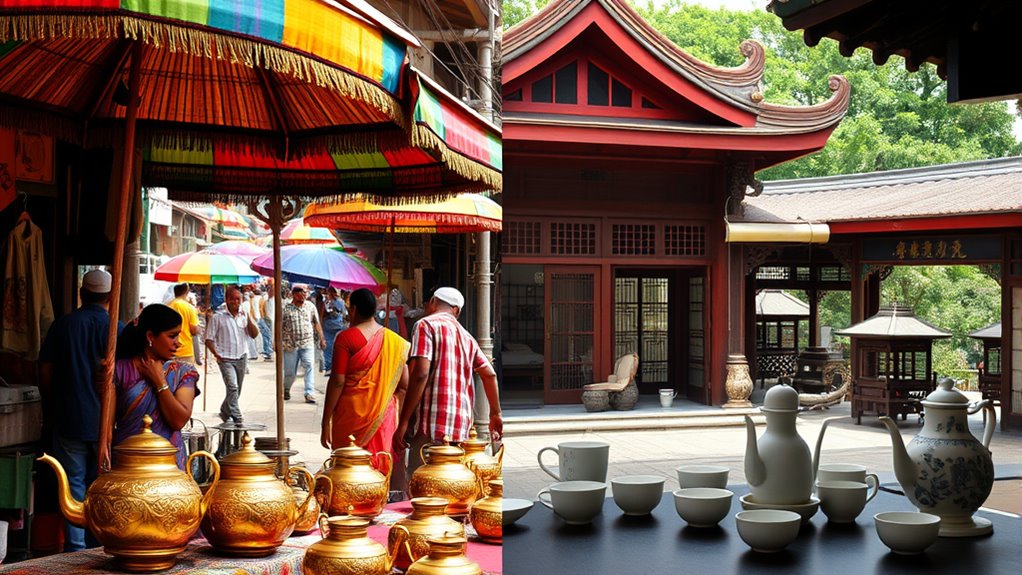
Tea culture varies greatly across different regions, reflecting local history, climate, and social customs. When you immerse yourself in these traditions, you’ll notice that how you prepare and serve tea can tell you a lot about the culture you’re exploring. For example, in some areas, the tea preparation methods are simple and practical, emphasizing efficiency and everyday enjoyment. In others, they are elaborate, involving precise steps and ceremonial significance. Understanding these differences helps you appreciate the cultural context behind each method and the values they embody.
Tea customs reveal unique cultural values and traditions worldwide.
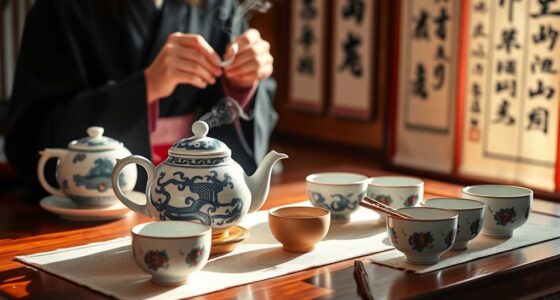
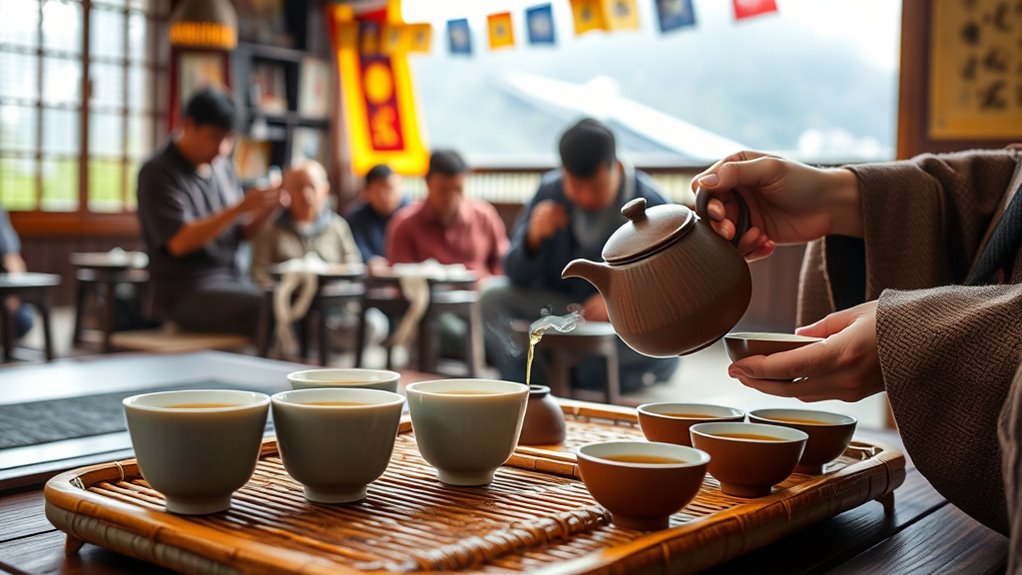
In regions like China, the tea ceremony etiquette is deeply rooted in history and philosophy. You might find that preparing tea here isn’t just about the beverage itself but about cultivating mindfulness and respect. The traditional Chinese tea ceremony involves specific steps, such as warming the teapot, carefully measuring tea leaves, and pouring the water at just the right temperature. These actions aren’t accidental—they symbolize harmony and reverence for nature. When you participate or observe, you’re expected to follow these customs, which reinforce social bonds and show respect to your host. This ceremony isn’t rushed; it’s a moment of calm and reflection that elevates the simple act of drinking tea into a meaningful ritual.
Meanwhile, in Japan, the tea ceremony, or “chanoyu,” emphasizes harmony, purity, respect, and tranquility. You’d learn that the precise tea preparation methods involve meticulous movements and a focus on aesthetics. Every gesture, from whisking the powdered matcha to the way you handle the utensils, is performed with grace and intention. The etiquette around this process is strict, emphasizing humility and mindfulness. Participating in a Japanese tea ceremony invites you to slow down and appreciate the moment, fostering a sense of spiritual connection. The careful attention to detail and the disciplined steps highlight how tea serves as a vehicle for spiritual discipline and social harmony.
Across the globe, you’ll find variations like the British afternoon tea, which centers on socializing and enjoying delicate pastries alongside a pot of black tea. Here, the focus is less on ceremony and more on leisurely enjoyment and conversation. The preparation methods may be straightforward—boiling water, steeping tea, and pouring—but the social etiquette emphasizes politeness, conversation, and relaxation. Additionally, the emphasis on high-quality tea leaves in many cultures underscores how the selection of ingredients influences the overall experience and appreciation of tea.
Frequently Asked Questions
How Do Climate Differences Affect Tea Cultivation Across Regions?
Climate impact profoundly shapes tea cultivation across regions. You’ll notice that warmer, humid climates boost leaf growth, while cooler areas produce more delicate flavors. Different conditions require specific cultivation techniques, like shade-growing or precise watering schedules. You adapt your methods to local climate, ensuring healthy plants and quality tea. Variations in temperature, rainfall, and altitude influence not just growth but also the taste and aroma of your tea, making each region’s product unique.
What Are the Unique Tea Ceremonies in Indigenous Communities?
You’ll find that indigenous communities often have unique tea ceremonies centered around indigenous brewing and ceremonial rituals. These traditions may involve specific herbs, sacred tools, and gestures that honor nature and ancestors. As you observe or participate, you’ll notice the ceremonies emphasize community, spirituality, and respect for the land. These rituals create a deeper connection to cultural heritage, making each indigenous tea ceremony a meaningful and immersive experience rooted in tradition.
How Do Regional Tastes Influence Tea Blending and Flavor Profiles?
You’ll find that regional tastes shape tea blending like a tailor crafting a suit—every stitch influenced by local flavor preferences. Blending techniques adapt to those customs, whether adding spicy notes in India or floral hints in China. Imagine a tea that’s so personalized, it practically whispers, “This is your region’s soul in a cup.” Regional influences turn simple leaves into a symphony of flavors uniquely tailored to local palates.
What Role Do Local Rituals Play in Daily Tea Consumption?
You actively participate in daily tea consumption through local rituals and tea etiquette, which shape your experience. These ceremonial practices, like specific pouring methods or timing, deepen your connection to tradition. They guide how you prepare, serve, and enjoy tea, making each sip meaningful. By adhering to local customs, you respect cultural values and enhance your appreciation, turning simple tea drinking into a shared, meaningful ritual that reflects community identity.
Are There Regional Variations in Tea Packaging and Presentation?
Yes, there are regional variations in tea packaging and presentation styles. You’ll notice that in some areas, tea is packaged in ornate, traditional boxes or tin containers, emphasizing craftsmanship, while others prefer minimalist, eco-friendly wraps. Presentation styles also differ; for example, in certain regions, tea is displayed in intricate, decorative ways during ceremonies, enhancing the overall experience. These regional packaging choices and presentation styles reflect local culture and aesthetic preferences.
Conclusion
As you explore different tea cultures, you realize that these traditions reflect deeper regional identities and histories. Some believe that the way tea is prepared and shared influences social harmony, a theory supported by the intricate rituals of Chinese Gongfu tea or Japanese tea ceremonies. While these practices vary, they all highlight tea’s role in fostering community and tradition. Embracing these differences, you see tea as a universal symbol of connection, rooted in local customs yet transcending borders.