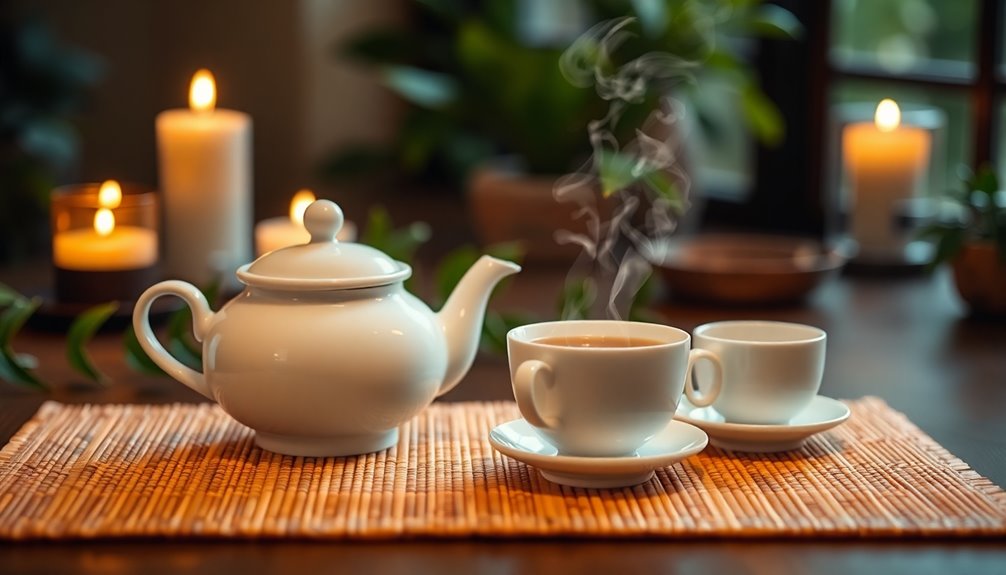
Regional variations of tea and meditation reflect unique cultural identities shaping mindful practices worldwide. In Japan, you’ll find a precise tea ceremony emphasizing harmony and tranquility, while China’s brewing highlights balance and reflection. Indian meditation often involves focused breathing or mantras for insight, and Southeast Asian techniques focus on mindfulness through seated or walking routines. Exploring these regional differences offers a richer understanding of how cultures incorporate mindfulness into everyday life. Keep exploring to uncover even more fascinating traditions.
Open a free Amazon Business account
Business pricing, bulk buying and tax-exempt orders.
As an affiliate, we earn on qualifying purchases.
Key Takeaways
- Japanese tea ceremonies emphasize harmony, respect, and mindfulness through precise movements and ritualized preparation.
- Chinese tea practices reflect Daoist principles, focusing on balance, harmony, and meditative reflection.
- Indian meditation often involves focused breathing and mantra chanting rooted in Vipassana and Raja Yoga traditions.
- Southeast Asian techniques include seated and walking mindfulness practices, promoting present-moment awareness.
- Western approaches adapt traditional mindfulness practices for stress reduction and mental clarity across diverse contexts.

Tea and meditation practices vary widely across regions, reflecting local cultures, histories, and philosophies. When you explore different parts of the world, you’ll notice how deeply intertwined these traditions are with daily life and spiritual beliefs. For example, in Japan, the tea ceremony traditions are meticulously structured, emphasizing harmony, respect, purity, and tranquility. This ritual isn’t just about drinking tea; it’s a mindful practice that cultivates presence and serenity. The precise movements, the choice of utensils, and the calm environment all serve to heighten awareness and foster inner peace. Similarly, in China, tea brewing often centers around harmony and balance, echoing Daoist principles. The act of preparing and drinking tea becomes a meditative practice itself, encouraging mindfulness and reflection.
Across regions, meditation practices are equally diverse, shaped by cultural and spiritual influences. In India, meditation often involves focused breathing or mantra chanting, rooted in centuries-old traditions like Vipassana or Raja Yoga. These practices aim to quiet the mind, develop insight, and connect with a higher consciousness. In contrast, in Southeast Asia, meditation might be practiced seated or walking, emphasizing mindfulness of each moment. These techniques, often tied to Theravāda Buddhism, help practitioners cultivate awareness and compassion, fostering a sense of interconnectedness. Moving westward, Western meditation has evolved into a more secular practice, blending mindfulness techniques derived from Buddhist traditions with modern psychology. Here, the focus is often on stress reduction and mental clarity, making it accessible to a broader audience.
The variations in tea ceremony traditions and meditation practices across regions highlight how culture shapes spiritual routines. In Korea, for instance, tea ceremonies are simple yet profound, emphasizing sincerity and humility, aligning with Confucian values. Meanwhile, in Tibet, meditation might involve visualizations and rituals aimed at developing compassion and enlightenment. These regional differences demonstrate that, whether through a ceremonial tea ritual or silent meditation, the core aim remains the same: to find balance, cultivate awareness, and deepen your connection with the present moment. You’ll find that understanding these diverse traditions enriches your appreciation of both tea and meditation, offering new perspectives on how to incorporate mindfulness into your daily routine. Exploring regional variations can also reveal how different cultures adapt practices for their unique spiritual and social contexts, enhancing your own understanding and practice.
As an affiliate, we earn on qualifying purchases.
Frequently Asked Questions
How Does Climate Influence Regional Tea Cultivation?
Climate influences your regional tea cultivation by shaping the climate zones where tea thrives. You’ll notice that in tropical and subtropical areas, warm temperatures and high humidity promote lush growth, while cooler, high-altitude regions develop distinct flavors. You adapt cultivation methods accordingly, using shade, irrigation, or specific harvesting techniques to optimize quality. Understanding these climate factors helps you produce better tea, tailored to your local environment’s unique conditions.
What Are Unique Meditation Techniques in Different Regions?
You’ll find that meditation techniques vary across regions, each with unique practices. For example, in Japan, you might practice Zazen, emphasizing mindfulness techniques and breathwork practices to cultivate awareness. In India, yoga and Pranayama focus on breath control and meditation. In Tibet, meditation involves visualization and chanting. Exploring these regional techniques allows you to deepen your mindfulness and harness diverse breathwork practices for a more enriching meditation experience.
Are There Specific Rituals Combining Tea and Meditation Worldwide?
Yes, you’ll find specific rituals combining tea and meditation worldwide. Tea ceremonies, like the Japanese Chanoyu or Chinese Gongfu, emphasize mindfulness and presence, creating a calming atmosphere. Similarly, mindfulness rituals in India or Morocco incorporate tea as a symbol of hospitality and reflection. These rituals guide you to slow down, focus on each sip, and cultivate inner peace, blending tradition and mindfulness seamlessly in everyday life.
How Do Cultural Beliefs Affect Tea and Meditation Practices?
Cultural beliefs deeply influence how you approach tea and meditation. You might see tea as more than a beverage, embodying cultural symbolism and spiritual significance. Rituals often emphasize mindfulness and respect, shaping your practice. In some cultures, tea rituals symbolize harmony and balance, making meditation more meaningful. These beliefs guide your actions, ensuring that each step reflects profound respect for tradition and enhances your overall spiritual experience.
What Future Trends Are Emerging in Regional Tea and Meditation?
You’ll see emerging tea innovations like personalized blends and health-focused teas gaining popularity, driven by tech and wellness trends. Meditation technology advancements, such as app-guided sessions and virtual reality experiences, are transforming how people meditate worldwide. These trends suggest a future where tea and meditation become more accessible, personalized, and integrated into daily routines, blending tradition with innovation to enhance mental and physical well-being.
Conclusion
You’ve seen how tea and meditation vary across regions, each culture adding its unique touch. Did you know that over 60% of Japanese adults incorporate tea ceremonies into daily life, enhancing mindfulness? This shows how deeply traditions influence well-being practices worldwide. Embracing these regional differences can inspire your own journey toward relaxation and awareness. So, explore these customs—you might find a new way to connect with yourself and the world around you.
NFL season / tailgating Picks
team gear
As an affiliate, we earn on qualifying purchases.