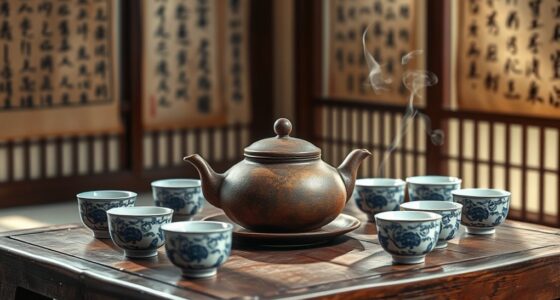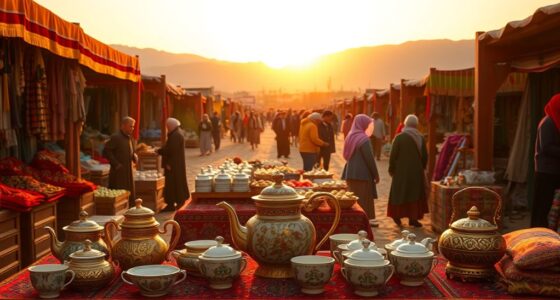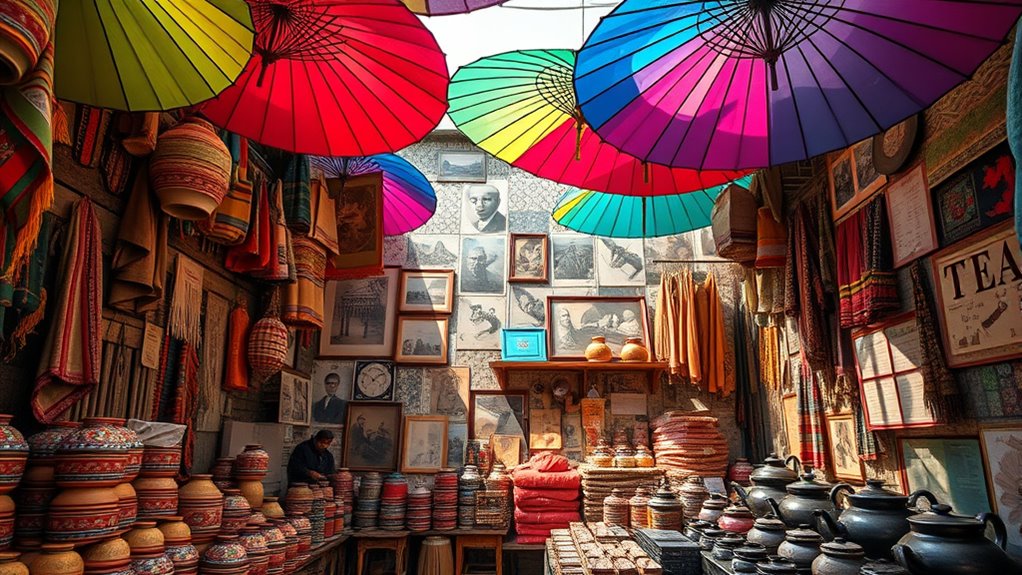

You’ll find that tea’s historical significance varies greatly by region, shaped by local cultivation methods, trade routes, and cultural traditions. In China, tea’s origins span thousands of years, influencing neighboring countries like Japan and Korea. India’s Assam and Darjeeling teas reflect unique terroirs, while colonial trade established plantations in places like Sri Lanka. Exploring these regional differences reveals how tea became a symbol of cultural identity and global exchange—if you explore further, you’ll discover even more fascinating connections.

Get coffee and tea gear delivered free — and shop member deals
- Fast, free delivery on millions of items
- Access to Prime Big Deal Days deals on October 6–7
- Prime Video, Amazon Music and more included
Key Takeaways
- Chinese tea cultivation traditions date back thousands of years, shaping regional identities and brewing techniques.
- India’s Assam and Darjeeling teas reflect unique terroirs influencing local culture and global trade.
- Tea trade routes like the Silk Road facilitated cultural exchanges and the spread of regional tea varieties.
- Colonial tea plantations in countries like Sri Lanka and India emerged from trade demands, impacting local economies.
- Tea symbolizes regional history, cultural identity, and diplomatic ties across Asia, Europe, and beyond.
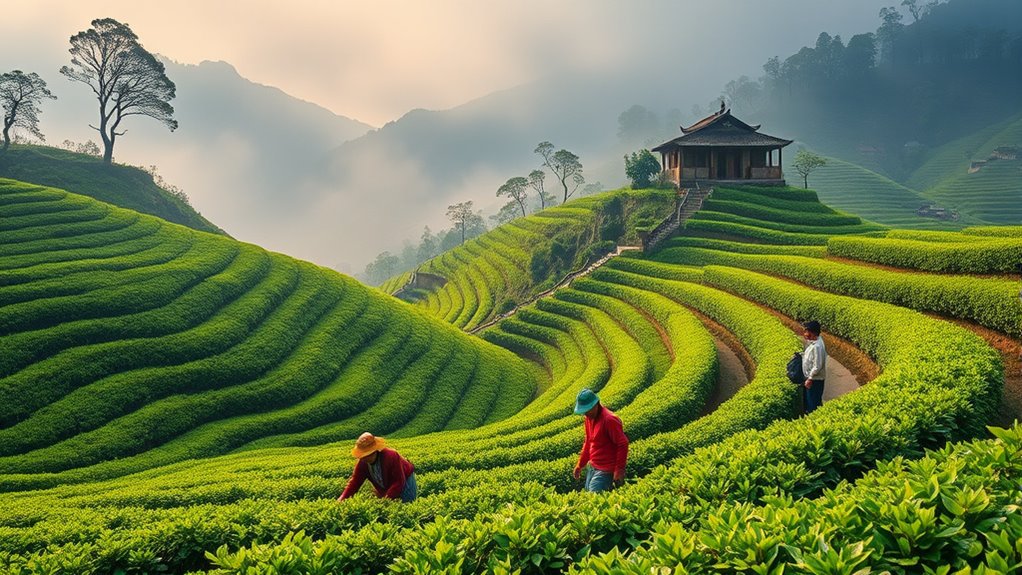
Tea has played a pivotal role in shaping the cultural and historical landscape of various regions around the world. Its journey begins with tea cultivation, which varies markedly depending on local climates, terrains, and traditions. In regions like China, tea cultivation dates back thousands of years, with specific techniques developed over generations to produce prized varieties such as green and black teas. As you trace the roots of tea, you’ll see how different methods of cultivation and processing reflect local customs and preferences, shaping regional identities. In India, the lush hills of Assam and Darjeeling have become renowned for their distinct tea plantations, each offering unique flavors rooted in their specific terroirs. These cultivation practices didn’t just serve local consumption; they became essential to international trade.
Trade routes played a critical role in elevating tea from a local commodity to a global staple. The famous Silk Road and maritime routes facilitated the exchange of tea between China and neighboring regions, spreading its popularity far beyond its origins. As you explore these trade routes, you’ll notice how tea became intertwined with cultural exchanges, diplomacy, and economic growth. For instance, during the Tang and Song dynasties, Chinese tea was a luxury item traded along land routes, influencing neighboring Japan, Korea, and Central Asia. Later, maritime trade routes, especially during the Age of Exploration, expanded tea’s reach to Europe, where it quickly gained favor among aristocrats and commoners alike.
The development of trade routes also influenced the social and political significance of tea. In Britain, the rise of tea consumption in the 17th and 18th centuries led to the establishment of tea plantations across colonies like India and Sri Lanka, driven by the demand created through these trade networks. This shift not only affected local economies but also impacted global geopolitics, as controlling trade routes meant controlling access to this highly coveted beverage. The evolution of these routes and cultivation practices demonstrates how tea’s regional importance was shaped by a complex web of cultural exchanges, economic interests, and political power. Whether in the Asian heartlands or the colonial plantations of the West, tea continues to embody the historical significance of regional trade, cultural identity, and shared tradition.
Chinese green tea traditional brewing set
As an affiliate, we earn on qualifying purchases.
As an affiliate, we earn on qualifying purchases.
Frequently Asked Questions
How Did Tea Cultivation Spread Globally Historically?
You see, tea cultivation spread globally through trade expansion, starting in China and reaching other parts of Asia. European traders, especially the British and Dutch, played a key role by establishing tea plantations in colonies like India, Ceylon, and Java. As trade grew, tea became a popular commodity worldwide, fueling economic growth and cultural exchange. This expansion was driven by demand, technological advances, and colonial efforts to meet global markets.
What Are the Indigenous Tea Traditions Unique to Specific Regions?
You’ll find unique tea traditions rooted in specific regions. For example, in Japan, you embrace the tea folklore of matcha, with ceremonial brewing that emphasizes mindfulness and precision. In China, Gongfu tea ceremonies highlight artistry and technique. Meanwhile, in Morocco, mint tea is a symbol of hospitality, prepared with a lively, social flair. These traditions reflect each culture’s history, values, and connection to tea’s spiritual and social significance.
Which Historical Events Most Influenced Regional Tea Trade Routes?
You might think trade routes evolved peacefully, but it was colonial expeditions and trade monopolies that truly shaped them. These events forced nations to compete fiercely for control, creating key routes through Asia and beyond. The British East India Company’s dominance, for instance, turned tea into a global commodity. Ironically, colonial powers’ greed and rivalries fueled the very routes that made tea accessible worldwide, changing history one sip at a time.
How Did Tea Influence Regional Social Hierarchies Historically?
You see, tea historically influenced social hierarchies by reinforcing social stratification, where the type of tea you drank signified your status. Wealthy elites used tea as a symbol of cultural sophistication, elevating their social standing, while common folk had limited access, reinforcing class divisions. Tea’s role as a cultural symbol strengthened societal distinctions, making it more than just a beverage but a marker of social hierarchy through history.
What Are Lesser-Known Regional Tea Rituals With Historical Roots?
You might not know about the Japanese tea ceremony, which emphasizes meticulous rituals and cultural symbolism, reflecting Zen Buddhist principles. Or consider the Moroccan mint tea ritual, where pouring tea from a height signifies hospitality and respect. These lesser-known regional tea rituals hold deep historical roots, showcasing how tea’s cultural symbolism extends beyond mere refreshment, embodying spiritual values, social bonds, and traditional customs unique to each region.
Conclusion
As you explore the regional variations of tea’s history, you realize it’s like a vast tapestry woven with diverse threads of culture and tradition. Each region adds its unique dye, creating a rich mosaic that highlights tea’s universal yet local significance. Embrace these differences, for they make the story of tea as intricate and beautiful as a finely crafted tapestry, inviting you to appreciate its timeless influence across the world.
Fall Picks
fall essentials
As an affiliate, we earn on qualifying purchases.