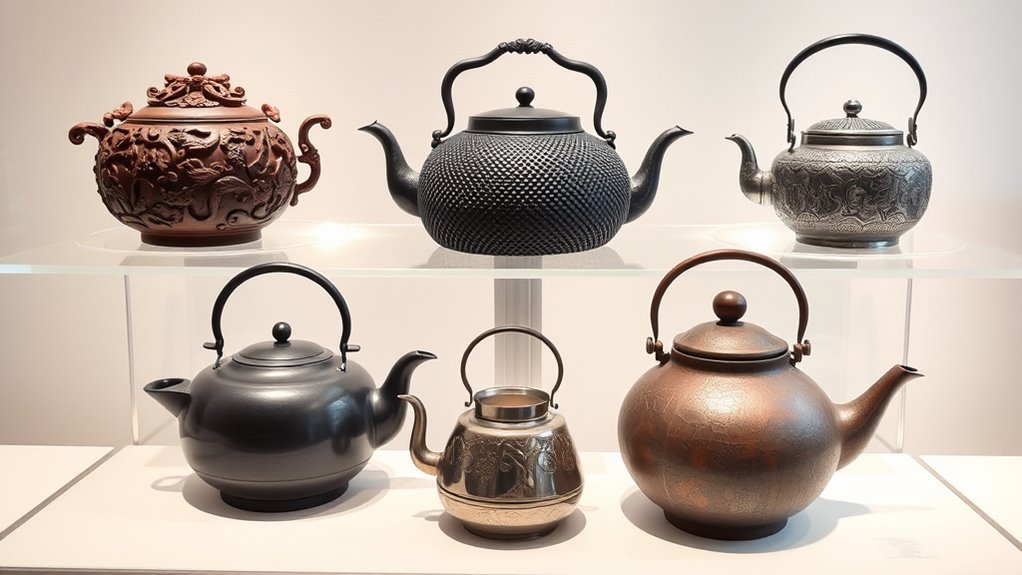

You can explore five iconic teapots displayed in world museums, each showcasing rich cultural symbolism and remarkable craftsmanship. Museums like the Victoria and Albert Museum and Shanghai Museum feature teapots crafted from porcelain, cast iron, and silver, with intricate motifs that reflect their societies’ values. These teapots are artistic masterpieces, embodying traditions, trade histories, and social hierarchies. If you continue, you’ll uncover the fascinating stories behind these extraordinary pieces and their cultural significance.

Get coffee and tea gear delivered free with Prime
- Fast, free delivery on millions of items
- Prime Video, Amazon Music and more included
- Member-only deals all year
Key Takeaways
- The Ming Dynasty Blue-and-White Porcelain Teapot at the Victoria and Albert Museum exemplifies exquisite craftsmanship and traditional Chinese artistry.
- The Japanese Cast Iron Tetsubin teapots, showcased in various museums, highlight durability and intricate surface decoration.
- The Meissen Porcelain Teapot in European museums reflects sophisticated craftsmanship and baroque design elements.
- The Yixing Clay Teapots displayed in Chinese museums are valued for their material and association with Gongfu tea traditions.
- The Kangxi Imperial Teapot, housed in global collections, symbolizes imperial craftsmanship and artistic excellence from the Qing Dynasty.
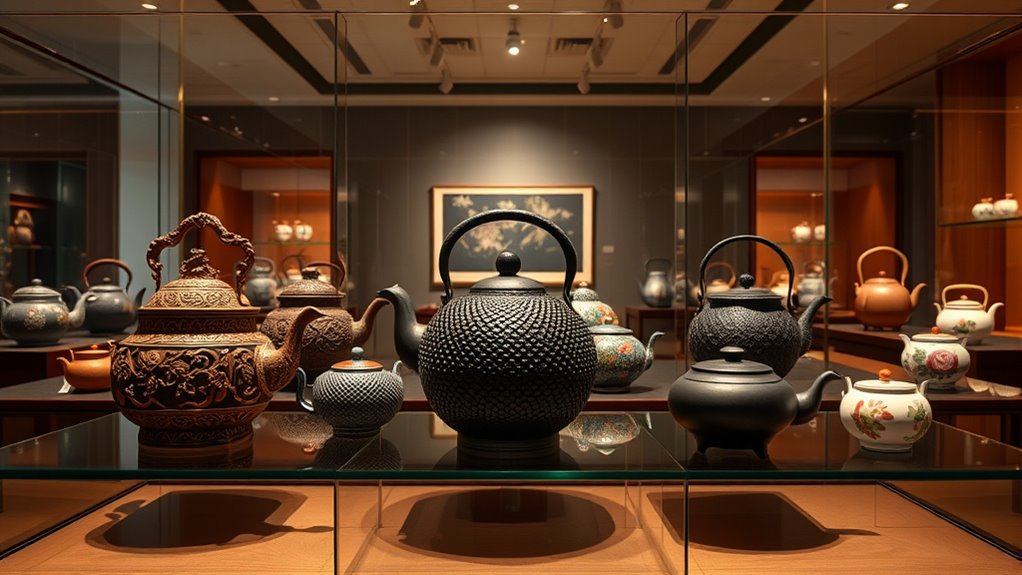
Teapots have long been celebrated as functional art, capturing both cultural significance and craftsmanship. When you explore iconic teapots displayed in world museums, you begin to appreciate how these objects transcend their everyday use to become symbols of cultural identity and artistic mastery. Each teapot embodies a unique story, reflecting the teapot craftsmanship that has been passed down through generations. The intricate details, choice of materials, and design techniques all reveal the skill and dedication of the artisans behind them. As you observe these masterpieces, you’ll notice how their forms and decorations encapsulate the cultural symbolism of their origins, serving as more than just vessels for tea—they are representations of tradition, social values, and artistic evolution.
Teapots as art reflect culture, craftsmanship, tradition, and artistic evolution beyond their everyday function.
In museums around the globe, such as the Victoria and Albert Museum in London or the Shanghai Museum in China, teapots are displayed not merely as functional objects but as significant cultural artifacts. These collections highlight how teapots have been adapted to different cultural contexts, from delicate porcelain pieces in China to robust cast iron varieties in Japan. You’ll see how each piece tells a story about the society that created it, whether emphasizing status, spirituality, or everyday life. The craftsmanship involved in producing these teapots often involves meticulous handwork, from shaping the clay to applying decorative motifs. This attention to detail underscores the importance of teapot craftsmanship as an art form that requires both technical skill and artistic expression.
Cultural symbolism is woven into many iconic teapots, making them more than just containers. For example, certain Chinese teapots feature motifs like dragons or phoenixes, symbolizing power and good fortune. In Europe, silver or porcelain teapots may carry heraldic symbols or intricate patterns that reflect social hierarchy or regional identity. When you stand before these objects in a museum setting, you’re witnessing a dialogue between utility and symbolism, where every curve and ornament serves a purpose beyond aesthetics. These teapots often carry histories of trade, cultural exchange, and evolving tastes, making them valuable artifacts that deepen your understanding of the societies from which they originated.
Ultimately, exploring iconic teapots in museums offers you a window into the artistry and cultural narratives embedded within each piece. They remind you that beyond their functional role, teapots are powerful symbols of tradition, craftsmanship, and cultural symbolism. When you look at these objects, you’re not just seeing a vessel for tea—you’re witnessing a tangible link to the past, an expression of identity, and a testament to human creativity across centuries.
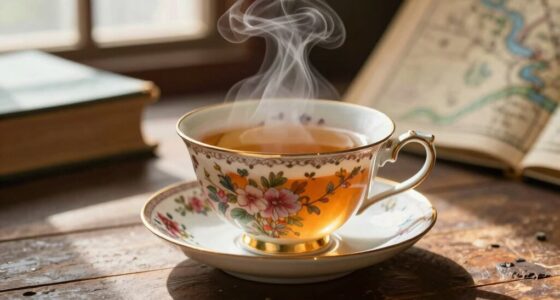
porcelain teapot with traditional Chinese motifs
As an affiliate, we earn on qualifying purchases.
As an affiliate, we earn on qualifying purchases.
Frequently Asked Questions
What Materials Are Most Commonly Used in Iconic Teapots?
When you consider iconic teapots, you’ll notice that porcelain craftsmanship is most common, offering delicate beauty and fine detail. Many also feature metal ornamentation, adding elegance and durability. These materials are favored for their aesthetic appeal and practicality. By choosing porcelain and metal, artisans create teapots that stand out in collections worldwide, showcasing both skilled craftsmanship and timeless design.
How Do Teapot Designs Vary Across Different Cultures?
Think of teapot designs as cultural tapestries, woven with regional craftsmanship and aesthetic values. You’ll notice that Asian teapots often feature delicate, ornate patterns symbolizing harmony, while European styles lean toward elegant, ornate forms reflecting sophistication. Each culture’s approach reveals its unique history and artistry, turning a simple vessel into a storybook of traditions. Your appreciation deepens as you see how these designs embody the soul of their origins.
Are There Any Famous Teapots With Legendary Stories Attached?
You’ll find that many famous teapot artifacts have legendary stories attached, making them truly special. For example, the Yixing teapot in China is linked to centuries of craftsmanship and cultural significance, while the Chinese Kangxi teapot is renowned for its exquisite design and historical value. These legendary teapot stories add depth to their allure, turning everyday items into symbols of tradition and history that captivate collectors and enthusiasts alike.
How Do Museums Preserve Delicate Teapot Ceramics?
You might wonder how museums preserve delicate teapot ceramics. They use specialized museum conservation techniques, carefully controlling humidity and temperature to prevent deterioration. Skilled conservators apply ceramic preservation techniques like cleaning with gentle materials and reinforcing weak spots with adhesives. These methods guarantee your favorite teapots stay intact for future generations, allowing you to appreciate their artistry and history without risking damage from environmental factors or handling.
Can Visitors Purchase Replicas of Iconic Museum Teapots?
You can often purchase replicas of iconic museum teapots at museum gift shops, where they offer carefully crafted souvenirs. These replicas showcase skilled craftsmanship, allowing you to enjoy a piece of art without risking the original. Keep in mind, though, that the quality varies, so it’s worth checking the craftsmanship before buying. Visiting the gift shop is your best bet for finding a beautiful, authentic-looking replica teapot.
Conclusion
As you explore these iconic teapots, you realize they hold more than just craftsmanship—they whisper stories of history, culture, and mystery. Each one invites you to imagine the secrets it’s kept through centuries, waiting for the right moment to reveal its true story. Will the next museum visit uncover a hidden tale or open a forgotten tradition? The world’s most iconic teapots leave you pondering—what else remains hidden, waiting to be discovered?
Halloween Picks
halloween
As an affiliate, we earn on qualifying purchases.