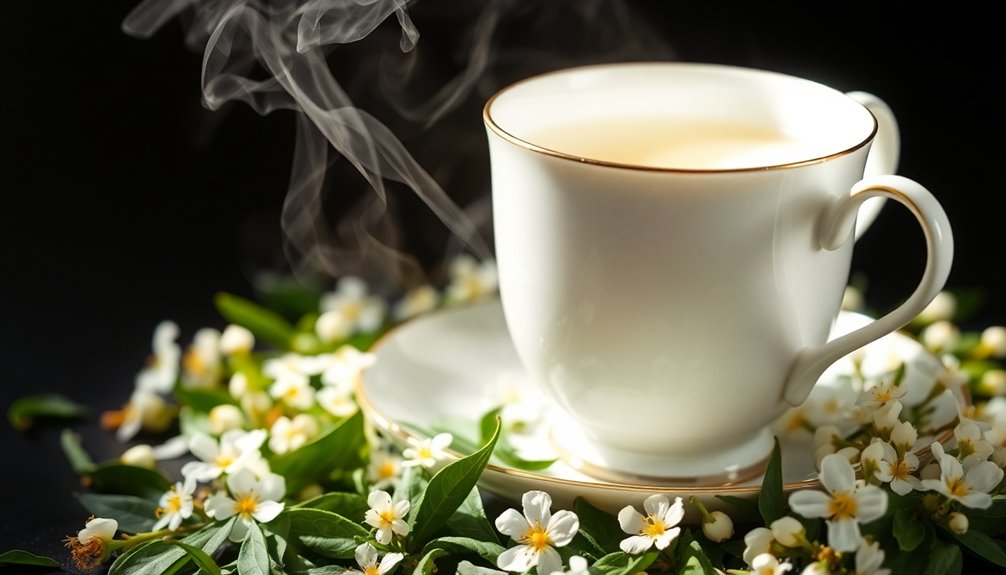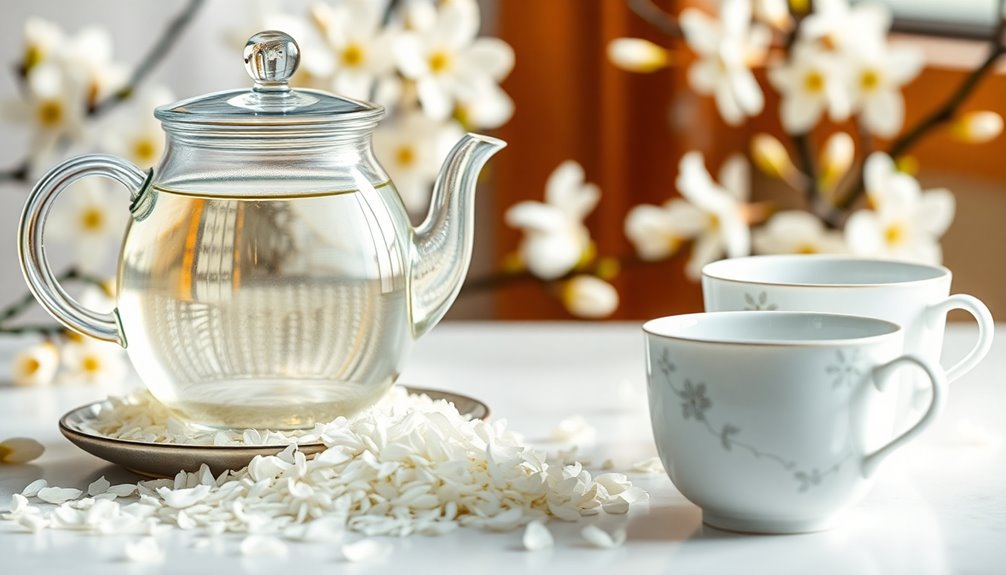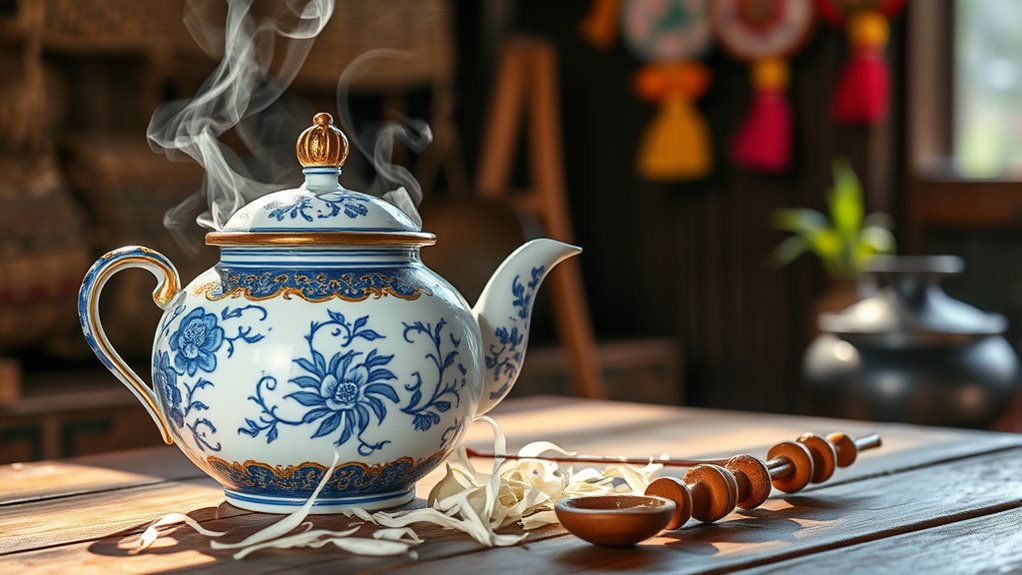

White tea holds great cultural significance in many local traditions, symbolizing purity, respect, and community bonds. You might find it central to ceremonies that emphasize mindfulness, patience, and reverence for nature. Sharing white tea during rituals fosters social connections and preserves cultural heritage. Its preparation and consumption reflect values passed down through generations, embodying harmony and tradition. If you’re curious, exploring further reveals how this delicate tea continues to shape and unite communities today.

Get coffee and tea gear delivered free with Prime
- Fast, free delivery on millions of items
- Prime Video, Amazon Music and more included
- Member-only deals all year
Key Takeaways
- White tea symbolizes purity and reverence, playing a central role in traditional rituals emphasizing mindfulness and social bonding.
- It is integral to cultural ceremonies that highlight craftsmanship, respect for nature, and community unity.
- White tea’s preparation and consumption reflect values of patience, respect, and harmony with tradition.
- It is used in traditional health remedies, embodying holistic approaches to wellness rooted in cultural philosophies.
- White tea acts as a cultural vessel, passing down historical practices and reinforcing community identity across generations.

White tea has long held a special place in local traditions around the world, valued for its delicate flavor and minimal processing. Its subtle taste and natural qualities make it more than just a beverage; it’s a symbol of cultural identity and reverence. In many regions, white tea is central to tea ceremonies, which are more than simple routines—they’re meaningful rituals that emphasize mindfulness, respect, and social bonding. When you participate in these ceremonies, you’re engaging in a centuries-old practice that celebrates purity and tradition. The careful preparation of white tea during such ceremonies reflects deep respect for nature and craftsmanship. You often observe specific steps, from selecting the finest leaves to precise steeping times, which highlight the tea’s delicate nature. These rituals serve to unify communities, fostering a sense of shared heritage and reverence for history.
Beyond its ceremonial role, white tea is also deeply woven into traditional health remedies across many cultures. You might have encountered stories where elders recommend white tea for its purported health benefits, such as boosting immunity, improving skin health, or reducing inflammation. In traditional medicine, white tea is believed to carry calming properties, helping to balance the body and mind. Its minimal processing retains high levels of antioxidants, which are thought to contribute to overall wellness. When you drink white tea in these contexts, you’re participating in a holistic approach to health that values natural remedies passed down through generations. These traditional health practices often involve more than just the tea itself; they embody a philosophy that emphasizes harmony, balance, and respect for natural healing methods.
Additionally, the preparation and consumption of white tea often require a mindful and patient approach, reflecting the cultural significance of patience and reverence in traditional practices. In many communities, sharing white tea during rituals or health practices isn’t just about the tea; it’s about forging connections and showing respect for elders and ancestors. When you observe or partake in these customs, you’re immersing yourself in a cultural narrative that values harmony with nature and the spiritual significance of everyday acts. The gentle process of preparing and drinking white tea becomes a reflection of a worldview that sees health and tradition as interconnected. Whether used in elaborate ceremonies or simple health remedies, white tea acts as a vessel for cultural expression and continuity. Its significance isn’t just in its taste but in its ability to carry forward centuries-old values and practices, uniting communities across generations.
As an affiliate, we earn on qualifying purchases.
Frequently Asked Questions
How Is White Tea Traditionally Prepared in Different Regions?
You typically prepare white tea by gently steeping the leaves in hot water, often during tea ceremonies that emphasize tranquility and mindfulness. In China, you might use a delicate gaiwan or Yixing teapot, while in Western regions, steeping is straightforward in a teapot or infuser. The preparation methods focus on preserving subtle flavors, with each region’s tea ceremonies highlighting unique traditions and techniques for an authentic experience.
What Are the Symbolic Meanings of White Tea in Local Rituals?
Imagine a delicate white bloom unfolding—white tea symbolizes purity, peace, and renewal in local rituals. Its subtle aroma embodies harmony and reverence, making it central to ceremonies that honor ancestors, new beginnings, or spiritual cleansing. The ritual significance of white tea lies in its role as a gentle offering of respect and serenity, creating a sacred space where tradition and mindfulness intertwine, inviting reflection and unity among participants.
Are There Specific Festivals Dedicated to White Tea Celebrations?
Yes, there are specific festivals dedicated to white tea celebrations. During these tea festivals, you participate in cultural ceremonies that highlight the significance of white tea. These events often feature traditional music, tea tasting sessions, and rituals emphasizing purity and tranquility. Attending these festivals gives you a deeper appreciation of white tea’s role in local culture, allowing you to experience its spiritual and social importance firsthand.
How Has White Tea Influenced Local Art and Folklore?
You might find that white tea deeply influences local art and folklore through its symbolism, representing purity and tranquility. Many artists draw inspiration from its delicate qualities, creating paintings and crafts that celebrate its subtle beauty. Folklore often links white tea to stories of wisdom and serenity, reinforcing its cultural importance. This artistic inspiration helps keep traditions alive, weaving white tea’s essence into the community’s cultural fabric.
What Role Does White Tea Play in Contemporary Cultural Practices?
White tea plays a meaningful role in contemporary cultural practices, especially during tea ceremonies where it symbolizes purity and tranquility. You often see it used to mark special occasions or to promote mindfulness, reinforcing its cultural symbolism. As you participate, you embrace tradition and modernity, blending age-old rituals with present-day appreciation. This keeps white tea’s significance alive, fostering a deeper connection to cultural roots while adapting to current practices.
Conclusion
As you sip white tea, you connect with centuries of tradition, feeling the gentle warmth that has comforted generations. This ancient brew, much like a timeless playlist on your vintage vinyl, weaves history into your present moment. Its delicate flavor reminds you that some customs, like the most cherished playlists, never truly fade—they just wait to be rediscovered. Embrace white tea’s cultural significance, and let it remind you that every sip is a journey through time.
Fall Picks
fall essentials
As an affiliate, we earn on qualifying purchases.