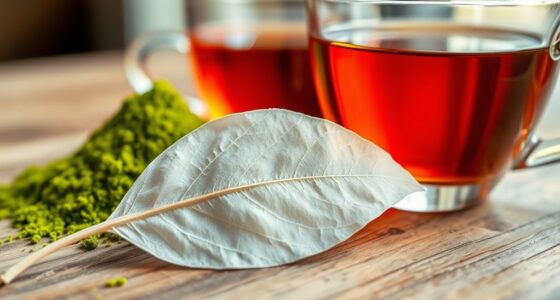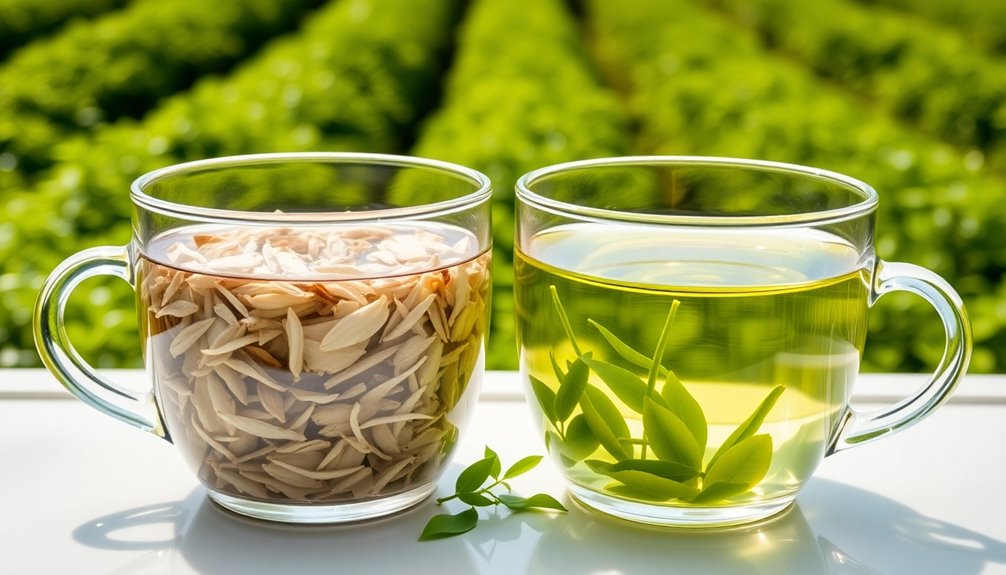
White tea is the least processed among teas, made from young leaves and buds that are carefully hand-picked at high altitudes during early spring. Its minimal processing helps preserve natural antioxidants and delicate flavors, giving it a subtle aroma and smooth taste. Skilled harvesters select only the tender parts, ensuring top quality. The simple, gentle processing keeps its natural qualities intact. Curious to discover more about how this gentle, refined tea is crafted? Keep exploring to uncover the full story.

Get coffee and tea gear delivered free with Prime
- Fast, free delivery on millions of items
- Prime Video, Amazon Music and more included
- Member-only deals all year
Key Takeaways
- White tea is the least processed tea, preserving natural antioxidants and delicate flavors.
- It is cultivated in high-altitude regions with specific climate and soil conditions that influence its quality.
- Only the youngest, tender leaves and buds are hand-picked in early spring, ensuring premium quality.
- Minimal processing after harvesting maintains its natural qualities and subtle aroma.
- Its delicate flavor and high antioxidant content are a result of careful cultivation and selective harvesting techniques.
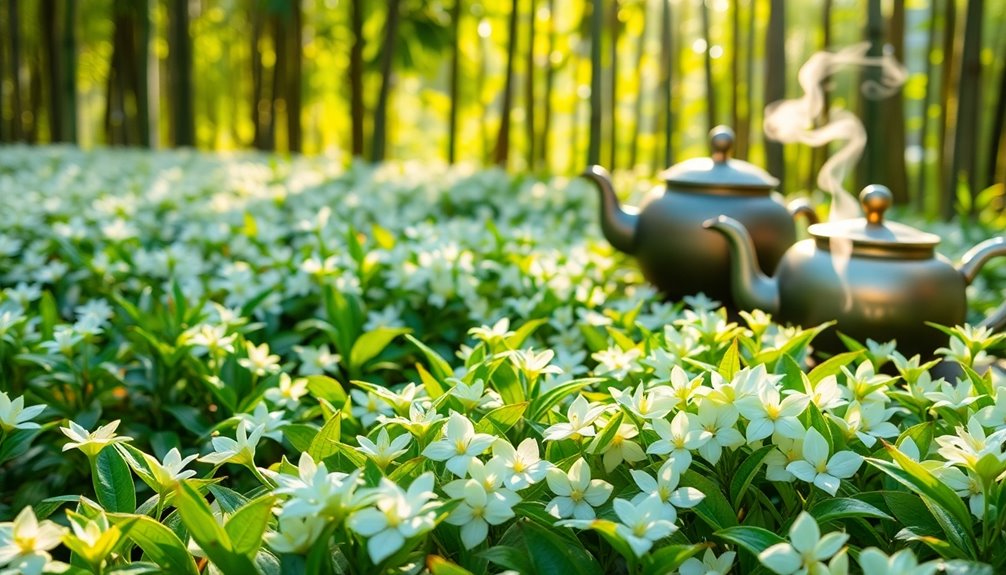
Have you ever wondered what sets white tea apart from other varieties? It’s a question that often comes up because, on the surface, white tea looks similar to green or black teas. But the real distinction lies in how it’s cultivated and harvested. White tea is the least processed of all tea types, which preserves its natural antioxidants and delicate flavors. The journey begins with tea cultivation—where the environment plays a vital role. White tea plants thrive in specific regions, often at high altitudes with cool temperatures and rich soil. These conditions slow down the growth of the tea bushes, allowing the leaves to develop a nuanced flavor profile. Unlike other teas that may be grown in various climates, white tea’s cultivation demands a subtle balance of temperature, sunlight, and soil quality, making it a more delicate crop to produce. Environmental conditions significantly influence the final flavor and quality of white tea. Additionally, the climate in these regions impacts the tea’s overall health and growth rate, further contributing to its unique characteristics.
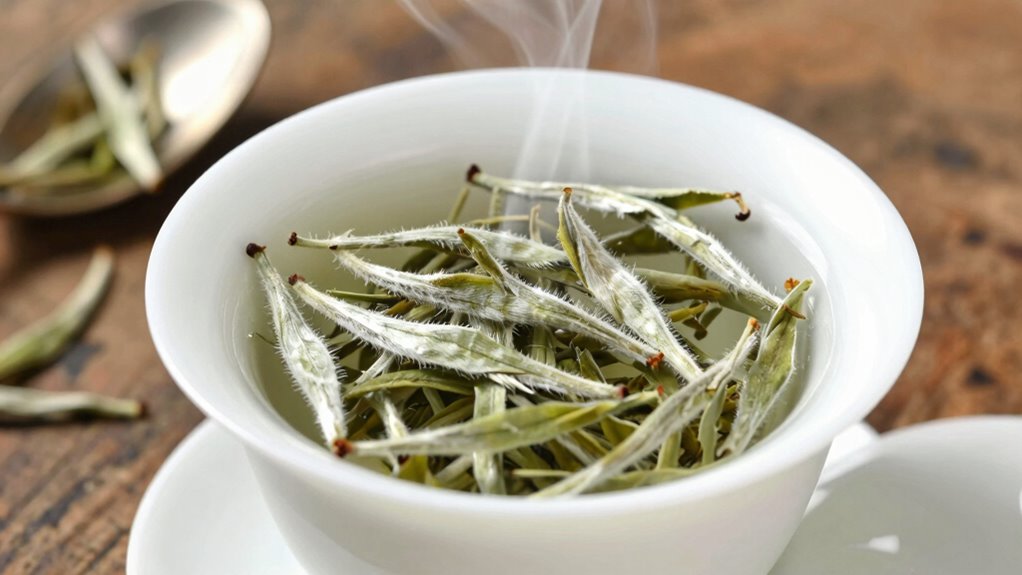
Once the tea plants are mature enough, harvesting techniques come into play. White tea is typically harvested by hand, and only the youngest, most tender leaves and buds are picked—often just in the early spring. This selective harvesting is essential because it guarantees the tea retains its light, subtle aroma and minimal bitterness. The buds and leaves are usually plucked when they’re still covered in fine white hairs, which give white tea its name and distinctive appearance. Because the harvest is so selective, it’s a labor-intensive process, often requiring skilled pickers who can identify the ideal leaves at just the right time. This careful picking process is vital to maintain the high quality and purity that white tea is known for. Moreover, the harvesting process is a crucial factor in preserving the tea’s delicate characteristics and ensuring its premium quality. Additionally, the processing methods used after harvesting are minimal to preserve the tea’s natural qualities and flavor profile.
As an affiliate, we earn on qualifying purchases.
Frequently Asked Questions
How Does White Tea Compare Nutritionally to Other Teas?
White tea is often lower in caffeine than black or green teas, making it a good choice if you’re sensitive to caffeine. It also contains high levels of tea antioxidants, which help protect your cells from damage. Nutritionally, white tea offers a milder flavor but still provides health benefits similar to other teas. Its delicate profile makes it a great option for boosting antioxidants without the jitters associated with more caffeinated varieties.
What Are the Best Brewing Methods for White Tea?
To brew white tea perfectly, you should use filtered water heated to about 160-185°F, ensuring the brewing temperature is just right to preserve its delicate flavor. Store your white tea in an airtight container away from light and moisture to maintain freshness. Steep the tea for 2-5 minutes, adjusting for strength. Proper tea storage and ideal brewing temperature bring out the subtle, sweet notes of white tea for the best experience.
Is White Tea More Expensive Than Other Tea Types?
Yes, white tea is generally more expensive than other tea types. You’ll find that tea cultivation involves delicate plucking and minimal processing, which drive up costs. Pricing factors include the quality of the leaves, the rarity of the harvest, and the labor-intensive nature of production. Since white tea is often made from young buds and requires careful handling, it commands a higher price, making it a more premium choice for tea lovers.
Can White Tea Help With Weight Loss?
Yes, white tea can help with weight loss. Its high level of antioxidants boosts your metabolism and aids fat burning. Because of the minimal tea leaf processing, white tea retains more beneficial compounds than other types, making it more effective for weight management. Drinking white tea regularly can support your weight loss efforts by enhancing energy levels and promoting fat oxidation naturally.
What Are Common Flavor Profiles of Different White Teas?
White teas boast flavor variations as delicate and complex as a fine melody. You’ll notice tasting notes ranging from sweet, subtly fruity, and floral to light, grassy, and slightly nutty. Some varieties, like Silver Needle, offer a creamy, honey-like sweetness, while others, such as Bai Mudan, feature fresh, vegetal tones. Exploring these flavor profiles reveals the tea’s nuanced artistry, inviting you to savor each sip like a treasure trove of nature’s gentle elegance.
Conclusion
Now that you know the true story behind white tea, you’ll appreciate its delicate process and unique benefits even more. Did you know that white tea contains up to three times more antioxidants than green tea? This makes it a powerful choice for boosting your health naturally. So next time you sip on white tea, remember its rich history and these impressive stats, and enjoy every calming, beneficial moment more consciously.
Fall Picks
fall essentials
As an affiliate, we earn on qualifying purchases.