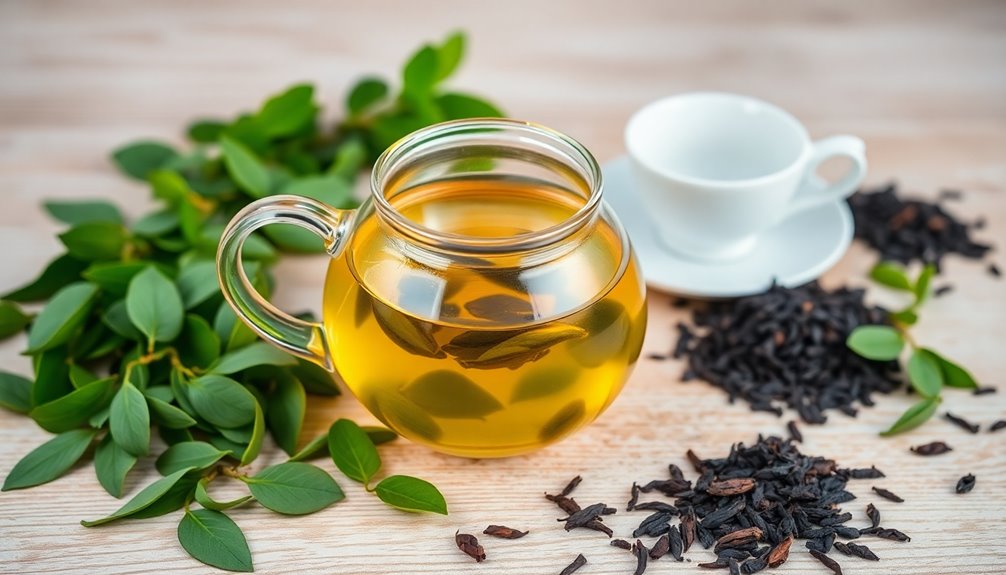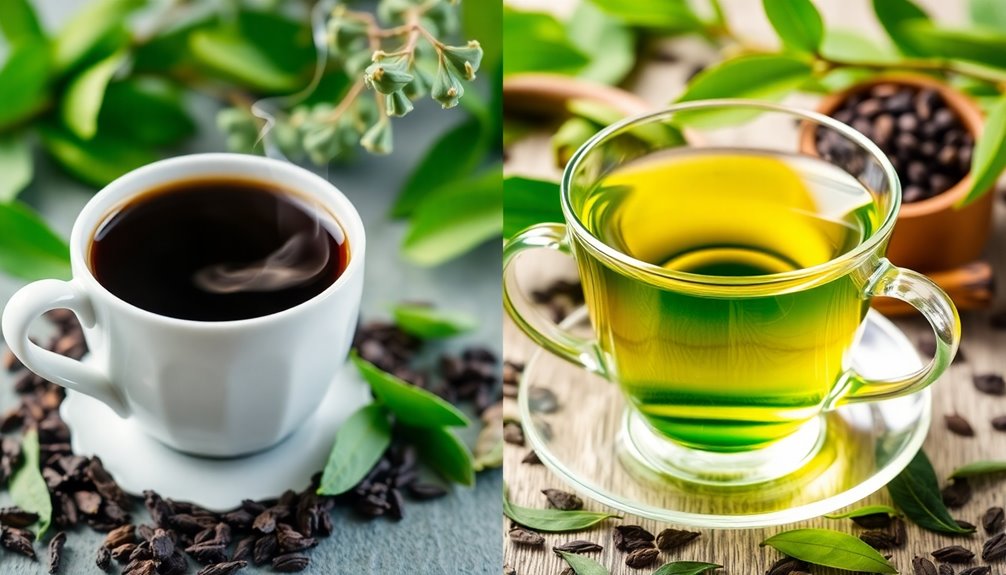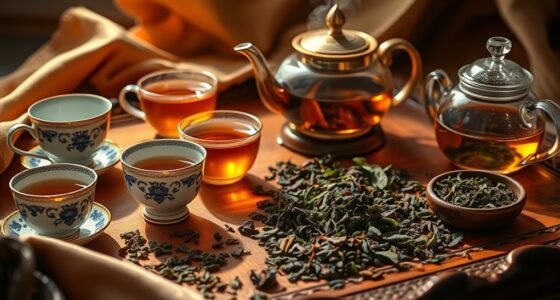
Exploring different tea types helps you appreciate the unique flavors shaped by specific cultivation conditions and processing methods. Each variety offers a distinct experience—green teas are fresh and grassy, black teas are bold and fruity, while oolong covers a range of floral to roasted notes. By understanding these differences, you can select teas that match your mood and deepen your cultural understanding. If you keep exploring, you’ll uncover even more about the artistry and tradition behind each cup.

Get coffee and tea gear delivered free with Prime
- Fast, free delivery on millions of items
- Prime Video, Amazon Music and more included
- Member-only deals all year
Key Takeaways
- Different tea types showcase diverse cultivation conditions that influence flavor and quality.
- Processing methods uniquely shape each tea’s taste, aroma, and overall character.
- Exploring various teas enhances appreciation of cultural traditions and craftsmanship.
- Understanding tea types allows for more intentional, tailored selections to suit preferences.
- A closer look reveals the artistry and complexity behind each cup, enriching the tasting experience.

Tea isn’t just a simple beverage; it’s a diverse world waiting to be explored. When you start paying attention to different tea types, you realize how much depth and variety there is beneath the surface. One reason to dive deeper is understanding tea cultivation, which directly influences the quality and character of each brew. The way tea plants are grown—climate, soil, altitude, and processing methods—shapes the final product. For example, teas cultivated at high altitudes tend to develop more complex flavors because the cooler temperatures slow growth, allowing the leaves to develop richer compounds. Conversely, teas from warmer regions often have a bolder, more robust taste. Recognizing these nuances helps you appreciate why teas can taste vastly different, even if they come from the same plant species.
As you explore more, you’ll notice that each tea type offers a distinct set of flavor profiles. These profiles are shaped by the cultivation process and how the leaves are processed after harvest. For instance, green teas usually have grassy, vegetal notes with a fresh, light body, while black teas often present a malty, fruity, or smoky flavor, depending on their processing. Oolong teas sit somewhere in between, with a complexity that can range from floral to roasted tones. White teas tend to be delicate, with subtle sweetness and a smooth finish. The diversity in flavor profiles encourages you to taste and compare, sharpening your palate and deepening your appreciation for the craftsmanship involved in each type. Additionally, understanding the processing methods involved in each tea type can help you identify what makes each one unique. Exploring these methods reveals the artistry behind tea production, highlighting how traditional techniques influence flavor and quality.
Knowing about tea cultivation and flavor profiles also makes your tea experience more intentional. Instead of grabbing a random bag, you can choose teas based on your preferences or the mood you want to set. Are you craving something light and refreshing? A green or white tea might suit you best. Want something rich and full-bodied? A robust black tea could be the answer. You’ll find that exploring different types broadens your understanding of the culture and history behind each one, enriching your overall experience. It’s not just about drinking tea; it’s about discovering the stories behind each leaf, the skill of those who grow and process it, and the layered flavors that result. This closer look transforms your simple cup into a journey—one worth taking for both your senses and your knowledge.
As an affiliate, we earn on qualifying purchases.
Frequently Asked Questions
How Do Processing Methods Affect Tea Flavor and Health Benefits?
Processing methods, like fermentation processes and oxidation levels, substantially influence your tea’s flavor and health benefits. Higher oxidation, as in black teas, creates richer, bolder flavors and boosts antioxidants. Conversely, less oxidation, seen in green teas, preserves delicate aroma and nutrients. Fermentation processes in certain teas, like pu-erh, develop unique earthy notes and may aid digestion. Understanding these methods helps you choose teas that match your taste and wellness goals.
Are There Regional Differences in Tea Cultivation Impacting Quality?
Yes, regional differences in tea cultivation markedly impact quality. Regional terroirs influence the soil, climate, and altitude, shaping flavor profiles and aroma. Cultivation practices vary widely, affecting leaf quality and processing. You’ll notice these differences in the taste, aroma, and even health benefits of teas from different regions. By understanding regional terroirs and cultivation practices, you can better appreciate the unique qualities each tea offers, making your tea experience richer and more satisfying.
What Are Common Misconceptions About Different Tea Types?
Many people believe all teas taste similar, but that’s a misconception. Different tea types have unique Tea aroma profiles that influence flavor, which can be enhanced or diminished by specific brewing techniques. For example, delicate green teas require gentle steeping, while robust black teas benefit from longer brewing. Understanding these nuances helps you appreciate each tea’s distinct qualities, ensuring you get the best experience every time.
How Can I Tell High-Quality Tea From Lower-Grade Options?
Think of choosing high-quality tea like selecting a rare gemstone. You’ll notice it in the tea leaf appearance—vivid, intact leaves indicate freshness and quality. When brewing, use the right temperature; too hot or cold dulls flavor. High-grade teas often have a richer aroma and vibrant color. So, examine the leaves closely and follow recommended brewing temperatures to guarantee you’re savoring the best possible cup.
Do Aging or Storage Influence Tea’s Taste and Aroma?
Yes, aging and storage considerably influence tea’s taste and aroma. Proper tea storage prevents exposure to light, moisture, and air, which can cause deterioration. Some teas, like aged Pu-erh, actually improve with aging, developing richer flavors. However, improper storage can lead to stale, flat, or off-putting tastes. Understanding aging effects helps you choose the right storage to preserve or enhance your tea’s unique qualities.
Conclusion
So, next time you sip your tea, remember there’s more than meets the eye. Did you know that over 3 billion cups of tea are consumed worldwide daily? With so many varieties—each with unique flavors and health benefits—taking a closer look can transform your tea experience. Explore different types, and you might discover a new favorite that boosts your well-being and enriches your daily routine. Cheers to uncovering the fascinating world of tea!
Halloween Picks
halloween
As an affiliate, we earn on qualifying purchases.