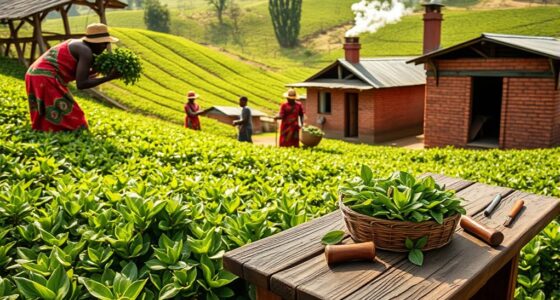

Sustainability challenges in the tea trade impact your industry’s future, facing issues like climate change, environmental degradation, and social inequalities. Farmers struggle with adapting to unpredictable weather, limited resources, and the high costs of adopting eco-friendly practices. Fair trade initiatives aim to improve conditions and promote sustainable methods, but barriers remain. To understand how these factors influence the market and what you can do about them, keep exploring the complexities behind tea trade economics.

Get coffee and tea gear delivered free with Prime
- Fast, free delivery on millions of items
- Prime Video, Amazon Music and more included
- Member-only deals all year
Key Takeaways
- High upfront costs hinder smallholder farmers’ adoption of sustainable and climate-resilient farming practices.
- Limited access to knowledge, resources, and technical support complicates transitions to sustainable tea production.
- Market fluctuations and price pressures challenge the economic viability of environmentally friendly and fair trade-certified teas.
- Climate change impacts, such as unpredictable weather patterns, threaten crop yields and disrupt supply chains.
- Insufficient policy support and financial incentives slow industry-wide adoption of sustainable and fair trade practices.
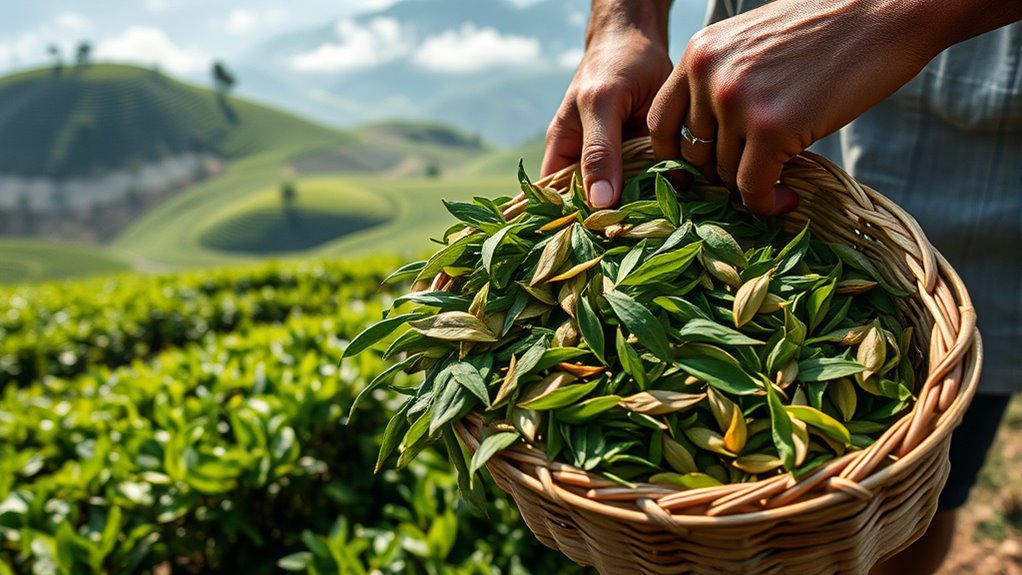
Have you ever wondered how the global tea industry balances growing demand with environmental and economic sustainability? It’s a complex challenge that requires careful planning and innovative strategies. Tea farmers and companies are increasingly recognizing the importance of climate adaptation—adjusting farming practices to cope with changing weather patterns, rising temperatures, and unpredictable rainfall. These shifts threaten crop yields and quality, making sustainable production more difficult. To combat this, many growers are adopting resilient agricultural techniques, such as diversifying crops, improving soil health, and utilizing drought-resistant plant varieties. Climate adaptation isn’t just about protecting the crop; it’s about ensuring the long-term viability of the industry and safeguarding the livelihoods of millions of small-scale farmers. Incorporating natural materials like wood, stone, and linen can also promote environmentally friendly practices in farming communities.
Simultaneously, the push for fair trade plays a vital role in this balancing act. Fair trade initiatives aim to provide farmers with better wages, improved working conditions, and equitable market access. When you choose fair trade-certified tea, you support a system that emphasizes ethical practices, transparency, and community development. This approach helps farmers invest in sustainable farming methods, which can also enhance climate resilience. Fair trade encourages practices like organic farming, reduced chemical use, and soil conservation—all of which contribute positively to the environment. By ensuring farmers receive fair compensation, these initiatives motivate them to prioritize sustainability, invest in climate adaptation measures, and maintain high-quality production standards.
However, integrating climate adaptation and fair trade principles isn’t without challenges. It often requires upfront investments and access to knowledge that many smallholder farmers lack. Transitioning to sustainable practices can be costly and complex, especially in regions most vulnerable to climate change. That’s why support from governments, NGOs, and international organizations is essential. They can provide training, financial aid, and resources to help farmers implement climate-resilient techniques aligned with fair trade standards.
As a consumer, your choices matter. Opting for fair trade-certified tea supports a system that values environmental health and social equity. It encourages companies to prioritize sustainable sourcing and invest in climate adaptation strategies for farmers. While the industry still faces hurdles in balancing demand with sustainability, your support helps accelerate positive change. By understanding these interconnected issues—climate adaptation, fair trade, and ethical consumption—you contribute to a more sustainable and equitable tea industry. This way, the enjoyment of your favorite brew also becomes a gesture of support for the planet and the people who cultivate it.
As an affiliate, we earn on qualifying purchases.
Frequently Asked Questions
How Do Climate Change Impacts Vary Across Different Tea-Growing Regions?
You’ll notice climate change impacts vary across tea-growing regions due to regional climate variability. In some areas, increased temperatures and irregular rainfall disrupt traditional growing seasons, making adaptive farming essential. Others face more frequent droughts or intense storms, damaging crops and soil health. By understanding these regional differences, you can implement tailored adaptive farming practices to mitigate climate impacts and sustain tea production effectively.
What Are the Economic Effects of Certification Schemes on Smallholder Farmers?
You’ll find that certification schemes can boost your income through market premiums, rewarding your efforts for sustainable practices. However, you also face certification costs that can be significant, especially for smallholders like you. Balancing these expenses against potential premiums is vital. While certification can open new markets and improve your bargaining power, it’s essential to assess whether the increased income offsets the costs involved.
How Can Consumers Influence Sustainable Practices in the Global Tea Market?
You can influence sustainable practices in the global tea market by staying informed about ethical sourcing and supporting brands committed to sustainability. Did you know that 66% of consumers prefer brands with transparent sustainability efforts? Your consumer awareness drives companies to adopt eco-friendly practices, ensuring fair wages and environmentally responsible methods. By choosing ethical teas, you directly encourage the industry to prioritize sustainability, making a positive impact on farmers and ecosystems worldwide.
What Innovations Are Emerging to Reduce Environmental Footprints in Tea Production?
You can support innovations like biodegradable packaging, which reduces plastic waste, and precision agriculture that minimizes water and chemical use in tea production. By choosing brands that adopt these technologies, you help lower environmental footprints. These advancements enable more sustainable farming practices, conserve resources, and promote eco-friendly packaging. Your consumer choices drive the industry toward greener methods, making a tangible difference in reducing the environmental impact of tea production.
How Do Political Factors Affect Trade Policies and Sustainability Efforts in Tea?
Imagine trade policies as the captain steering your ship through turbulent waters. When governments impose trade tariffs and regulations, they can slow down or redirect your journey, affecting sustainability efforts. These political factors influence how freely tea moves across borders and what standards it must meet. You must navigate these changes carefully, adapting to new rules to keep your trade sustainable and profitable, much like a captain adjusting sails in changing winds.
Conclusion
Just like a delicate teapot needs careful handling, the tea trade’s sustainability relies on your awareness and actions. Every choice you make can be a drop that either nourishes or depletes this essential industry. By supporting ethical practices and sustainable initiatives, you help keep the tea’s flavor rich and vibrant for generations to come. Remember, your influence is the steaming cup that can stir positive change, ensuring the future of tea remains strong and thriving.
Halloween Picks
halloween
As an affiliate, we earn on qualifying purchases.