
Modern tea serving etiquette combines traditional customs with personal touches. You can incorporate elegant gestures like offering tea with both hands or maintaining cleanliness, while also using stylish teapots and cups that suit your style. Casual gatherings can embrace relaxed elements, adding warmth and friendliness. Many adapt rituals to fit their preferences, blending respect and mindfulness with convenience. Continue exploring these adaptations to deepen your appreciation and create meaningful connections during each tea moment.
Key Takeaways
- Incorporate ergonomic teapots and stylish cups for convenience and aesthetic appeal.
- Emphasize core principles like offering with both hands, maintaining cleanliness, and showing gratitude.
- Blend traditional gestures with casual, modern settings to create warm, friendly tea experiences.
- Personalize rituals by adapting serving styles to individual preferences while respecting cultural origins.
- Use contemporary accessories and presentation methods to elevate the tea-drinking experience while honoring tradition.
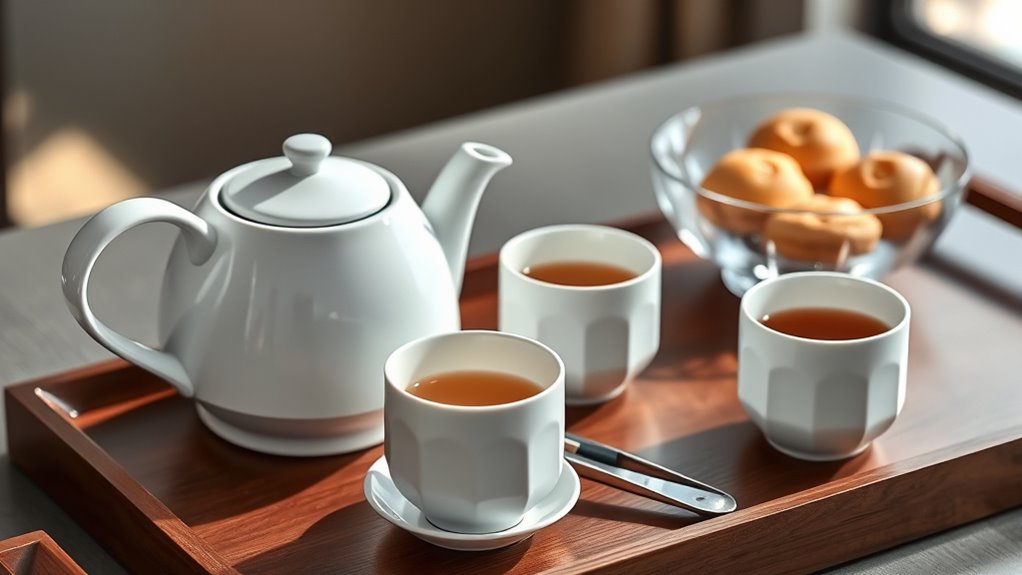
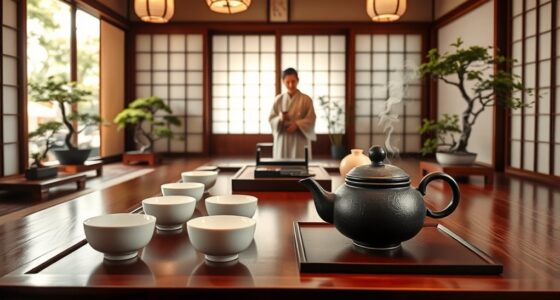
Tea serving etiquette combines tradition and respect, guiding you on how to present and enjoy tea gracefully. When you consider the tea ceremony origins, you’ll notice that many customs have deep cultural roots, reflecting centuries of tradition. These origins, such as those in China, Japan, and other Asian countries, shape modern practices and influence regional serving customs today. For example, in Japan, the tea ceremony emphasizes harmony, purity, and respect, with specific movements and gestures that convey mindfulness. In contrast, Chinese tea traditions focus on the art of brewing and pouring, often involving multiple infusions and a communal approach. Understanding these roots helps you appreciate the significance behind each step, fostering a genuine sense of respect when serving or receiving tea.
Tea etiquette blends tradition and respect, rooted in Asian cultural practices that foster mindfulness, harmony, and appreciation.
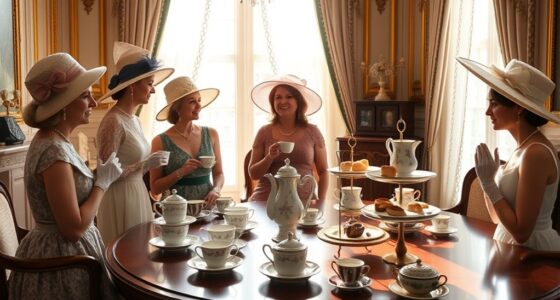
Regional serving customs, in particular, provide a rich variety of approaches that you can adapt to your own setting. In some cultures, like Morocco, serving tea involves a ceremonial pouring from a height to aerate the beverage and demonstrate hospitality, while in Britain, serving tea is more casual but still follows a specific order—placing the cups, pouring milk or lemon, and ensuring the presentation is tidy. Modern adaptations often blend these traditions, allowing you to create a personalized experience that honors cultural significance while embracing convenience. For instance, you might incorporate traditional Japanese gestures when serving a matcha, or adopt the relaxed, social vibe of a British afternoon tea.
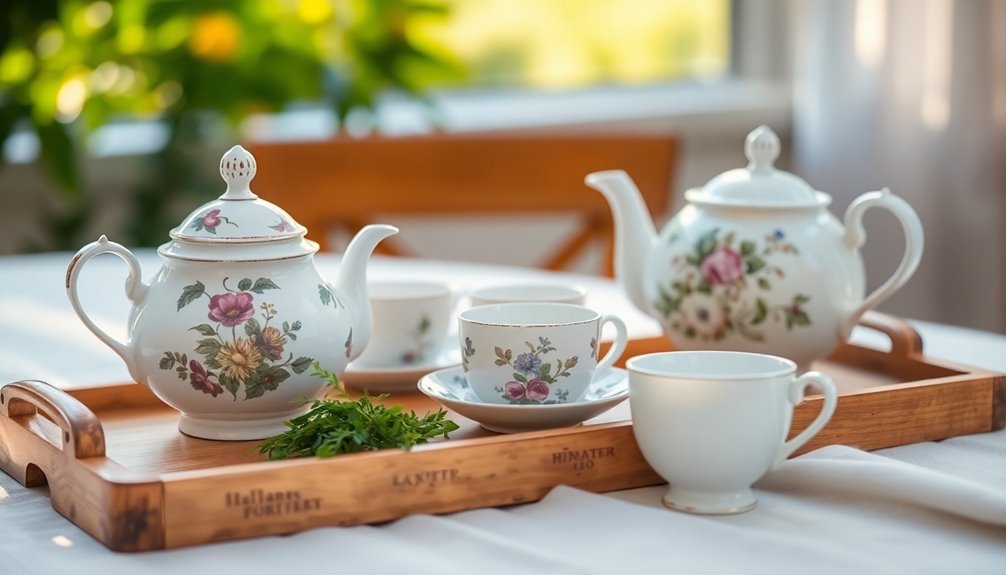
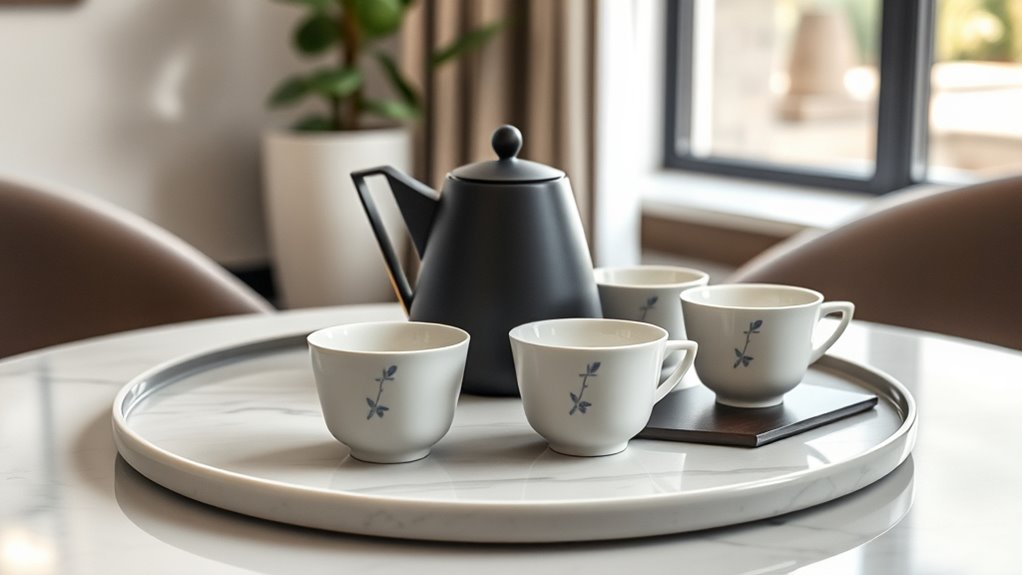
In contemporary settings, the focus shifts toward making tea serving accessible and enjoyable without sacrificing respect. You might use modern teapots with ergonomic handles or serve in stylish cups that reflect your personality. Yet, the core principles—such as offering the tea with both hands, maintaining a clean presentation, and expressing gratitude—remain intact. You can also adapt the rituals to suit informal gatherings, adding a touch of ceremony to everyday moments. For example, when hosting friends, you might still follow the traditional sequence of pouring and offering, but with more relaxed movements that emphasize warmth and friendliness. Additionally, understanding the cultural roots of these practices enhances your appreciation for the ritual and fosters mindfulness in your service.
Ultimately, understanding the origins of tea ceremony customs and regional serving styles allows you to serve tea with intention and grace. Whether you’re recreating a traditional ritual or putting a contemporary touch on it, respecting the cultural context enriches the experience. By blending historical significance with modern ease, you turn a simple act of pouring tea into a meaningful gesture of hospitality. This balance between tradition and adaptation enables you to enjoy tea not just as a beverage, but as a way to connect, honor customs, and create memorable moments.
Frequently Asked Questions
How Have Modern Tea Trends Influenced Traditional Etiquette?
Modern tea trends have reshaped traditional etiquette by making the tea ceremony more relaxed and accessible. You now often see casual serving protocols, like self-serve stations or informal gatherings, instead of strict rules. This shift encourages you to enjoy tea more freely, blending respect for tradition with contemporary comfort. While still appreciating the art of tea, you’re invited to personalize your experience, fostering a more inclusive and enjoyable atmosphere.
Are There Specific Etiquette Differences for Tea Served Digitally or Virtually?
Imagine hosting a virtual tea party where you guarantee good digital etiquette by muting your microphone when not speaking and maintaining eye contact with the camera. In virtual tea manners, you should also send a reminder to participants about punctuality and dress code. Digital etiquette emphasizes respectful communication, while virtual tea manners focus on maintaining a polite and engaging atmosphere. These adaptations help preserve the elegance of tea traditions online.
How Do Multicultural Influences Shape Contemporary Tea Serving Manners?
You see that multicultural influences shape contemporary tea serving manners through cultural fusion and global fusion, blending traditions from around the world. You might find yourself adopting Japanese whisking techniques alongside British scones or Chinese tea ceremonies, creating a unique experience. This fusion encourages openness and creativity, allowing you to appreciate diverse customs. Embracing these influences helps you enjoy tea moments that reflect global diversity while respecting each tradition’s significance.
What Are Eco-Friendly Practices in Modern Tea Serving Etiquette?
You can practice eco-friendly tea serving by using reusable utensils to minimize waste and opting for biodegradable packaging to reduce environmental impact. When serving tea, choose sustainable materials and encourage guests to reuse items or recycle properly. These small actions make a big difference, showing your commitment to sustainability. By incorporating these practices, you help protect the planet while enjoying your tea moments responsibly and stylishly.
How Does Social Media Impact Traditional Tea-Serving Customs?
You notice that 73% of tea enthusiasts share their tea moments on social media, which considerably impacts traditional tea-serving customs. Social media influence encourages more casual, visually appealing presentations, often prioritizing aesthetics over tradition. This shift fosters new digital etiquette, blending modern trends with classic practices. As a result, you might find yourself adapting to quicker, more photo-friendly tea rituals, balancing respect for tradition with the demands of online sharing.
Conclusion
Just like a perfectly brewed cup of tea, modern adaptations of tea serving etiquette bring harmony to our daily routines. Imagine sharing a pot with a friend, laughter bubbling just as hot water steeps the leaves—it’s about connection, ease, and respect. As more people embrace these new customs, they become the gentle stir that refreshes tradition without losing its warmth. Ultimately, adapting etiquette keeps our shared moments rich, comforting, and timeless—like every good cup of tea.