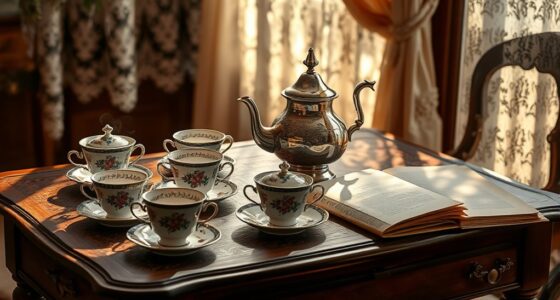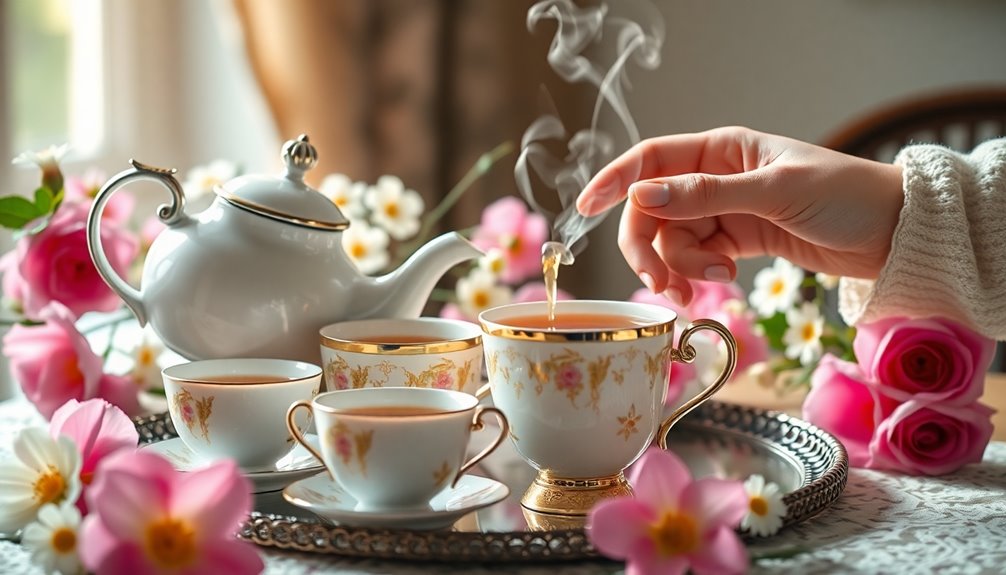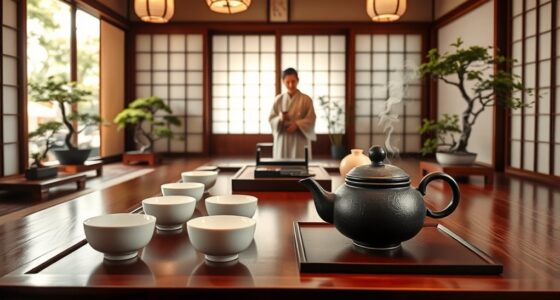
Tea serving etiquette has deep roots in various cultures, symbolizing respect, hospitality, and mindfulness. Over centuries, traditions like Chinese and Japanese ceremonies evolved, emphasizing careful pouring, humble handling, and symbolic gestures. These customs reflect core values such as reverence and patience, turning tea drinking into an art form. Understanding the history behind these rituals helps you appreciate their cultural significance and enriches your tea experience. Continue exploring to discover the meaningful gestures behind these timeless practices.
Key Takeaways
- Tea serving etiquette reflects centuries-old cultural values like respect, humility, and mindfulness across different societies.
- Traditional rituals, such as Chinese and Japanese tea ceremonies, emphasize deliberate gestures to symbolize harmony and reverence.
- Proper cup handling and pouring techniques demonstrate attentiveness and cultural understanding, deepening guest connections.
- These customs evolved to elevate tea drinking into an art form, embodying patience, humility, and reverence.
- Practicing tea etiquette fosters respect, mindfulness, and appreciation, enriching the social and cultural experience of tea drinking.
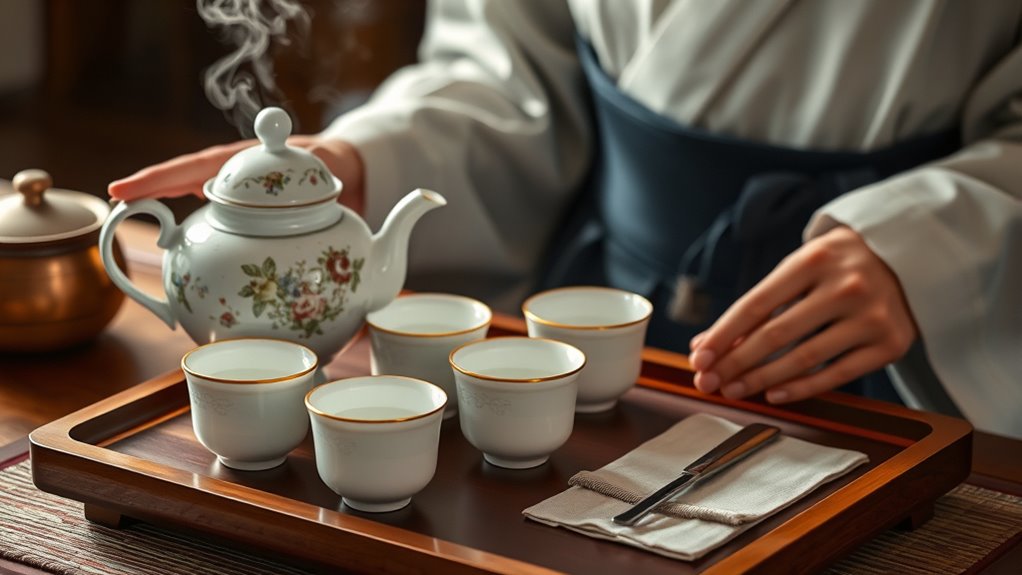
Serving tea properly is a sign of respect and hospitality that enhances the entire experience. When you understand the history and meaning behind tea serving etiquette, you not only honor tradition but also deepen your connection with those you serve. One of the most important aspects of this etiquette involves tea pouring customs, which vary across cultures but share a common goal: demonstrating care and respect. In many traditions, the way you handle the teapot, the gentle pace of pouring, and the positioning of cups all communicate your regard for your guests. For instance, in Chinese tea ceremonies, pouring the tea in a steady, controlled manner reflects discipline and mindfulness. Similarly, in Japanese ceremonial tea rituals, every movement is deliberate, emphasizing harmony and respect. These ceremonial tea rituals serve more than just the act of serving; they embody centuries of cultural values, emphasizing patience, humility, and reverence for tradition. Proper etiquette also involves understanding the significance of cup placement and handling, which further conveys your attentiveness and cultural awareness. Understanding the significance of tea pouring customs helps you appreciate the deeper meaning behind each gesture. In Chinese traditions, pouring tea with two hands signifies humility and respect, especially when serving elders or guests. The careful handling of the teapot and the attentive eye on the pour reinforce the importance of mindfulness during the ritual. In contrast, Western tea service often emphasizes the presentation and timing, where pouring from a slightly elevated height allows the tea to flow smoothly into cups, symbolizing generosity. These customs are not just about the act itself but also about creating a moment of connection. When you follow these rituals, you show that you value your guests’ comfort and cultural significance of the tea being served. Ceremonial tea rituals, whether elaborate or simple, are rooted in history and serve to elevate the act of drinking tea into an art form. They often involve specific steps, tools, and gestures, each carrying symbolic meaning. For example, in Japanese tea ceremonies, the precise movements of whisking, pouring, and serving are designed to cultivate harmony and mindfulness. These rituals remind you to slow down and appreciate the present moment, transforming a simple beverage into an experience of serenity and respect. When you participate in or observe these ceremonies, you’re engaging with a rich cultural heritage that highlights the importance of etiquette and intention. By understanding and practicing these customs, you not only honor tradition but also create a meaningful atmosphere where every sip becomes a gesture of respect, kindness, and shared appreciation.
Frequently Asked Questions
How Did Tea Serving Etiquette Originate Historically?
You might find that tea serving etiquette originated from the tea ceremony origins in ancient China, where respect, harmony, and mindfulness were essential. Historical influences from Zen Buddhism and Japanese culture shaped the formal rituals, emphasizing politeness and social harmony. Over time, these customs spread globally, evolving with regional traditions. Your awareness of these origins helps you appreciate the cultural significance behind every sip and gesture during tea service.
Are There Regional Differences in Tea Serving Customs?
You’ll notice regional customs and cultural variations shape tea serving customs worldwide. In Japan, you handle matcha with reverence and precise movements, while in Britain, you enjoy a casual afternoon tea with scones and clotted cream. In Morocco, mint tea is poured from high above to aerate it, reflecting hospitality. These differences highlight how local traditions influence etiquette, making each tea experience unique and culturally rich.
What Symbols Are Associated With Proper Tea Etiquette?
You’ll notice that proper tea etiquette uses subtle symbols like gentle serving gestures and respectful posture to convey politeness. The tea cup symbolizes hospitality and warmth, while the way you handle it reflects your respect. A delicate serving gesture shows consideration, and maintaining eye contact signifies connection. These symbols and gestures together communicate appreciation, creating a harmonious experience that honors tradition and fosters genuine hospitality in every sip you take.
How Has Modern Culture Influenced Traditional Tea Serving Manners?
Modern culture has markedly influenced traditional tea serving manners by blending casual social etiquette with the formalities of a tea ceremony. You now often enjoy tea in relaxed settings, where the emphasis shifts from strict rules to comfort and personal expression. While some traditional practices remain, you’re encouraged to adapt the tea ceremony to fit contemporary lifestyles, making it more accessible and inclusive without losing its cultural significance.
What Are Common Mistakes to Avoid When Serving Tea?
Avoid common mistakes like rushing the tea pouring process or mishandling utensils, which can disrupt the calm and grace of tea serving. You should handle utensils gently and steadily, showing respect for the tradition. Don’t overfill cups; too much tea can spill, ruining the moment. Remember, patience and mindfulness in your tea pouring and utensil handling demonstrate courtesy, creating a more enjoyable experience for everyone involved.
Conclusion
So, after all this talk about centuries-old customs and delicate gestures, it turns out the real art of tea isn’t in perfect manners but in simply enjoying the moment. Ironically, all those rules might just distract you from the simple pleasure of a warm cup. So go ahead, break a few etiquette rules—your tea might taste better when you’re relaxed and truly present. Sometimes, the best tradition is to just enjoy your tea your way.