Tea rituals go beyond just sipping a beverage; they reflect deep cultural values like mindfulness, respect, and community bonding. By paying attention to the precise movements and symbolism, you can appreciate how these practices foster inner calm and social connections. They serve as a way to preserve traditions and share stories across generations. If you stay curious, you’ll discover how these rituals truly enrich our understanding of human connection and cultural identity.

Get coffee and tea gear delivered free with Prime
- Fast, free delivery on millions of items
- Prime Video, Amazon Music and more included
- Member-only deals all year
Key Takeaways
- Tea rituals embody cultural identity, preserving traditions and stories across generations.
- They foster mindfulness, encouraging presence and inner calm through deliberate, symbolic movements.
- Tea practices promote social cohesion, respect, and hospitality within communities.
- Ritualized ceremonies deepen spiritual connections and reflect values like humility and reverence.
- Exploring these practices reveals their role in cultural preservation and enriching human understanding.

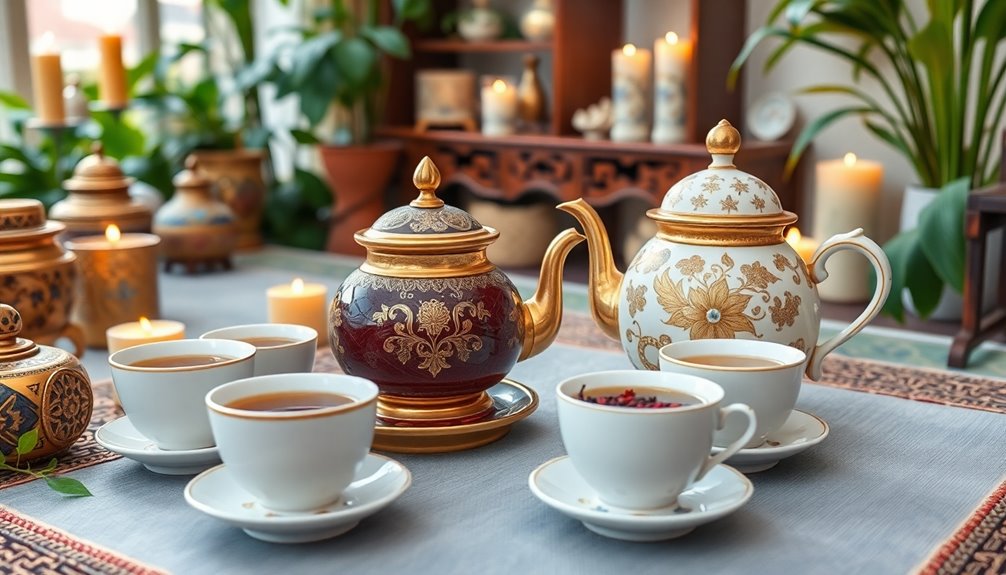
You might notice that in many cultures, tea ceremonies are highly ritualized, emphasizing mindfulness and presence. For example, in Japan, the traditional tea ceremony, or Chanoyu, involves precise movements, specific utensils, and a serene atmosphere. It’s a deliberate act of harmony between host and guest, emphasizing humility, purity, and tranquility. The cultural significance here goes beyond the beverage; it’s a way to cultivate inner calm and social cohesion. Similarly, in China, Gong Fu tea ceremonies focus on the skillful art of brewing and serving tea, emphasizing patience and mastery. These practices serve as a reflection of respect—toward the tea, the process, and those sharing it with you. Recognizing the cultural significance of these rituals helps deepen appreciation for their role in fostering community and preserving tradition. Understanding the cultural significance of tea ceremonies allows you to appreciate their role as more than simple routines. They’re symbols of identity, hospitality, and spiritual discipline. In many societies, hosting a tea ceremony is a sign of respect and goodwill, offering a space for meaningful conversation and reflection. The attention to detail in these practices demonstrates reverence for tradition and the importance of community bonds. Observing and participating in these rituals can also serve as a mindfulness practice, helping individuals connect with the present moment and find peace amidst daily life. Moreover, these rituals often involve a ritualized sequence that underscores their significance and helps foster a sense of discipline and reverence. Incorporating cultural traditions into daily life can enrich one’s understanding of human history and social values. For instance, the symbolic gestures performed during tea ceremonies convey respect and humility, adding to their spiritual depth. You begin to see tea rituals as a form of storytelling, where every movement and utensil tells a story about the people and their history.
As an affiliate, we earn on qualifying purchases.
Frequently Asked Questions
How Do Tea Rituals Differ Across Cultures?
You’ll notice that tea rituals differ across cultures through their unique cultural symbolism and ritual significance. In Japan, the tea ceremony emphasizes mindfulness and harmony, while in Britain, afternoon tea highlights social connection and elegance. Chinese tea practices focus on respect and tradition, whereas Moroccan mint tea involves hospitality and warmth. These variations reflect each culture’s values, making exploring tea rituals a fascinating way to understand diverse traditions.
What Are the Health Benefits of Traditional Tea Practices?
Sipping tea is like opening a treasure chest of health benefits. As you indulge in traditional practices, you harness tea leaf antioxidants that boost your immune system and combat aging. Herbal infusion benefits go beyond relaxation—they improve digestion and reduce stress. The ritual’s symbolism nurtures your mind and body, turning each cup into a mindful act of self-care. Embrace these practices to enhance your well-being naturally.
How Can I Incorporate Tea Rituals Into Daily Life?
You can incorporate tea rituals into your daily life by setting aside a quiet moment for tea meditation, focusing on your breath and the warmth of the cup. Experiment with flavor pairing by matching teas with complementary snacks or herbs, enhancing your sensory experience. Make it a habit to slow down, savor each sip, and create a peaceful routine that nurtures your well-being and deepens your appreciation for tea.
What Equipment Is Essential for Authentic Tea Ceremonies?
Think of your tea ceremony as a dance—every move needs the right partner. Crucial equipment includes tea accessories like a teapot, cups, and a tea strainer, which help you perfect your brewing techniques. A kettle for boiling water and a tea scoop also play indispensable roles. With these tools, you create an authentic experience, turning simple tea into a mindful ritual that soothes and inspires.
Are There Specific Etiquette Rules for Different Tea Traditions?
Yes, there are specific etiquette rules for different tea traditions. You should follow tea etiquette and cultural manners carefully, as they reflect respect for the tradition. For example, in Japanese tea ceremonies, you’ll bow and handle utensils gently, while in British tea customs, you should hold the cup properly and use the saucer. Respectful behavior enhances the experience and shows appreciation for each unique cultural practice.
Conclusion
By embracing tea rituals and practices, you open yourself to a world as calming and intricate as a delicate lacework. These traditions aren’t just about drinking tea—they’re about slowing down, connecting, and appreciating the small moments. When you pay closer attention, you see the beauty in every sip, transforming a simple act into a mindful experience. Like a gentle stream flowing steadily, these rituals remind you to find serenity in everyday life.
Halloween Picks
halloween
As an affiliate, we earn on qualifying purchases.