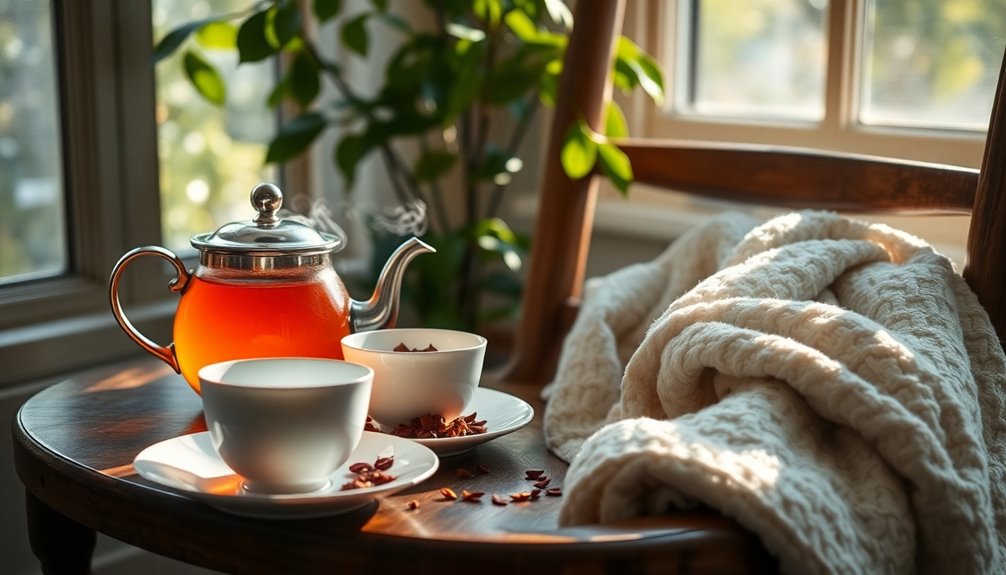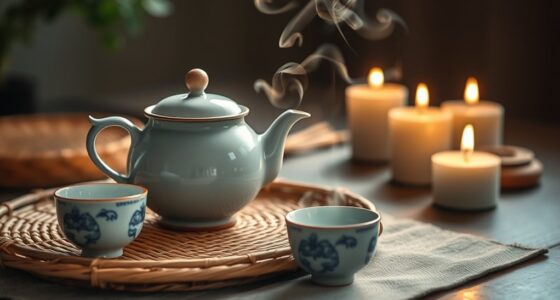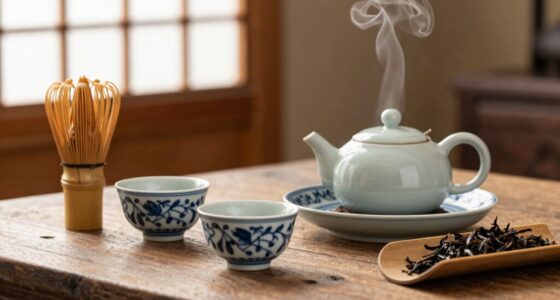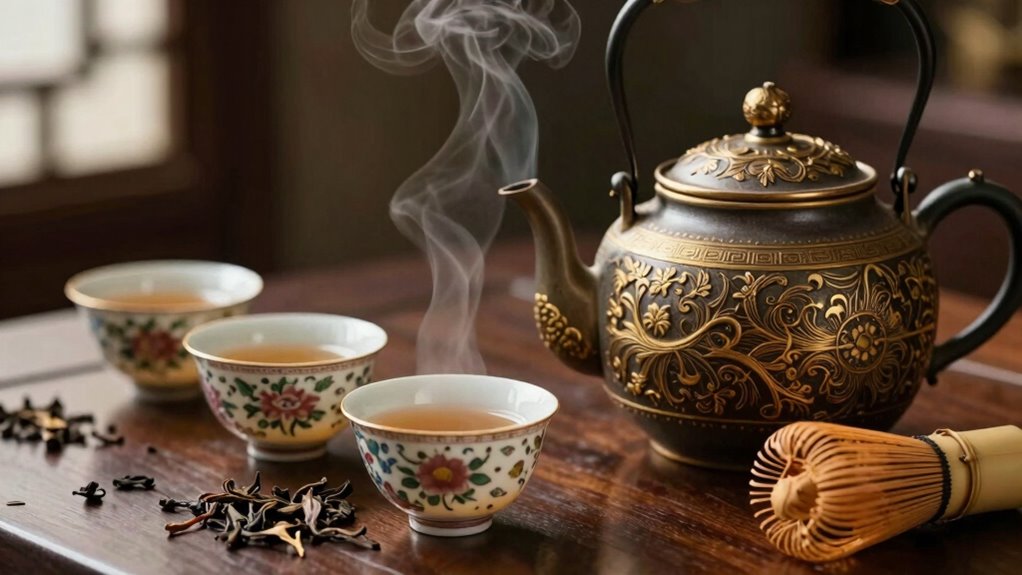
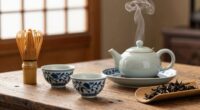
Tea rituals are rich cultural practices that show how societies value respect, harmony, and mindfulness. They often reflect deeper beliefs, philosophies, and identities through carefully chosen movements and utensils. Whether it’s Japan’s Zen-inspired ceremonies or China’s craftsmanship-focused Gongfu style, each practice tells a unique story of tradition, spirituality, and community. To uncover the fascinating history behind these customs and what they reveal about cultural values, there’s more to discover ahead.

Get coffee and tea gear delivered free with Prime
- Fast, free delivery on millions of items
- Prime Video, Amazon Music and more included
- Member-only deals all year
Key Takeaways
- Tea rituals symbolize cultural values like respect, harmony, and mindfulness, reflecting deeper spiritual and societal meanings.
- Variations in practices—such as Japanese, Chinese, and British traditions—highlight different cultural identities and philosophies.
- Rituals serve as storytelling tools, preserving history and fostering community through shared customs and gestures.
- Symbolism in tea practices embodies philosophical ideas like mindfulness, respect, and natural harmony.
- Participating in tea rituals promotes cultural continuity, environmental awareness, and universal human connection.

Have you ever wondered what makes tea rituals so meaningful across different cultures? It’s not just about drinking tea; it’s about the deeper significance that each tradition holds. Tea ceremonies are rich with symbolism, each movement and utensil carefully chosen to reflect values like respect, harmony, and mindfulness. For example, in Japan, the tea ceremony—known as Chanoyu—embodies Zen principles, emphasizing simplicity, tranquility, and the appreciation of beauty in the mundane. The way you prepare and serve the tea isn’t random; it’s a deliberate act that invites you to be present in the moment. Each gesture, from whisking the powdered tea to pouring it into cups, carries symbolic weight, representing a connection between the host and guest, the natural world, and spiritual awareness.
Cultural influences shape these rituals profoundly, molding their form and meaning. In China, the Gongfu tea ceremony emphasizes precision and skill, reflecting a deep respect for craftsmanship and patience. The process involves multiple infusions of high-quality leaves, each brewed with care, symbolizing patience and the pursuit of perfection. Meanwhile, in Britain, afternoon tea is more social and leisurely, influenced by Victorian ideals of civility and etiquette. The focus here is on creating a relaxed environment where conversation and elegance flourish. These differences highlight how cultural values influence the way people interact with tea and what they seek to express through their rituals. The tradition of tea acts as a tangible link to history, preserving cultural identity across generations. Additionally, these rituals often incorporate environmental awareness, emphasizing sustainability and respect for the natural resources involved in tea production.
Across all these traditions, the act of preparing and sharing tea becomes a vessel for cultural storytelling. It’s a way to preserve history, pass down values, and strengthen community bonds. Whether it’s the meticulous movements of a Japanese tea master or the convivial clinking of cups during a British tea party, each practice is a reflection of the society’s worldview. Tea ceremony symbolism often extends beyond the physical act to embody larger philosophical ideas. In many cultures, it’s about fostering mindfulness, showing respect to others, and finding harmony amidst chaos. These rituals serve as a reminder that tea is more than a beverage—it’s a cultural artifact that connects generations and offers a window into the soul of a community. Additionally, understanding how cultural influences shape these practices can deepen appreciation and respect for diverse traditions. Recognizing the symbolism in rituals enhances our understanding of their significance and the values they convey.
Furthermore, exploring these ritualistic elements can reveal how societies use tea as a form of cultural identity and continuity. In essence, understanding the meanings behind these rituals reveals the universal human desire for connection, meaning, and serenity. As you participate in or observe these practices, you gain insight into the values that shape different societies, making every cup of tea a small but powerful act of cultural expression.
As an affiliate, we earn on qualifying purchases.
Frequently Asked Questions
How Did Tea Rituals Originate Historically?
You might find that tea rituals originated in ancient China, where they served as a form of meditation and social bonding. Over time, these ceremonies incorporated symbolism, emphasizing harmony and respect. As tea spread, cultural tea etiquette developed, reflecting local values and traditions. You can see these practices in Japanese tea ceremonies or British afternoon teas, where each step and gesture carries deeper meaning, showcasing respect and mindfulness through ritualized actions.
Are There Regional Differences in Tea Preparation Methods?
You’ll notice regional differences in tea preparation methods, influenced by local customs and etiquette. For example, in China, you might use a gaiwan and focus on aroma, while in Britain, a teapot and strong brew are common. About 80% of tea-drinking cultures include unique tea accessories tailored to their traditions. These regional etiquettes shape the way you prepare and enjoy tea, making each experience distinct and culturally rich.
What Symbolic Meanings Are Associated With Tea Ceremonies?
You’ll find that tea ceremonies carry deep symbolic meanings and cultural significance. Tea symbolism often represents harmony, respect, purity, and tranquility, reflecting core values of the culture. When you participate in a tea ceremony, you’re not just brewing tea; you’re engaging in a ritual that honors tradition, fosters mindfulness, and strengthens social bonds. These practices embody a respect for history, nature, and community, making each sip a meaningful experience.
How Have Modern Lifestyles Influenced Traditional Tea Practices?
You’ll notice that nearly 60% of people now enjoy tea in quick, informal settings. Contemporary adaptations and urban influences have shaped modern tea practices, making them more casual and accessible. People prefer quick brews at work or social gatherings, often skipping traditional rituals. This shift reflects busy lifestyles, but many still cherish the cultural essence. You can find a blend of tradition and modernity in today’s tea rituals, adapting to fast-paced urban life.
Are There Health Benefits Linked to Specific Tea Rituals?
Yes, there are health benefits linked to specific tea rituals. When you practice tea mindfulness, you focus on the present moment, reducing stress and enhancing mental clarity. Ceremonial etiquette encourages slow, deliberate movements that promote relaxation and improve digestion. These rituals help you develop a deeper connection with your tea, fostering calmness and well-being. Engaging in these practices can positively influence your mental and physical health over time.
Conclusion
As you explore tea rituals, remember they’re more than just rituals; they’re bridges connecting you to centuries of tradition and mindfulness. Each sip is like a whisper from history, inviting you to slow down and savor life’s simple pleasures. Embrace these practices as a gentle dance between past and present, where every cup becomes a vessel for peace and reflection. In the end, tea is your quiet companion, guiding you through the maze of modern life with timeless grace.
Halloween Picks
halloween
As an affiliate, we earn on qualifying purchases.