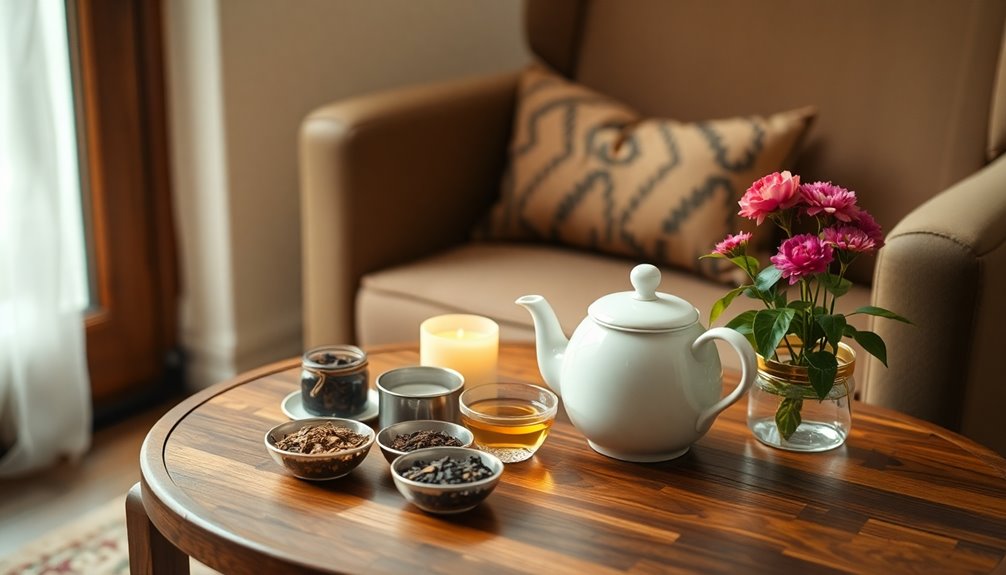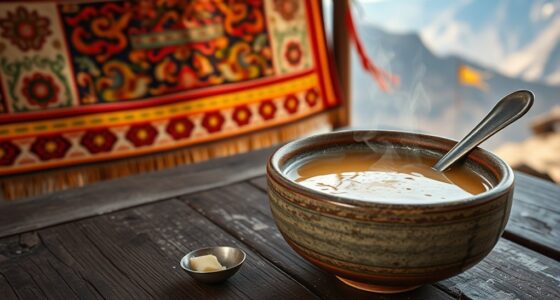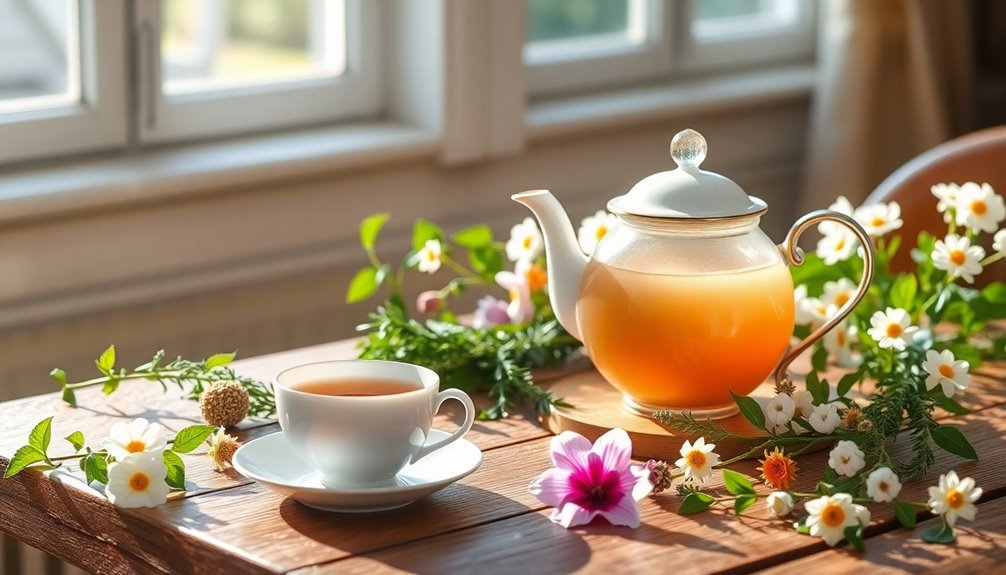
Tea rituals and practices greatly influence modern tea culture by emphasizing mindfulness, respect, and tradition in every cup. You’re encouraged to embrace carefully choreographed steps, use traditional utensils, and control details like water temperature. These rituals turn daily tea drinking into a calming, meditative act that connects you to cultural roots. By exploring more, you’ll discover how these ancient customs continue to shape contemporary tea experiences and deepen your appreciation for this timeless tradition.

Get coffee and tea gear delivered free with Prime
- Fast, free delivery on millions of items
- Prime Video, Amazon Music and more included
- Member-only deals all year
Key Takeaways
- Traditional tea rituals promote mindfulness and intentionality in modern tea practices, enhancing the overall experience.
- Use of authentic utensils and techniques preserves cultural heritage while elevating contemporary tea preparation.
- Rituals foster reflection, patience, and appreciation, influencing modern tea culture’s emphasis on mindfulness and presence.
- Aesthetic elements from traditional ceremonies create calming environments that deepen the cultural significance of tea.
- The preservation and adaptation of rituals strengthen cultural identity and continuity within contemporary tea communities.
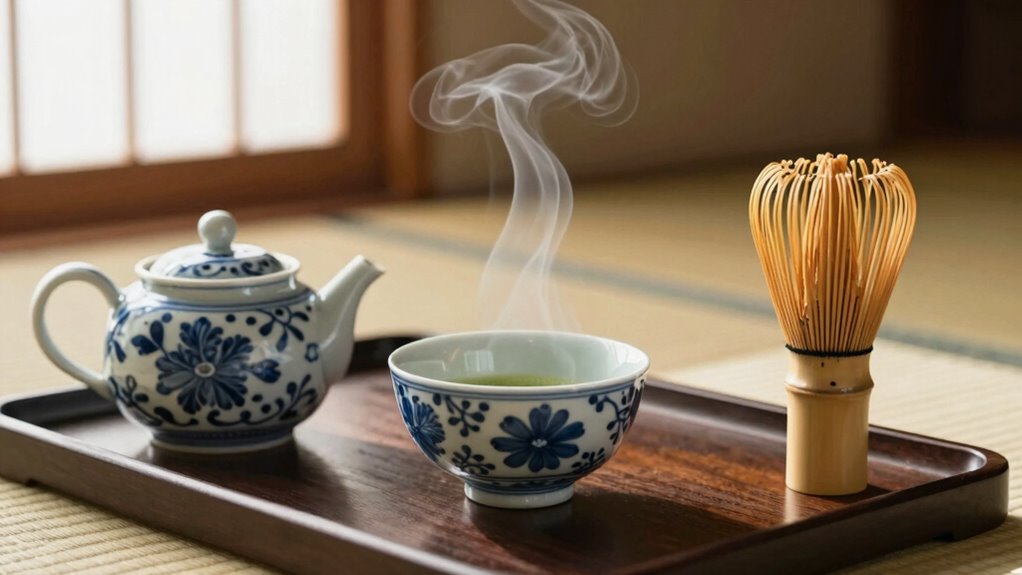
Have you ever wondered why tea ceremonies hold such significance across different cultures? It’s because these rituals go beyond simply making a hot drink—they embody respect, mindfulness, and a deep connection to tradition. At the heart of many tea cultures is the tea ceremony, a carefully choreographed event where every movement and utensil has meaning. This emphasis on cultural preservation helps maintain the integrity and authenticity of traditional practices in modern times. This preservation often involves the use of traditional utensils, which are designed to enhance both the aesthetic and functional aspects of the ritual. This tradition influences modern tea practices by emphasizing the importance of mindful brewing techniques, which can transform a simple act into a moment of reflection and appreciation. When you follow a traditional tea ceremony, you learn to slow down and focus on each step, from selecting the quality leaves to pouring the perfect cup. These brewing techniques are more than just practical skills; they are a form of art that cultivates patience and presence.
In contemporary tea culture, many people adopt elements of these rituals, blending them with their busy lives. Whether you’re preparing matcha in Japan or brewing loose leaf tea in the West, the influence of traditional practices encourages you to be deliberate in your actions. You might preheat your teapot, measure your leaves carefully, or pay attention to water temperature—all aspects rooted in age-old techniques. These practices serve to enhance the flavor and aroma of the tea, but they also serve as a reminder to cherish the present moment. The ceremonial approach to tea encourages mindfulness, turning an everyday activity into a meditative experience. As you engage in these brewing techniques, you’re participating in a centuries-old tradition that emphasizes harmony, respect, and tranquility. Moreover, understanding the cultural significance behind these rituals can deepen your appreciation and connection to the practice.
Furthermore, modern tea culture often borrows from the aesthetics of traditional ceremonies, creating a visually pleasing and calming environment. The use of specific utensils, like a tea scoop or whisk, reflects an appreciation for craftsmanship and ritual. These small details elevate your tea-drinking experience, connecting you to the cultural roots of the practice. Even as you adapt these rituals to suit your lifestyle, the core principles remain intact—fostering respect for the ingredients, the process, and yourself. Incorporating traditional rituals into your routine can deepen your appreciation for tea and its cultural significance. Ultimately, the influence of tea ceremonies and their intricate brewing techniques continues to shape how we view and enjoy tea today. It’s about more than a beverage; it’s about honoring tradition while transforming a simple act into a meaningful moment of connection.
traditional tea ceremony utensils
As an affiliate, we earn on qualifying purchases.
As an affiliate, we earn on qualifying purchases.
Frequently Asked Questions
How Do Ancient Tea Rituals Vary Across Different Cultures?
You’ll notice that ancient tea rituals vary greatly across cultures due to cultural diversity. In Japan, the tea ceremony emphasizes ritual significance, focusing on harmony and respect through precise movements. In China, Gongfu tea involves intricate techniques highlighting craftsmanship. Meanwhile, in Morocco, mint tea is a symbol of hospitality. These differences show how each culture’s unique values and traditions shape their tea practices, enriching the global tea experience.
What Are the Health Benefits of Traditional Tea Ceremonies?
Sure, traditional tea ceremonies might seem like over-the-top mindfulness exercises, but they actually boost your health. You get to practice tea mindfulness, which reduces stress, improves focus, and promotes relaxation. The ceremonial mindfulness involved helps lower blood pressure and enhances digestion. So, next time you indulge in a ritual, know you’re not just sipping tea—you’re nurturing your body and mind, one elegant cup at a time.
How Have Modern Innovations Changed Traditional Tea Practices?
Modern innovations like innovative brewing techniques and tea customization have transformed traditional tea practices. You now experiment with new methods, such as cold brewing or using high-tech gadgets, making the experience more personalized and convenient. These changes allow you to tailor flavors to your preferences and enjoy tea in diverse ways. As a result, traditional rituals adapt to fit contemporary lifestyles, blending history with innovation, and creating a more dynamic, engaging tea culture.
What Role Does Etiquette Play in Contemporary Tea Culture?
You’ll find that tea etiquette plays a essential role in contemporary tea culture, with about 75% of tea drinkers valuing proper manners during gatherings. Cultural manners shape how you prepare, serve, and enjoy tea, fostering respect and mindfulness. By following these customs, you show appreciation for tradition and create a welcoming atmosphere, making your tea experience more meaningful and connecting you to a broader cultural heritage.
How Do Regional Ingredients Influence Modern Tea Rituals?
You see regional ingredients shaping modern tea rituals through regional flavors and ingredient diversity. When you explore different areas, you notice how local herbs, fruits, and spices influence brewing techniques and flavor profiles. These regional ingredients add unique cultural touches, inviting you to appreciate diverse traditions. They make your tea experience more vibrant and personalized, connecting you deeply with local customs and enhancing your appreciation of the global tea landscape.
Conclusion
You might be surprised to learn that over 70% of tea drinkers worldwide participate in traditional rituals, showing how these practices shape modern tea culture. By embracing these customs, you connect with centuries of tradition, adding depth to your experience. Whether you’re brewing a cup mindfully or sharing a ceremony with friends, these rituals enrich your appreciation of tea’s history and significance. So next time you sip, remember—you’re part of a vibrant, centuries-old tradition.
Fall Picks
fall essentials
As an affiliate, we earn on qualifying purchases.