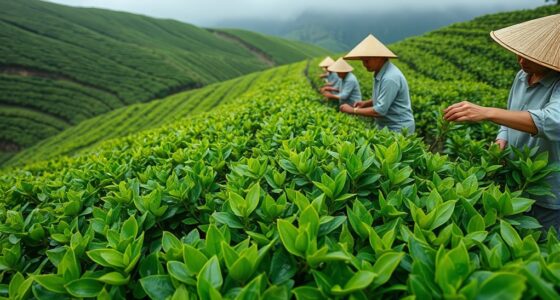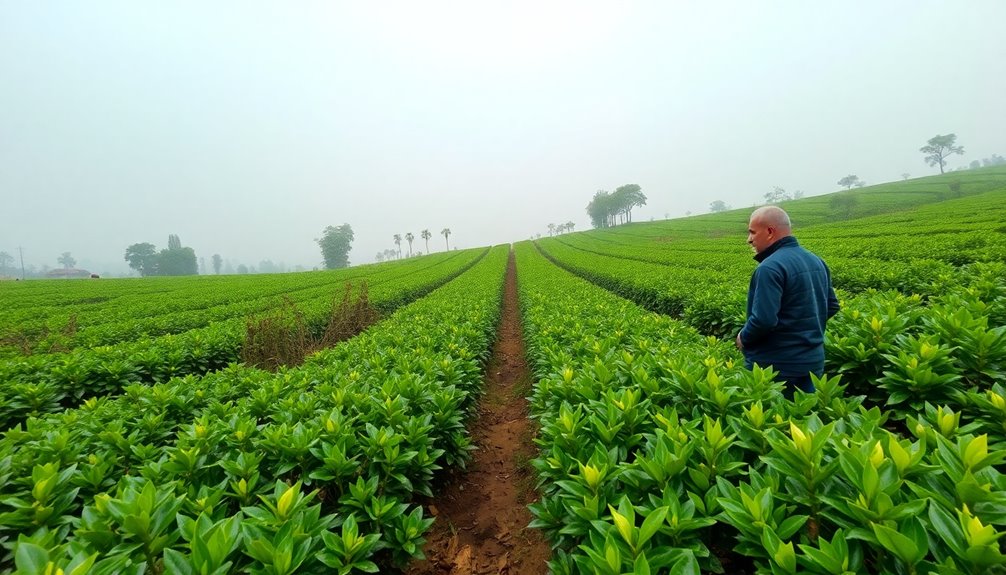

Regulations on tea production and harvesting guarantee you’re following safety, environmental, and labor standards. They require you to adopt sustainable farming practices, manage waste responsibly, and protect workers’ rights. These rules can influence your methods and demand regular audits, but they also open doors to premium markets and boost your brand’s credibility. Understanding these impacts helps you stay compliant and competitive—keep exploring to see how these regulations shape your tea business.
Key Takeaways
- Regulations enforce sustainable farming practices, reducing environmental harm and promoting soil and ecosystem health.
- Compliance requirements influence harvest timing, methods, and documentation, ensuring safety and quality standards.
- Certification processes open access to premium markets, boosting product reputation and consumer trust.
- Regular inspections and audits promote transparency, accountability, and adherence to labor and environmental standards.
- Meeting regulatory standards helps avoid penalties, ensures legal compliance, and supports long-term business sustainability.

Regulations play a crucial role in shaping tea production by setting standards that guarantee quality, safety, and sustainability. If you’re involved in growing or harvesting tea, you’ll quickly realize how these rules influence every aspect of your work, from cultivation to the final product. One of the key regulations you need to pay attention to is organic certification. Achieving this status means your tea meets strict standards for avoiding synthetic pesticides, fertilizers, and genetically modified organisms. It’s not just about market appeal; it’s about ensuring your tea is safe for consumers and environmentally friendly. Organic certification requires rigorous documentation and regular inspections, which might seem demanding at first, but it’s a mark of quality that can open doors to premium markets. It also pushes you to adopt more sustainable farming practices that minimize harm to the soil and local ecosystems, aligning your production with global sustainability goals.
Labor compliance is another critical aspect influenced by regulations. You need to ensure that your labor practices adhere to local and international standards, which protect workers’ rights and promote fair treatment. This means providing safe working conditions, fair wages, and reasonable working hours. For you, maintaining labor compliance isn’t just about avoiding penalties; it’s about fostering a responsible, ethical environment that can improve worker morale and productivity. Governments and industry bodies often conduct inspections to verify compliance, and failing to meet these standards can result in fines or loss of certification. Staying ahead of these requirements requires continuous monitoring and training, but it ultimately helps build a trustworthy reputation for your tea.
Regulatory frameworks also extend to environmental practices, controlling how waste is managed and water resources are used during cultivation and processing. These regulations aim to reduce pollution and conserve natural resources, which is essential if you want your tea to meet the expectations of eco-conscious consumers. By adhering to these standards, you demonstrate your commitment to responsible production, which can markedly boost your brand’s credibility.
Frequently Asked Questions
How Do Regulations Influence Tea Farmers’ Income?
Regulations directly influence your income by affecting market access and price stability. When rules are strict, you might face limited markets or higher compliance costs, reducing your earnings. Conversely, clear regulations can enhance market access and ensure fair prices, boosting your income. Stable regulations help you plan better and maintain consistent harvests, which ultimately lead to more reliable income streams. Staying informed about regulations helps you adapt and maximize your earnings.
What Are the Environmental Impacts of Tea Regulations?
Like a guardian of the rainforest, tea regulations promote sustainable farming practices and biodiversity conservation. You’ll notice fewer environmental harms, as stricter guidelines reduce chemical runoff and habitat destruction. These regulations encourage farmers to adopt eco-friendly methods, helping preserve local ecosystems. By balancing production with environmental health, regulations serve as a safeguard, ensuring tea cultivation coexists harmoniously with nature, much like a well-tended garden that flourishes without harming its surroundings.
How Do Regulations Affect Organic Tea Certification?
Regulations directly influence organic tea certification by setting strict standards that you must meet, ensuring your tea is truly organic. These certification standards require you to follow specific farming practices, which can increase your compliance costs. While the process might seem demanding, adhering to these regulations guarantees quality and helps you access premium markets. Staying compliant may be challenging, but it ultimately benefits your reputation and consumer trust in your organic tea products.
Are Small-Scale Producers Impacted Differently by Regulations?
Yes, small-scale producers face unique challenges with regulations. You might struggle with regulatory compliance because limited resources make it harder to meet all requirements. Small scale challenges include understanding complex rules and affording certification costs. These obstacles can slow your ability to access markets or obtain organic certification, ultimately affecting your competitiveness. Staying informed and seeking support can help you navigate these regulations more effectively, ensuring your tea production remains compliant and sustainable.
What Are the Future Regulatory Trends in Tea Industry?
You’ll likely see future regulations in the tea industry focusing on sustainability and transparency, driven by evolving consumer preferences favoring ethically sourced products. As global trade continues to grow, expect stricter standards on pesticide use, fair labor practices, and eco-friendly packaging. These changes aim to meet consumer demands and guarantee compliance across borders, shaping how tea producers operate worldwide. Staying adaptable will help you navigate these upcoming regulatory shifts effectively.
Conclusion
As you navigate these regulations, remember they are the roots anchoring the future of tea. Just as a deep-rooted tree withstands storms, your adherence preserves tradition and growth. Each rule is a leaf, fragile yet essential, symbolizing balance between progress and preservation. Embrace these changes, for they nourish your craft like sunlight to a sapling. Ultimately, your dedication becomes the enduring branch, shaping a legacy that stands tall through time’s seasons.