
You might not realize how much precision and timing go into making your favorite teas. Proper harvesting—selecting just the right leaves at the right time—greatly influences flavor and aroma. Skilled techniques guarantee high-quality batches, highlighting regional practices and seasonal changes. Together, these factors shape the taste you enjoy. If you keep exploring, you’ll discover how these detailed steps contribute to crafting exceptional tea and why understanding them makes a real difference.

Get coffee and tea gear delivered free with Prime
- Fast, free delivery on millions of items
- Prime Video, Amazon Music and more included
- Member-only deals all year
Key Takeaways
- Harvesting directly impacts tea flavor, aroma, and overall quality, making it essential to understand for premium products.
- Skilled plucking techniques ensure only the best leaves are harvested, enhancing taste and aroma.
- Seasonal variations influence leaf chemical composition, requiring careful timing for optimal quality.
- Regional harvesting practices affect flavor profiles and quality, highlighting the importance of tailored techniques.
- Proper harvesting reflects craftsmanship, crucial for producing high-quality, distinctive teas.

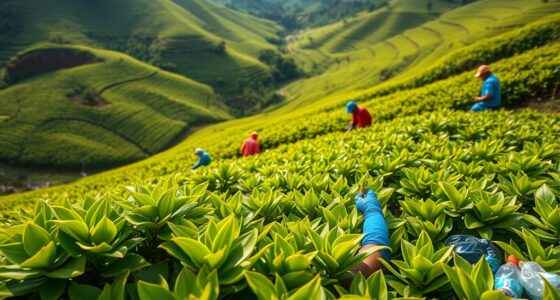
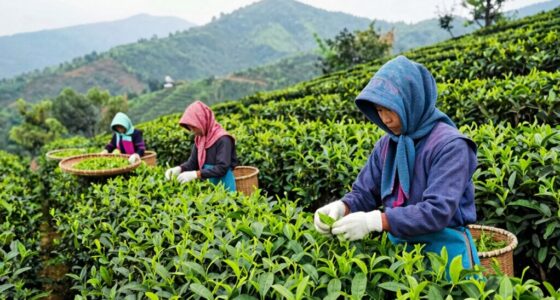
Tea production begins with careful harvesting, a process that directly influences the quality of the final product. The way you pick the tea leaves, known as tea leaf plucking techniques, plays a vital role in guaranteeing the tea’s flavor, aroma, and overall quality. Skilled pluckers usually select only the tender, young leaves and buds, which contain the highest concentration of flavors. This selective harvesting helps produce high-grade teas, while careless or over-harvesting can lead to lower quality leaves that compromise the taste. Different regions and tea types may require specific plucking methods, but the goal remains the same: to harvest only the best leaves at the right time. Additionally, understanding the harvesting process and how it varies with regional practices can further enhance the quality control in tea production. Recognizing regional differences in harvesting techniques can help producers adapt to local conditions and improve overall quality. Understanding harvesting seasonal variations is equally important. The season in which you harvest impacts the tea’s characteristics profoundly. During spring, for instance, the leaves tend to be more delicate and flavorful, resulting in fresher, more nuanced teas. Autumn harvests, on the other hand, often produce teas with a richer, more robust profile. The climate, rainfall, and temperature fluctuations across seasons influence leaf growth and chemical composition. As a tea producer, you need to adjust your harvesting schedule to match these variations, making sure you capture the best leaves at their peak quality. Timing your harvest during the ideal season can make a noticeable difference in the final flavor and aroma.
Careful plucking of tender leaves ensures high-quality tea with rich flavor and aroma.
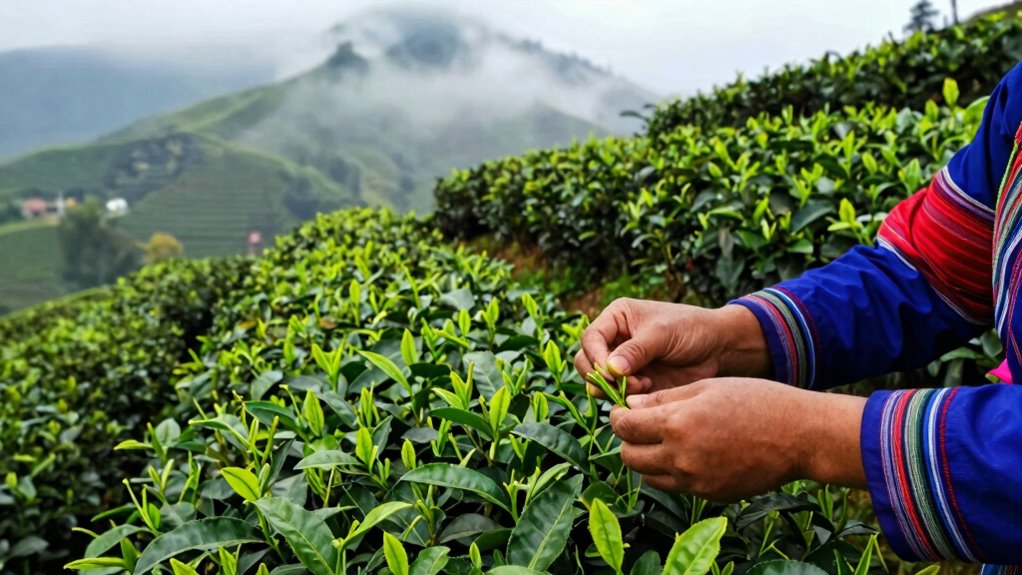
The process of harvesting is more than just collecting leaves; it’s a delicate art that requires precision and experience. When you understand the nuances of tea leaf plucking techniques, you can better control the quality of your product. For instance, plucking only the top two leaves and a bud is a common technique for high-quality teas, but it requires skill to avoid damaging the plant or pulling too many leaves. Similarly, being aware of seasonal variations helps you plan your harvests to maximize flavor and aroma, rather than merely gathering leaves randomly. This knowledge ultimately leads to a better cup of tea, one that reflects the care, effort, and expertise invested in its production.
In essence, paying close attention to how and when you harvest your tea leaves isn’t just about tradition; it’s about crafting an exquisite product. The techniques you choose and the seasonal timing you follow shape the very foundation of good tea. By mastering these aspects, you guarantee that each batch you produce is of the highest quality, with flavor profiles that can stand out in a crowded market. It’s a meticulous process, but one that’s well worth your effort, because great tea starts with great harvesting.
high quality tea leaf plucking scissors
As an affiliate, we earn on qualifying purchases.
As an affiliate, we earn on qualifying purchases.
Frequently Asked Questions
How Does Climate Change Affect Tea Cultivation?
Climate change impacts tea cultivation by disrupting ideal growing conditions, forcing you to contemplate climate adaptation strategies. Rising temperatures and unpredictable weather can stress tea plants, reducing yields and quality. You also need to address pest resilience, as warmer climates encourage pests that threaten crops. By implementing climate-smart practices, you can help guarantee sustainable tea production, safeguarding livelihoods and maintaining the quality of your tea amidst changing environmental conditions.
What Are the Labor Conditions for Tea Harvesters?
You’ll find that tea harvesters often face tough labor conditions, with many working long hours in challenging environments. Despite their hard work, they usually don’t receive fair wages, and worker safety can be overlooked, risking injuries and health issues. It’s essential to advocate for better treatment, ensuring fair wages and improved safety measures, so these workers can earn a decent living and work in healthier, safer conditions.
Which Countries Are the Top Tea Producers Globally?
You’ll find China, India, Kenya, and Sri Lanka leading the list of top tea producers globally. These countries cultivate countless tea plant varieties using clever cultivation techniques, creating countless cups of tea daily. Picture lush landscapes where leaves are carefully harvested, showcasing a symphony of skill and sustainability. Their dedication to diverse tea plant varieties and innovative cultivation techniques turns tiny tea leaves into treasured beverages enjoyed worldwide.
How Does Organic Tea Differ From Conventional Tea?
Organic tea differs from conventional tea because it’s grown through organic farming practices that avoid synthetic chemicals and pesticides. You’ll notice that organic tea has fewer chemical residues, making it a healthier choice. Conventional teas often contain traces of pesticides used during cultivation. By choosing organic, you support sustainable farming methods and enjoy a beverage free from potentially harmful chemical residues, promoting better health and environmental benefits.
What Innovations Are Improving Tea Harvesting Efficiency?
Did you know that automated plucking can boost harvest efficiency by up to 30%? You’ll find innovations like automated plucking machines and drone monitoring transforming tea harvesting. Automated plucking reduces labor costs and speeds up collection, while drones help farmers monitor crop health and ripeness from the sky. These advancements allow for more precise, faster harvesting, ensuring better quality tea and increased productivity for farmers worldwide.
Conclusion
So, next time you sip your tea, remember it’s more than just a drink—it’s a story of careful harvesting and dedicated workers. Sometimes, it’s funny how a simple cup can connect you to distant fields and seasons you’ve never seen. Like finding a forgotten note in an old book, appreciating tea’s journey makes every sip richer. So, take a moment to truly enjoy it, knowing the effort behind each fragrant, soothing cup.
Fall Picks
fall essentials
As an affiliate, we earn on qualifying purchases.