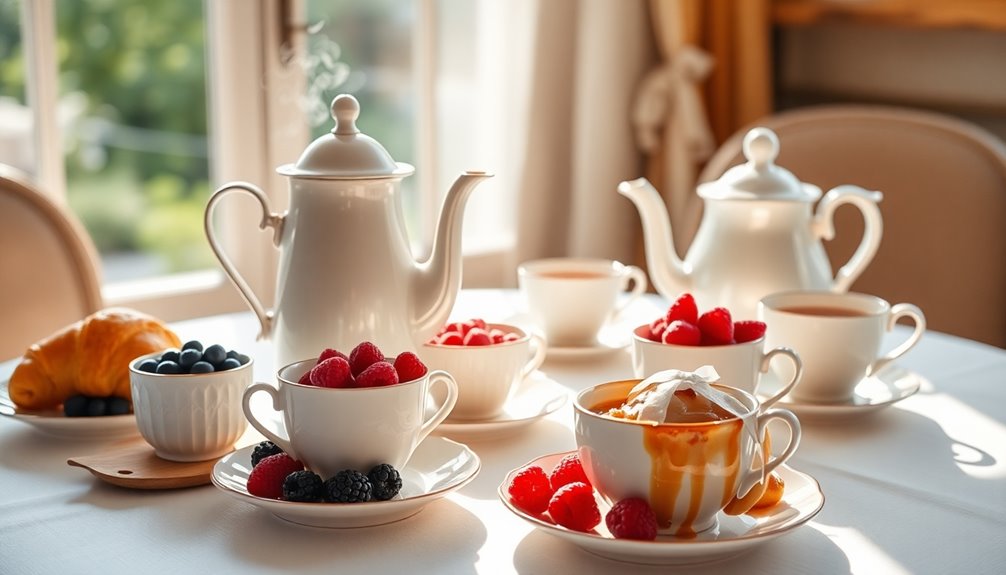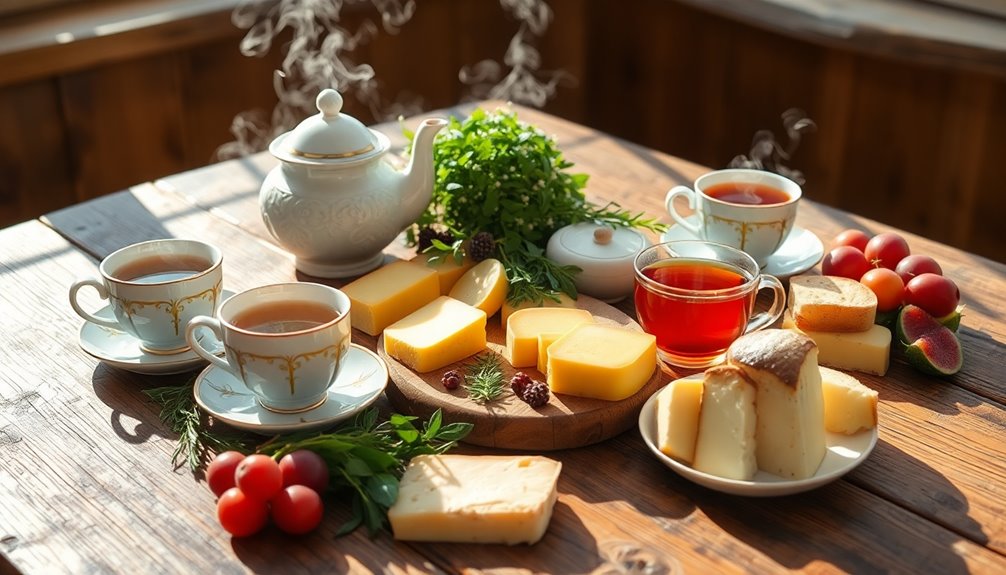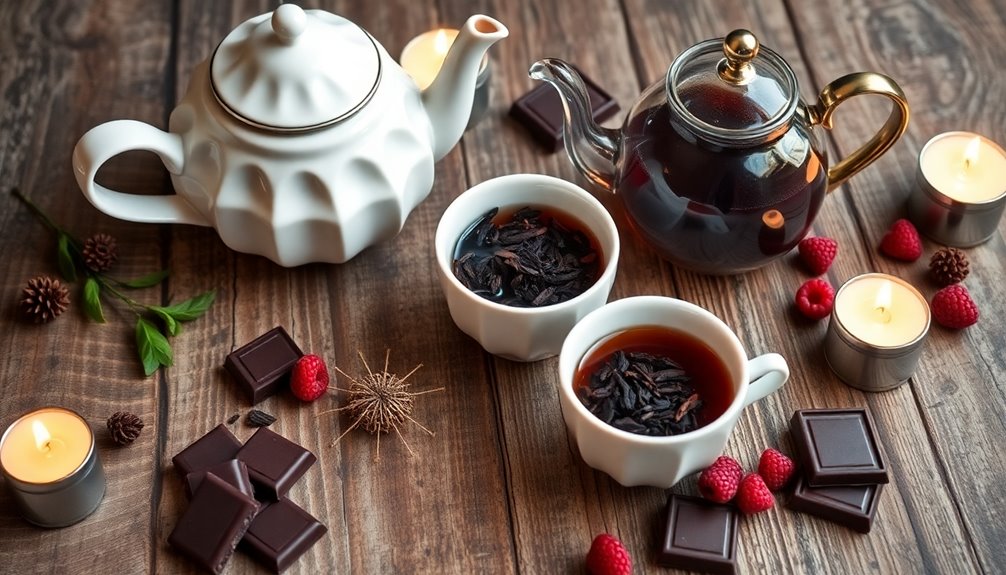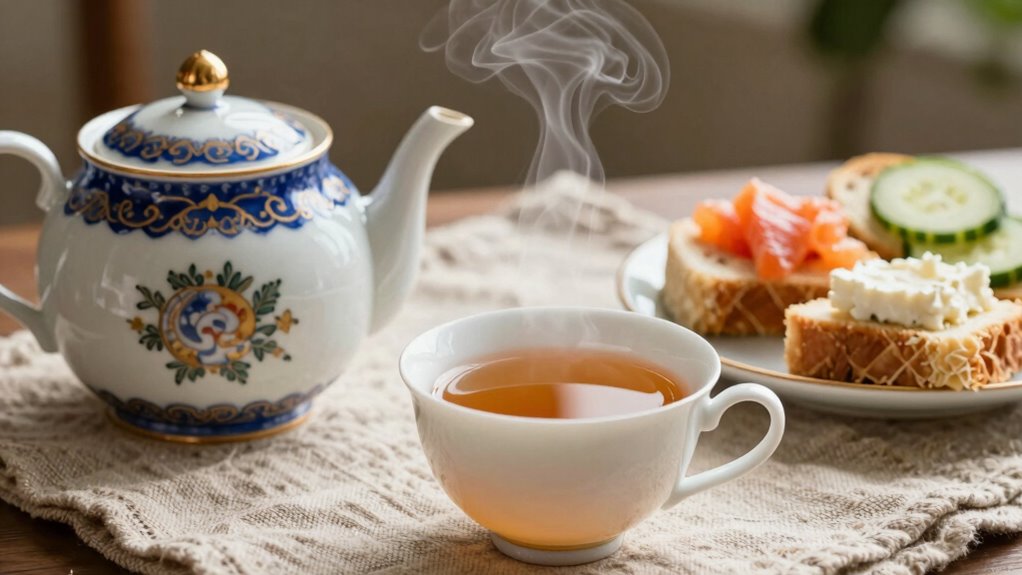
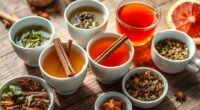
Tea pairing with food deserves a closer look because it’s a simple way to enhance your dining experience. By matching teas with dishes based on flavor profiles, you can create harmony or add exciting contrast. Understanding cultivation methods and brewing techniques helps you select the perfect tea for any meal. This mindful approach elevates everyday foods into a sensory journey. If you explore further, you’ll discover how mastering these pairings can turn ordinary meals into extraordinary moments.

Get coffee and tea gear delivered free with Prime
- Fast, free delivery on millions of items
- Prime Video, Amazon Music and more included
- Member-only deals all year
Key Takeaways
- Understanding tea flavor profiles enhances pairing effectiveness, creating more harmonious and enjoyable dining experiences.
- Knowledge of cultivation and processing reveals unique tea characteristics that influence pairing choices.
- Proper brewing techniques highlight specific tea qualities, optimizing flavor interactions with food.
- Thoughtful pairing of contrasting or complementary flavors adds complexity and depth to meals.
- Exploring tea pairings transforms everyday dining into a refined sensory journey, elevating overall enjoyment.

The art of pairing lies in matching the intensity and flavor profile of the tea with your food. Light, grassy green teas tend to go well with salads, seafood, or lightly seasoned dishes, while full-bodied black teas can stand up to rich meats or spicy cuisine. If you’re serving something sweet or fruity, consider a floral or lightly oxidized oolong, which can add complexity without overwhelming the palate. The key is to think about how the flavors interact—whether they complement each other or create an interesting contrast. When you pay attention to tea cultivation, you gain insight into what makes each tea unique, allowing you to experiment confidently and refine your pairings.
Brewing techniques also influence how well the tea pairs with your food. A well-brewed cup emphasizes the tea’s delicate notes or bold qualities, making your pairing more harmonious. For instance, steeping green tea at a lower temperature preserves its freshness, while a longer steep for black tea develops deeper, richer flavors. By controlling these variables, you ensure the tea’s character shines through, enhancing your dining experience. In the end, exploring tea pairing isn’t just about matching flavors but about understanding the journey of each leaf and how best to prepare it. With a little knowledge about tea cultivation and brewing techniques, you can elevate your meals, turning simple food and tea into a delightful sensory adventure.
Products Worth Considering

KitchenAid Classic Series 4.5 Quart Tilt-Head Stand Mixer K45SS, Onyx Black

Ninja PossibleCooker Plus 6-in-1 8.5 Qt Black (MC1010)

Weber Genesis E-415 4-Burner Propane Gas Grill, Black
As an affiliate, we earn on qualifying purchases.
Frequently Asked Questions
How Does Tea Temperature Affect Pairing Effectiveness?
Tea temperature considerably affects pairing effectiveness by influencing flavor harmony. When your tea is too hot, it can overpower delicate dishes, masking subtle flavors. Conversely, cooler teas allow for a more balanced taste, enhancing food pairings. You should aim for the right tea temperature to optimize flavor harmony, ensuring both the tea and food complement each other perfectly. Adjusting the temperature helps you enjoy a more harmonious and satisfying pairing experience.
Are There Regional Tea Pairing Preferences?
Did you know that Asian tea pairings often emphasize regional flavors and cultural traditions? You’ll find preferences differ across regions—green teas in China, black teas in India, and oolong in Taiwan—each complementing local dishes beautifully. These regional tea pairing preferences highlight unique culinary histories, allowing you to explore diverse flavor profiles and deepen your appreciation for cultural traditions through thoughtful pairing choices.
Can Herbal Teas Complement Savory Dishes?
Yes, herbal teas can complement savory dishes beautifully. You’ll notice herbal synergy when the flavors of herbs like basil, mint, or chamomile enhance your meal. These teas create flavor harmony by balancing rich, salty, or spicy notes in your dishes. When pairing, consider the herbal’s natural profiles to match the intensity of your savory foods, resulting in a delightful, well-rounded dining experience.
How Long Should I Steep Tea for Pairing?
You should steep your tea for about 3 to 5 minutes, like gently coaxing a secret from a friend. This timing allows the flavor infusion methods to work their magic, revealing delicate notes without overpowering your palate. Pay attention to your tea brewing techniques—too long and it becomes bitter, too short and weak. Find that sweet spot, and your tea will harmonize beautifully with your meal, enhancing every bite.
Does Tea Acidity Influence Food Pairing Choices?
Yes, tea acidity influences your food pairing choices. Tea tannins contribute to its acidity, which can either enhance or clash with certain dishes. For example, a bright, tangy green tea pairs well with light, fresh foods, creating flavor harmony. Conversely, a highly tannic black tea might overpower delicate flavors. Understanding the acidity helps you select teas that complement your food, elevating your overall tasting experience.
Conclusion
Just like a perfectly tuned orchestra, tea pairing with food brings harmony to your dining experience. When you pay attention to the flavors and textures, you reveal a world of delightful surprises—each sip and bite enhancing the other. Don’t overlook this simple yet powerful way to elevate your meals. Embrace tea pairing as you would a good conversation: warm, engaging, and full of unexpected harmony. Your taste buds will thank you for it.