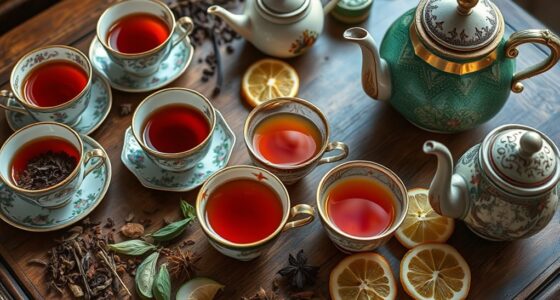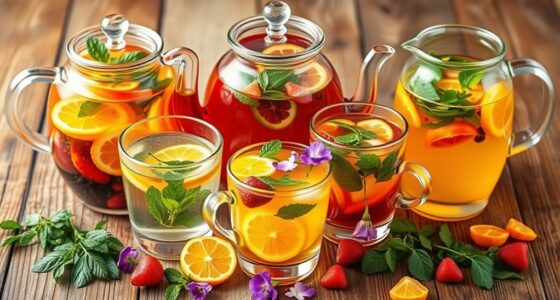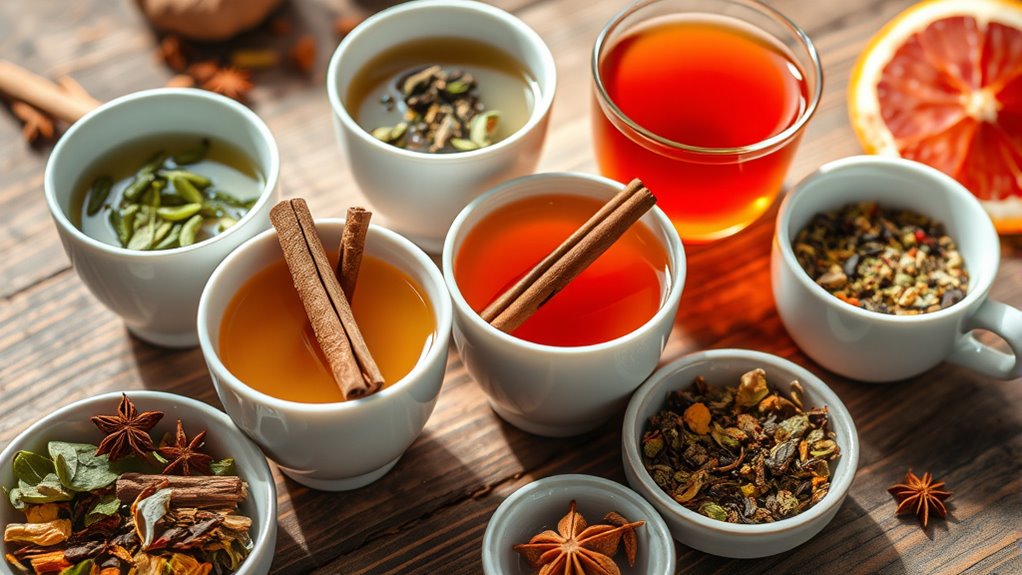

Discover traditional tea infusions inspired by regional cultures, where each blend reflects local herbs and culinary traditions. For example, China offers jasmine-green tea, blending fragrant blossoms with tea leaves, while India’s chai combines spices like cardamom and cinnamon for warmth. Middle Eastern herbal teas often mix mint and chamomile, and South American yerba mate pairs well with citrus or mint. These unique combinations tell cultural stories, and exploring them will reveal even more about the rich flavors behind each cup.

Get coffee and tea gear delivered free with Prime
- Fast, free delivery on millions of items
- Prime Video, Amazon Music and more included
- Member-only deals all year
Key Takeaways
- Regional herbs like mint, chamomile, and jasmine are traditionally paired with teas to reflect local flavors and cultural practices.
- Cultural narratives are expressed through unique infusion blends, such as Chinese jasmine-green tea and Indian chai.
- Technique-driven layering of herbs creates complex, regionally inspired flavor profiles in traditional tea infusions.
- Ingredients rooted in regional flora and culinary traditions influence the choice of herbs and flavor combinations.
- Crafting harmonious infusions enhances cultural storytelling and personal creativity within regional tea traditions.
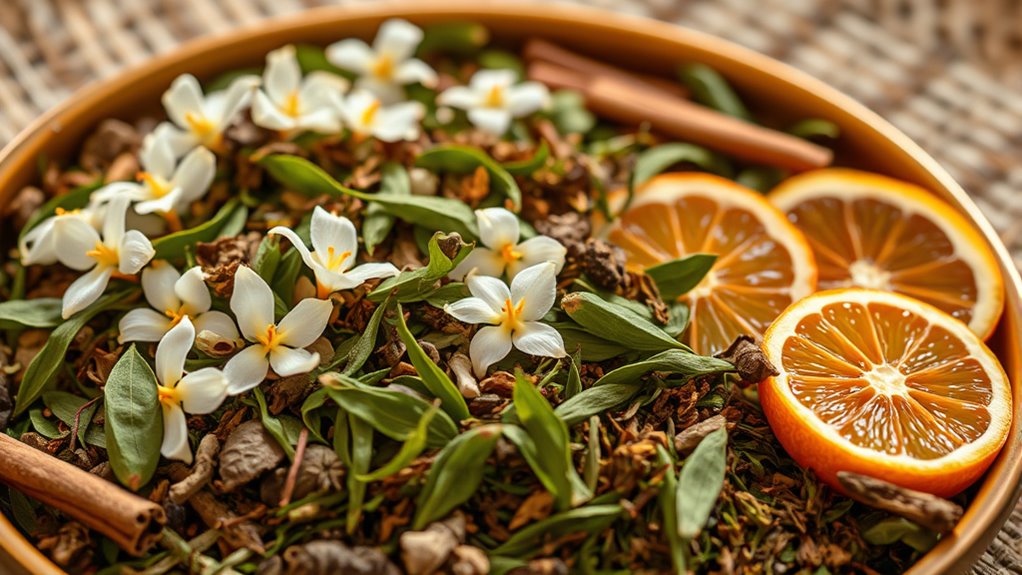
Have you ever wondered how different cultures have perfected the art of tea infusions? It’s fascinating to see how each region develops its own unique approach to blending herbs and flavors, creating traditions that have stood the test of time. When you explore herbal blends, you’re not just tasting a beverage; you’re experiencing a cultural narrative crafted through centuries of experimentation and taste. Whether it’s a delicate jasmine-green tea from China or a spicy chai from India, each infusion is carefully curated through thoughtful flavor pairing. This process involves combining herbs, spices, and tea leaves in a way that enhances the overall profile, balancing aromatic nuances with soothing or invigorating effects.
Exploring herbal tea infusions reveals rich cultural stories and centuries of flavorful tradition.
In many cultures, herbal blends aren’t randomly thrown together—they’re thoughtfully designed to evoke specific qualities or health benefits. For example, in the Middle East, mint and chamomile are often paired with green or black tea to create invigorating and calming infusions. The herbs chosen reflect regional flora and traditional remedies, making each sip a reflection of local wisdom. Similarly, Japanese tea masters have perfected the art of subtle flavor pairing in their matcha and gyokuro teas, emphasizing harmony and balance with minimal herbal additions. The focus is on highlighting the natural umami and sweetness of the tea itself, often complemented by hints of seaweed or roasted rice.
Across the world, the art of flavor pairing extends to how herbs are layered to create complex profiles. In South America, yerba mate infusions are sometimes combined with citrus peels or herbs like mint, adding bright, invigorating notes that elevate the traditional beverage. In Europe, herbal infusions often incorporate flowers like chamomile, elderflower, or lavender, enhancing floral and honeyed qualities that soothe and relax. These combinations aren’t accidental—they’re rooted in regional ingredients and culinary traditions, making the experience of each infusion deeply connected to local culture. Additionally, understanding herbal pairing principles can help you craft more harmonious and flavorful infusions at home.
As you experiment with herbal blends, you begin to recognize the importance of understanding flavor pairing principles. The goal isn’t just to mix herbs for the sake of variety but to craft harmonious profiles that enhance the tea’s character. Whether you prefer a calming chamomile-lavender blend or a spicy cinnamon-ginger infusion, the art of flavor pairing guides you toward balanced, flavorful cups. By studying these regional traditions, you can develop your own appreciation for the subtle ways herbs influence tea infusions, enriching your drinking experience with cultural depth and personal creativity.
As an affiliate, we earn on qualifying purchases.
Frequently Asked Questions
What Are the Health Benefits of Regional Tea Infusions?
Regional tea infusions offer numerous health benefits, thanks to herbal synergy and antioxidant properties. When you drink these teas, you can boost your immune system, improve digestion, and reduce inflammation. The natural herbs work together to enhance overall wellness, providing you with a calming or energizing effect depending on the blend. Regularly enjoying regional tea infusions helps you stay healthier and more balanced, making them a delicious way to support your well-being.
How Do Regional Climates Influence Tea Flavor Combinations?
Did you know that microclimate effects can alter tea flavors markedly? You’ll notice that regional climates, through terroir influence, shape unique flavor combinations. For example, higher altitudes often produce teas with brighter, more nuanced tastes, while humid coastal areas may yield richer, earthier infusions. These climate factors influence the soil, sunlight, and temperature, directly impacting the tea’s aroma and taste, making each regional infusion truly one-of-a-kind.
Are There Traditional Ceremonies Associated With Regional Tea Infusions?
Yes, many regional tea infusions are tied to traditional ceremonies and cultural rituals. You might participate in a Japanese tea ceremony, where precise steps and etiquette highlight respect and mindfulness. In China, tea rituals emphasize harmony and tradition. These ceremonies often involve specific infusions and flavor combinations that reflect local culture, creating a meaningful experience. By engaging in these rituals, you connect deeply with the history and customs of the region.
How Are Regional Ingredients Sourced for Authentic Tea Blends?
You’re on the right track when you ask about sourcing ingredients. To keep things authentic, you’ll want to focus on local sourcing and sustainable harvesting practices. This means partnering with local farmers who grow ingredients respectfully and ethically. By doing so, you preserve regional flavors and support the community. It’s a win-win, proving that good things come to those who wait and choose wisely for the best, most genuine tea blends.
Can Regional Tea Flavors Be Adapted for Modern Palates?
You can definitely adapt regional tea flavors for modern palates by applying fusion techniques that blend traditional ingredients with contemporary tastes. Experiment with flavor evolution by balancing bold, familiar notes with subtle, innovative ones. This approach keeps the essence of regional infusions while appealing to modern preferences, making the tea both authentic and exciting. Your creativity in combining flavors guarantees a delightful experience that respects tradition and embraces innovation.
Conclusion
Exploring traditional tea infusions lets you taste the rich tapestry of regional cultures, each sip like a journey through history. By embracing these unique flavor combinations, you connect with centuries-old traditions and stories woven into every cup. Just as a tapestry is made of many threads, these teas blend diverse ingredients into harmonious experiences. So, next time you brew, imagine you’re opening a world of culture and flavor, one soothing sip at a time.
Halloween Picks
halloween
As an affiliate, we earn on qualifying purchases.