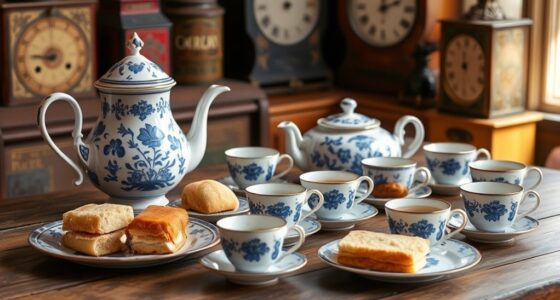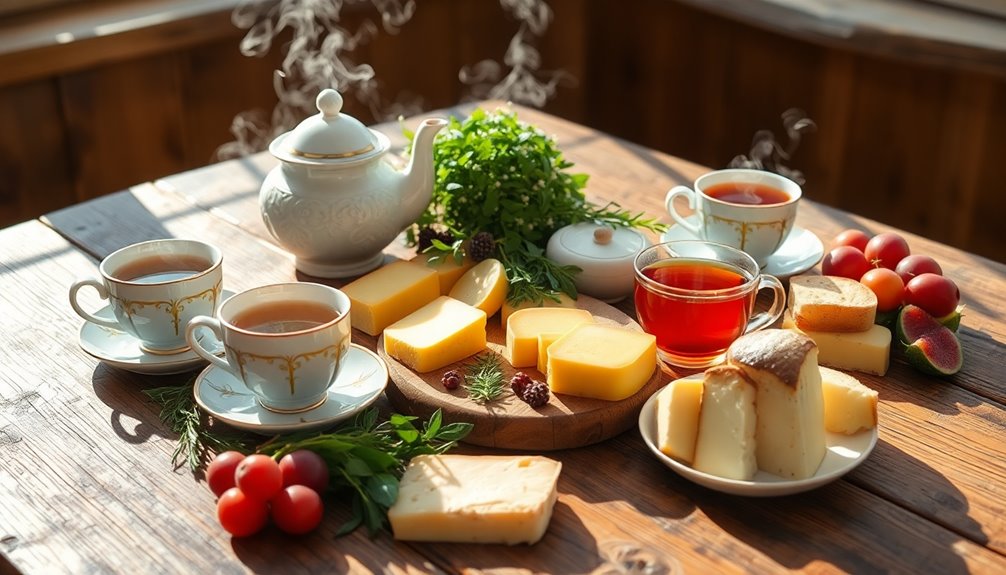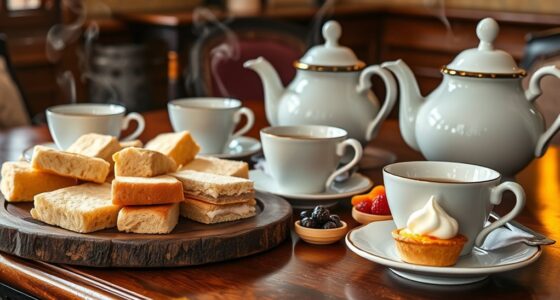
To start with simple tea pairings, choose a tea that matches the flavor strength of your food. For delicate dishes like salads or fruits, opt for light green or white teas with grassy or floral notes. For heartier meals like roasted meats or cheeses, try robust black or oolong teas. Focus on balancing the tea’s flavor with your food, ensuring neither overshadows the other. Keep experimenting—more tips await to help you perfect your perfect pairing.
Key Takeaways
- Choose light, delicate teas like green or white for pairing with salads and seafood.
- Match the tea’s flavor intensity with the richness of the food to balance taste.
- Brew teas properly at appropriate temperatures to maximize flavor and pairing harmony.
- Start with simple combinations, such as green tea with light snacks, and adjust as needed.
- Focus on creating a balanced experience where neither the tea nor the food overpowers the other.
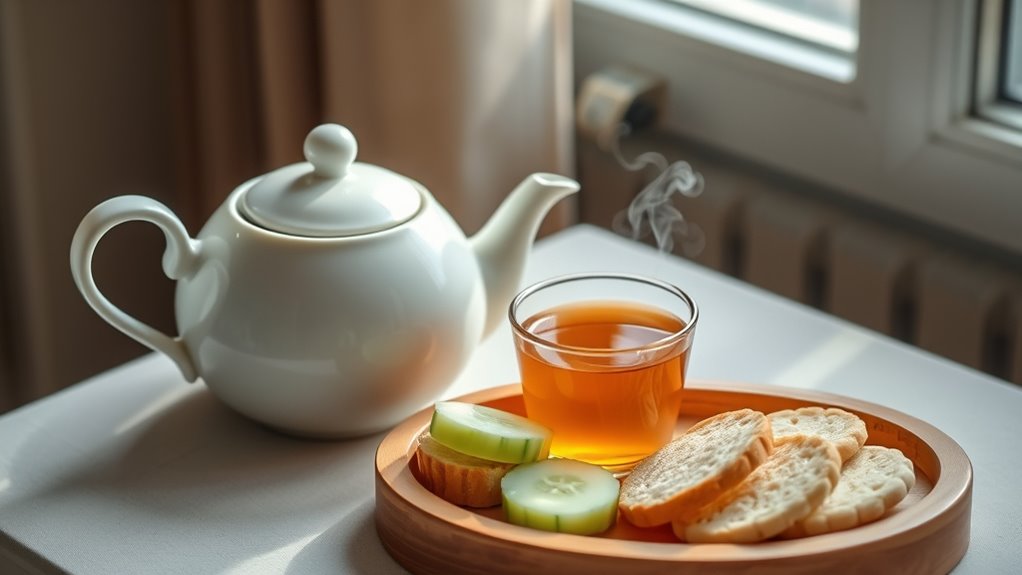
Tea pairing doesn’t have to be complicated; with a few simple tips, you can elevate your tea-drinking experience and complement your favorite foods effortlessly. One of the most important factors to contemplate is understanding tea flavor profiles. Different teas offer unique tastes—some are grassy, floral, nutty, fruity, or smoky. Recognizing these profiles helps you choose teas that naturally enhance specific foods. For example, a light green tea with grassy notes pairs beautifully with fresh salads or seafood, while a robust black tea with malty undertones complements hearty dishes like roasted meats or rich cheeses. By paying attention to these flavor nuances, you can craft harmonious pairings that make each bite and sip more enjoyable.
Another key aspect is mastering brewing techniques. Proper brewing brings out the best in each tea’s flavor profile, ensuring you experience its full potential. For delicate teas like white or green, a lower temperature and shorter steeping time preserve their subtle flavors. Conversely, darker teas such as black or oolong benefit from slightly hotter water and longer steeping, revealing their richer, more complex notes. Using the right water temperature and steeping time prevents bitterness and maintains balance. When you brew your tea correctly, it becomes easier to match it with food because the tea’s true flavor shines through, creating a more harmonious pairing.
Once you understand tea flavor profiles and brewing techniques, pairing becomes more intuitive. For instance, if you’re preparing a cup of jasmine green tea, its floral notes work well with light, subtly flavored foods like steamed vegetables or fruit salads. On the other hand, a full-bodied chai, with its spices and bold flavors, can stand up to spicy dishes or baked goods like cookies and cakes. Experimenting with different teas and pairings is part of the fun—start with simple combinations and adjust as you go. Keep in mind that the goal isn’t to overshadow the food but to enhance it, creating a balanced experience where neither the tea nor the dish overwhelms the other.
Additionally, understanding the emotional and spiritual significance of auras can deepen your appreciation for the sensory experience, as the energy and mood of both the tea and food can influence your overall enjoyment.

365 by Whole Foods Market, Organic Green Tea, 70 CT
Brought to you by Whole Foods Market
As an affiliate, we earn on qualifying purchases.
As an affiliate, we earn on qualifying purchases.
Frequently Asked Questions
How Do I Store Different Types of Tea Properly?
To store different types of tea properly, you should focus on tea storage and proper container selection. Keep teas in airtight containers, ideally opaque to block light, which can degrade flavor. Store them in a cool, dry place away from strong odors. For loose leaf teas, glass or metal tins work well, but avoid plastic containers. Proper storage preserves freshness, aroma, and flavor, ensuring your teas stay delightful over time.
Can I Mix Different Teas for Unique Flavors?
Yes, you can mix different teas for unique flavors through tea blending. It’s a great way to experiment with flavor combinations and find what you enjoy most. Start by selecting teas with complementary profiles, then gradually blend small amounts to test the results. Keep notes on your blends so you can recreate or tweak them later. Flavor experimentation makes tea drinking more fun and personalized, enhancing your overall experience.
What Are Common Tea Pairing Mistakes to Avoid?
Avoid common tea pairing mistakes like ignoring tea flavor profiles or breaking pairing etiquette. You might think mixing bold black teas with delicate desserts works, but it often overwhelms the palate. Remember, respecting the subtlety of each tea ensures a harmonious experience. Don’t serve overly strong or mismatched pairings—your taste buds will thank you for sticking to balanced, thoughtful choices. After all, good pairing is about harmony, not chaos.
How Does Water Temperature Affect Tea Flavor?
Water temperature notably impacts your tea’s flavor by influencing the water infusion process. If you use too high a brewing temperature, you risk over-extracting tannins, making your tea bitter. Conversely, too low a temperature can result in weak flavors. To get the best taste, match the brewing temperature to the tea type, ensuring ideal extraction and a balanced, flavorful cup every time.
Are There Specific Teas for Certain Cuisines or Dishes?
Think of teas as ambassadors of culture, each with unique flavor profiles that complement specific cuisines. You’ll find green teas perfect with Japanese dishes, echoing freshness and balance, while robust black teas enhance hearty Western meals. Herbal infusions can brighten Mediterranean flavors, and oolong offers a nuanced pairing for Chinese cuisine. Exploring these cultural pairings enriches your experience, making every sip a journey into tradition and harmony.

VAHDAM, Imperial White Tea Leaves From Himalayas (25 Cups/1.76oz) High Elevation Grown, White Tea Loose Leaf Tea | Pure Unblended Loose Leaf Tea | Vacuum Sealed
IMPERIAL HIMALAYAN WHITE TEA – Elevate your evenings with our Imperial Himalayan White Tea. This exquisite loose-leaf tea…
As an affiliate, we earn on qualifying purchases.
As an affiliate, we earn on qualifying purchases.
Conclusion
Now that you’ve uncovered the basics of tea pairing, think of it as painting with flavors—each cup adds a splash of harmony to your meal. Don’t be afraid to experiment and let your taste buds dance like leaves in the breeze. With a little practice, your palate will become a garden of delightful surprises. Remember, the perfect pairing is like a symphony—simple, beautiful, and uniquely yours. Cheers to your flavorful journey ahead!

Organic Positively Tea Company, Assam TGFOP Black Tea, Loose Leaf, 16 Ounce
TEA TYPE: Organic Black Tea, CAFFEINE LEVEL: High, TASTING NOTES: Sweet, Smooth, Complex, CERTIFICATION: USDA Certified Organic, ORIGIN:…
As an affiliate, we earn on qualifying purchases.
As an affiliate, we earn on qualifying purchases.

Prince of Peace Organic Oolong Tea, 100 Tea Bags – 100% Organic Black Tea – Unsweetened Black Tea – Lower Caffeine Alternative to Coffee – Herbal Health Benefits
100% ORGANIC TEA. Our 100% Organic Oolong Tea has a woody aroma and a full-bodied flavor. Oolong Tea…
As an affiliate, we earn on qualifying purchases.
As an affiliate, we earn on qualifying purchases.