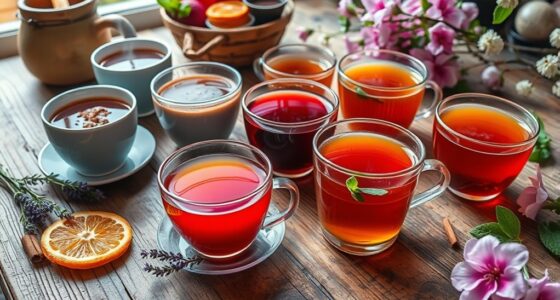
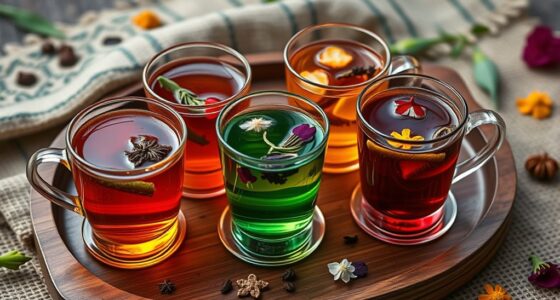
The history and evolution of tea infusions and flavor combinations show a journey from ancient practices to modern creativity. Cultures long ago added herbs, spices, and fruits to create unique blends that reflected local traditions. Over time, regional environments shaped distinct flavors, from brisk green teas to spicy chai. Personal experimentation and cultural influences continue to inspire new pairings today. Explore further to discover how these timeless traditions have evolved into the vibrant world of tea flavors you enjoy now.
Key Takeaways
- Tea infusion traditions date back centuries, shaped by cultural, regional, and historical influences across China, India, Japan, and Sri Lanka.
- Environmental factors like climate, soil, and altitude create distinct flavor profiles in different tea-growing regions.
- Historically, herbs, spices, fruits, and flowers were added to teas to enhance complexity and suit local tastes.
- Cultural practices and regional ingredients influence signature blends, reflecting local identities and historical trade connections.
- Personal experimentation and innovation continue to evolve tea flavors, blending tradition with modern creativity.

Tea infusions have a rich history that spans centuries, reflecting both cultural traditions and evolving tastes. As you explore this tradition, you’ll discover that the journey begins with tea cultivation—an art and science that has been refined over generations. From the lush plantations of China and India to the small farms of Japan and Sri Lanka, tea cultivation involves precise methods that influence the flavor profile of each leaf. The climate, soil, and altitude all play critical roles, offering a wide range of taste experiences. When you taste different teas, you’re actually experiencing the results of centuries of cultivation techniques designed to bring out specific flavors, whether it’s the briskness of a Chinese green tea or the malty richness of an Indian black tea.
Tea cultivation spans centuries, shaping unique flavors influenced by climate, soil, and altitude across global tea-growing regions.
As you investigate more deeply into tea, you’ll notice that flavor experimentation is at the heart of its evolution. Historically, people have added herbs, spices, fruits, and even flowers to create unique infusions, transforming simple leaves into complex, aromatic beverages. This experimentation allows you to personalize your tea experience, exploring combinations that suit your palate. For example, adding a sprig of mint to a green tea can enhance its freshness, while infusing black tea with cardamom introduces warm, spicy notes. Over time, this mix-and-match approach has led to the development of countless signature blends across cultures, each with its own story and tradition.
The beauty of flavor experimentation is that it keeps the tradition vibrant and adaptable. You’re encouraged to try new additions, balancing flavors to craft your perfect cup. This process also reflects broader cultural influences, as different regions incorporate local ingredients into their teas. For instance, in Morocco, mint tea becomes a symbol of hospitality, while in India, chai combines black tea with a blend of spices that tell a story of centuries of trade and cultural exchange. Through this ongoing experimentation, tea continues to evolve, blending old practices with new ideas, making each cup a reflection of both history and innovation.
Ultimately, your journey into tea is about more than just drinking; it’s about engaging with a tradition that values craftsmanship, creativity, and cultural expression. By understanding how tea cultivation impacts flavor and how flavor experimentation shapes the evolution of teas, you gain a deeper appreciation of each sip. Every cup becomes a story—a blend of history, nature, and your own personal touch. Whether you prefer classic brews or adventurous infusions, this ongoing evolution invites you to participate actively in a centuries-old tradition that continues to flourish through your curiosity and creativity.
Frequently Asked Questions
How Do Cultural Influences Shape Tea Infusion Preferences Worldwide?
Cultural influences shape your tea infusion preferences through rituals and regional customs that reflect local tastes and traditions. For example, in China, you’ll find delicate jasmine-infused teas, while in Morocco, mint tea is a staple. These customs influence your choices, making certain flavors more popular based on where you are. Your preferences are deeply connected to the cultural context, ensuring tea drinking remains a meaningful and personalized experience worldwide.
What Are the Health Benefits of Traditional Versus Modern Tea Flavorings?
You gain health benefits from traditional tea flavorings like herbs that promote herbal synergy, supporting digestion, relaxation, or immunity. Modern flavorings often include added spices or fruits that enhance flavor, but may lack the natural herbal benefits. Both can boost your well-being, yet traditional infusions focus on herbal synergy for holistic health, while modern blends emphasize flavor enhancement for sensory enjoyment. Choose based on your health goals and taste preference.
How Have Trade Routes Impacted the Popularity of Specific Tea Infusions?
You should know that tea trade routes dramatically boosted specific infusions’ popularity, with over 2 billion cups consumed daily worldwide. These routes facilitated cultural fusion and flavor globalization, introducing unique ingredients like spices and herbs into traditional teas. As you explore different infusions, you’ll notice how global trade transformed local customs, making your favorite flavors accessible and popular across continents, enriching your tea-drinking experience through centuries of interconnected cultural exchange.
What Are Emerging Trends in Tea Flavor Pairings Today?
You’ll notice that emerging trends in tea flavor pairings focus on botanical blends and exotic infusions. You’re likely to encounter teas infused with unique herbs, spices, and floral notes that create vibrant, multi-layered flavors. Trendsetters are experimenting with unexpected combinations like lavender with citrus or ginger with tropical fruits. These innovations let you explore richer, more diverse taste experiences, making tea drinking more exciting and personalized.
How Do Regional Climates Influence Tea Infusion Ingredients?
You might think climate doesn’t impact tea, but it truly does. Regional climates influence the local flora, which in turn shapes tea infusion ingredients. For example, humid areas favor citrus or floral notes, while cooler regions might bring out earthy, woody flavors. By understanding climate adaptation, you can explore teas that highlight the unique ingredients native to each region, elevating your tasting experience with authentic and vibrant flavors.
Conclusion
As you explore the rich history of tea infusions and flavor combinations, you realize they’re like a tapestry woven through centuries, each thread adding new colors and textures. From ancient herbs to modern blends, these flavors invite you to craft your own story in every cup. Embrace the journey, and let your palate be the brush that paints your unique tea experience—because, in the end, tea is a bridge connecting tradition and innovation, flavor and memory.