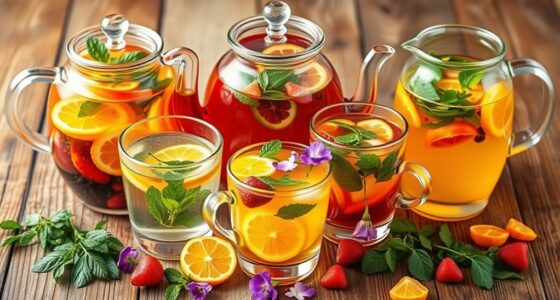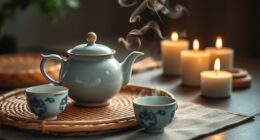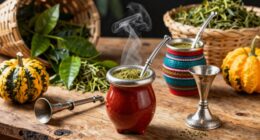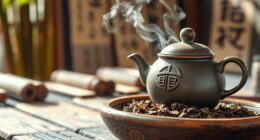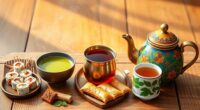
Around the world, tea infusions fuse local ingredients and traditions to create unique flavors. From India’s spiced chai, combining black tea with cinnamon, cardamom, and ginger, to Morocco’s mint tea poured with flair, each culture adds its signature touch. In Japan, the meditative matcha ceremony emphasizes harmony and mindfulness. As you explore these diverse customs and infusions, you’ll discover how tea transforms into a rich cultural expression—more fascinating twists await if you continue exploring.
Key Takeaways
- Regional ingredients like spices, herbs, and fruits create unique tea blends, such as Indian chai, Moroccan mint, and Japanese matcha.
- Different brewing techniques, including multiple infusions and specific teapots, enhance flavor complexity across cultures.
- Rituals like Japanese tea ceremonies and Chinese gongfu brewing elevate tea drinking to an art form.
- Incorporating local flavors like cinnamon, ginger, and mint reflects regional culinary influences.
- Diverse traditions highlight tea’s role as a cultural expression and a means of social connection worldwide.

Have you ever wondered how diverse tea infusions and flavors from around the world can transform a simple cup into a sensory journey? When exploring global tea culture, you quickly realize that each region brings its own unique traditions and brewing techniques to the table. These practices shape not only the taste but also the experience of enjoying tea. For instance, in Japan, the tea ceremony traditions emphasize mindfulness, precision, and harmony. You might find yourself carefully measuring matcha powder, whisking it into hot water with a bamboo chasen, and serving it in a specific sequence to honor centuries-old customs. This ritual elevates a simple act into a meditative practice, highlighting the importance of tradition and respect for the process.
In contrast, Chinese tea brewing techniques often focus on multiple infusions, allowing you to extract varied flavors from a single leaf. You might start with a quick rinse, then steep the leaves multiple times, adjusting the steeping time to *liberate* different layers of aroma and taste. These methods are deeply rooted in history and philosophy, emphasizing patience and appreciation for subtle changes in flavor. The use of specific teapots, such as gaiwans or Yixing clay pots, influences the infusion process and enhances the tea’s character. Each step, from selecting the right water temperature to timing your steepings, plays a *pivotal* role in crafting the perfect cup.
Across the globe, you’ll also encounter vibrant flavor combinations that reflect local ingredients and culinary influences. In India, chai blends black tea with spices like cardamom, cinnamon, and ginger, creating a warming, aromatic beverage. Preparing chai often involves simmering the spices with tea leaves and milk, a process that releases rich flavors and fills your kitchen with inviting scents. Meanwhile, in Morocco, you might experience the tradition of pouring sweet mint tea from a height, creating a frothy top and balancing the sweetness with fresh herbs. These regional twists on tea infusions show how local tastes and ingredients shape the way tea is enjoyed.
Ultimately, exploring diverse tea traditions and brewing techniques reveals that tea is much more than a drink. It’s a cultural expression, a ritual, and an art form that invites you to savor the moment and appreciate the rich tapestry of flavors from around the world. Whether you’re following the meticulous steps of a Japanese tea ceremony or experimenting with bold spice blends, each approach offers a new perspective and deepens your connection to this ancient beverage.
Top picks for "global twist infusion"
Open Amazon search results for this keyword.
As an affiliate, we earn on qualifying purchases.
Frequently Asked Questions
How Do Cultural Differences Influence Tea Flavor Preferences Globally?
Cultural taste preferences shape how you enjoy tea, with regional flavor influences guiding your choices. In some places, you might favor bold, smoky teas, while others prefer delicate, floral notes. These differences stem from local ingredients, traditions, and climate, influencing what you find appealing. By understanding these cultural variations, you can explore a diverse array of teas that reflect the unique tastes and preferences of each region.
What Are Emerging Trends in International Tea Infusions?
You’ll notice that 65% of tea drinkers are seeking unique flavor experiences, highlighting a shift toward innovative blends. Emerging trends in international tea infusions focus on flavor innovation, combining traditional ingredients with unexpected elements like herbs, spices, and fruits. You’re likely to see more tea blending that emphasizes health benefits and cultural fusion, creating exciting, personalized options that appeal to global palates and reflect evolving tastes.
How Do Climate Conditions Affect Regional Tea Flavor Profiles?
You’ll notice that climate conditions, like soil composition and altitude effects, shape the unique flavor profiles of regional teas. Rich, mineral-laden soils add depth, while high altitudes slow leaf growth, intensifying flavors. Warmer climates produce bolder, more robust teas, whereas cooler regions yield delicate, nuanced infusions. By understanding these factors, you can better appreciate how local environmental conditions influence the taste and aroma of teas from around the world.
Are There Health Benefits Linked to Global Tea Flavor Combinations?
Oh, absolutely, sipping on global tea blends is practically a health revolution. You get herbal synergy and antioxidant properties in every cup, making your daily ritual feel like a wellness retreat. Each exotic combination, from jasmine to ginger, boosts your immune system and fights free radicals. So, go ahead—indulge in those vibrant infusions; your taste buds and body will thank you for this sophisticated, health-boosting adventure.
How Can I Create Authentic International Tea Blends at Home?
You can create authentic international tea blends at home by experimenting with tea blending and flavor pairing. Start with a base tea like green, black, or white, then add herbs, spices, or dried fruits inspired by the region, such as lemongrass for Thailand or cardamom for India. Adjust the proportions to balance flavors, and always taste as you go. Keep notes on your blends to refine your unique, authentic international tea creations.
Conclusion
As you explore these global tea infusions and flavor combinations, remember that each cup tells a story—like a modern-day fairy tale steeped in tradition. Embrace the adventure, much like Alice tumbling down the rabbit hole, discovering new tastes and cultures. So go ahead, indulge your curiosity and let each sip transport you across the world’s vibrant, aromatic landscapes. After all, every great journey begins with a simple, comforting cup of tea.