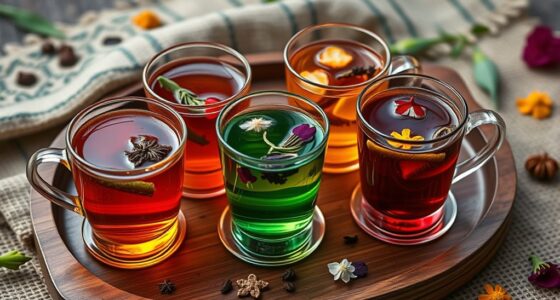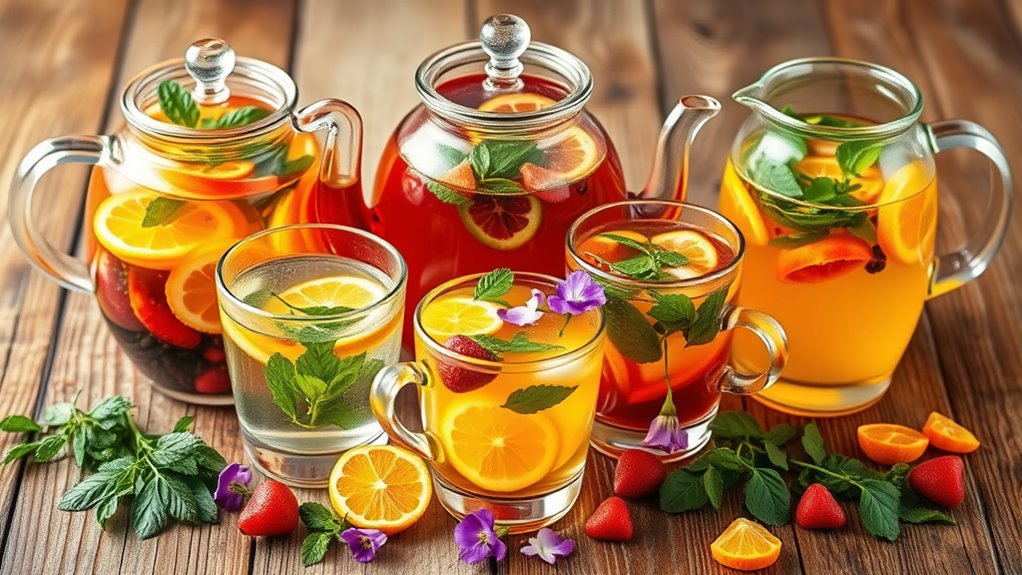

Discover exciting ways to elevate your tea experience by exploring creative infusions with herbs and fruit. Combine fresh or dried ingredients like mint, chamomile, berries, citrus, and apples to craft balanced flavors that support wellness and delight your senses. Experiment with different combinations and steeping techniques to find your perfect harmony. With a little practice, you’ll unseal vibrant, personalized tea blends that energize, relax, and satisfy—more inspiring ideas are waiting just beyond this moment.
Key Takeaways
- Combine herbs like mint, chamomile, or rosemary with fruits such as lemon, berries, or peaches for vibrant, aromatic infusions.
- Use fresh herbs and dried fruits to create complex flavor profiles that balance sweetness, tartness, and herbal notes.
- Experiment with pairing citrus slices with herbs like basil or thyme to add brightness and depth to your tea.
- Incorporate unexpected ingredients like ginger, lavender, or pineapple to craft unique and personalized flavor combinations.
- Adjust steeping times and ingredient ratios to fine-tune the taste, ensuring harmonious and refreshing tea infusions.
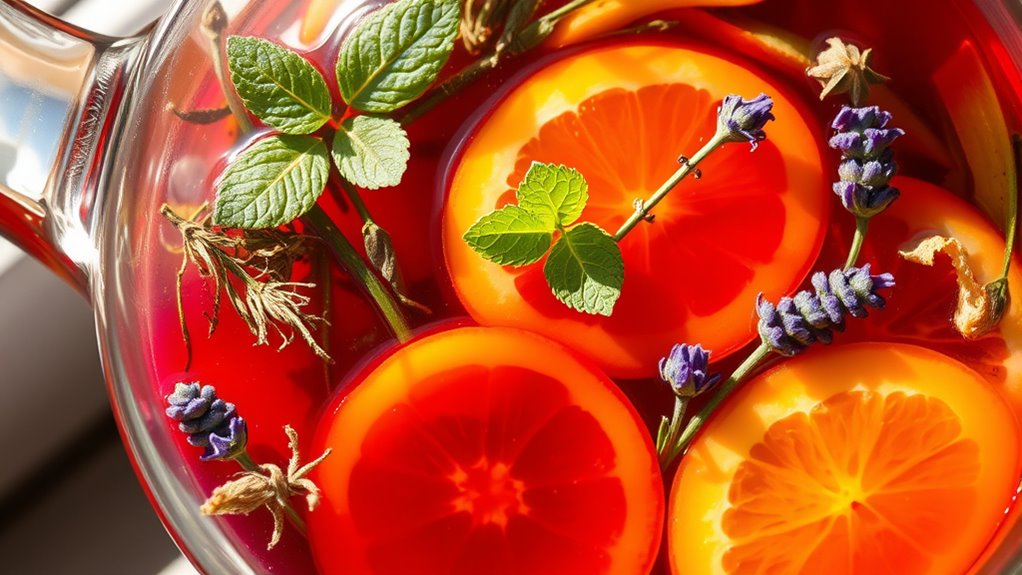
Tea infusions with herbs and fruit offer a vibrant and flavorful way to enjoy your favorite beverages. When you experiment with different combinations, you reveal a world of taste and health benefits that elevate your tea-drinking experience. Herbal benefits are a key reason to explore these infusions, as many herbs contain antioxidants, anti-inflammatory compounds, and other nutrients that support your well-being. Mint, chamomile, and ginger, for example, can soothe digestion, boost your immune system, or help you relax. Incorporating herbs into your tea isn’t just about flavor; it’s about nurturing your body while delighting your senses.
Explore herbal infusions for vibrant flavors and health benefits that nourish your body and delight your senses.
Fruit pairing tips are equally important when crafting these infusions. Fresh or dried fruits add natural sweetness and depth, balancing the sometimes bitter or earthy notes of herbs. Berries like strawberries, blueberries, and raspberries work beautifully because they bring vibrant color and a tartness that contrasts nicely with herbal tones. Citrus slices—lemon, orange, or lime—add brightness and a revitalizing zing, making your tea more invigorating. Apples and peaches provide gentle sweetness and a mellow richness that complement herbal notes without overpowering them. When selecting fruits, consider their flavor profiles and how they’ll interact with the herbs you choose, aiming for harmony and balance.
To create a successful infusion, start with a good-quality tea base—black, green, or herbal tea—then add your herbs and fruits. For a calming blend, try chamomile with honey and lemon slices; for something energizing, combine green tea with mint and fresh berries. You can also experiment with dried herbs like lavender or rosemary for unique aromatic qualities, paired with fruits such as pear or pineapple for added sweetness and complexity. Remember, the key is to taste as you go, adjusting the amount of herbs and fruit to suit your preferences. Incorporating flavor harmony and balance is essential to crafting a delightful infusion.
When preparing your infusion, steep the tea with the herbs and fruits in hot water, allowing the flavors to meld. Depending on the ingredients, you might need to steep longer or shorter—fresh herbs generally need less time than dried ones. Once steeped, strain out the solids and enjoy your creation hot or iced. For an extra touch, add a drizzle of honey or a sprig of fresh mint. These creative combinations not only make your tea more enjoyable but also turn each cup into a personalized, healthful treat. With a little experimentation, you’ll discover new flavor horizons that make tea time truly special.
Frequently Asked Questions
How Long Should Herbal and Fruit Tea Infusions Steep?
For herbal and fruit tea infusions, you’ll want to pay attention to infusion timing and steeping duration. Usually, herbal teas steep for about 5 to 7 minutes, while fruit infusions may need 8 to 10 minutes. Keep in mind, longer steeping can enhance flavor but might also cause bitterness. Taste your tea periodically to find the perfect balance, ensuring you enjoy a flavorful, aromatic cup every time.
Can Herbal Teas Be Mixed With Caffeinated Teas Safely?
You might think mixing herbal teas with caffeinated ones is risky, but it’s actually a great way to explore tea blending and flavor pairing. Just be mindful of the caffeine content and how strong you want each flavor. Combining herbal and caffeinated teas can create delightful, balanced infusions. So go ahead, experiment! You’ll find that the union can be both safe and surprisingly delicious, revealing new layers of flavor.
Are There Any Herbs or Fruits to Avoid in Tea Infusions?
You should avoid toxic herbs like belladonna or pennyroyal, as they can be harmful. Also, steer clear of allergic fruits such as strawberries or citrus if you’re sensitive or allergic, to prevent adverse reactions. Always research thoroughly before mixing herbs or fruits in your tea infusions. If unsure, consult a healthcare professional, especially if you’re pregnant, nursing, or have existing health conditions.
How Can I Enhance the Natural Flavors of My Tea Infusions?
To enhance the natural flavors of your tea infusions, focus on flavor balancing by adjusting ingredient quantities and adding complementary herbs or fruits. Use ingredient pairing wisely, combining herbs and fruits that naturally amplify each other’s profiles. Experiment with subtle additions like a touch of honey or a splash of citrus to bring out the tea’s depth. This approach guarantees your infusions are both harmonious and vibrant, elevating your tea-drinking experience.
What Are Creative Presentation Ideas for Herbal and Fruit Teas?
You can elevate your tea experience by exploring tea art, such as intricate pour-over designs or layered glassware. Incorporate edible garnishes like fresh herbs, citrus slices, or flower petals for visual appeal and flavor. Use colorful teacups or creative serving trays to make your presentation stand out. These ideas turn your herbal and fruit teas into a delightful sensory experience, impressing guests and adding a touch of artistry to every sip.
Conclusion
Imagine each sip wrapping you in a warm, fragrant embrace, where vibrant herbs dance with juicy fruit notes, awakening your senses. As the steam rises, swirling with colorful hues, you feel a gentle calm settle over you. These creative infusions transform simple tea into a delightful symphony of flavors—refreshing, soothing, and endlessly inspiring. So, brew your favorite combinations, let the aromas drift through your space, and enjoy every flavorful moment.