The tea industry faces significant sustainability challenges such as pollution, water depletion, and land degradation. Innovative trends like organic certification, water conservation methods, and advanced technology are helping address these issues. Certification programs encourage responsible farming and resource efficiency, while precision agriculture and satellite monitoring optimize land and water use. Continuing your exploration reveals how these cutting-edge practices are transforming the industry towards a more sustainable future.
Key Takeaways
- The tea industry faces water scarcity and pollution, requiring innovative water-saving techniques like drip irrigation and rainwater harvesting.
- Organic certification promotes sustainable farming, reducing chemical use and protecting ecosystems amidst increasing environmental concerns.
- Technological advances such as satellite monitoring and precision agriculture improve resource efficiency and land management.
- Certification standards incentivize responsible practices, encouraging industry-wide adoption of water conservation and eco-friendly methods.
- Balancing productivity with environmental sustainability remains a challenge, prompting ongoing innovation in eco-friendly farming practices.
The tea industry faces significant sustainability challenges that threaten its long-term viability. As a consumer or producer, you might not realize how deeply these issues impact the future of your favorite brew. One of the key concerns is ensuring that tea cultivation aligns with responsible farming practices, especially through organic certification. Organic certification indicates that tea is grown without synthetic fertilizers, pesticides, or genetically modified organisms, which helps protect soil health and biodiversity. By supporting certified organic teas, you contribute to reducing chemical runoff that pollutes water sources and harms ecosystems. This certification also encourages farmers to adopt sustainable practices that preserve the land for future generations.
Supporting organic tea preserves soil health, biodiversity, and promotes sustainable farming for a healthier future.
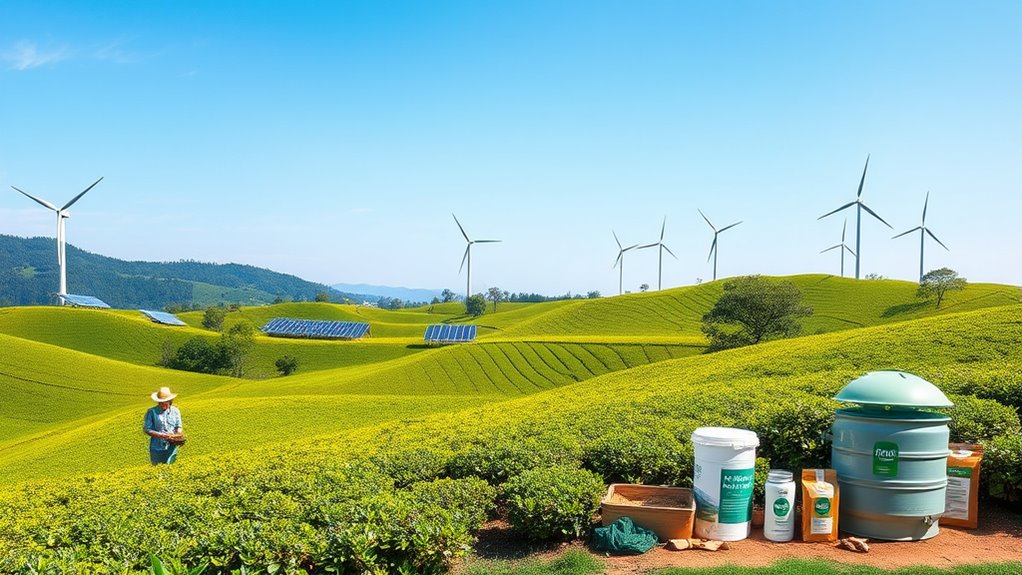
Water conservation plays a vital role in addressing sustainability. Tea cultivation often demands significant water resources, especially in regions facing drought or erratic rainfall patterns. As someone invested in sustainable tea, you should recognize the importance of water management. Innovative irrigation techniques, such as drip irrigation or rainwater harvesting, help minimize water waste. Additionally, some tea farms implement water recycling systems, reducing their reliance on freshwater sources. These measures not only conserve water but also improve farm resilience in the face of climate change. Supporting brands that prioritize water conservation signals a shift toward more responsible production methods, encouraging other farmers to follow suit.
However, adopting these sustainable practices isn’t always easy or affordable for farmers, which is why certifications and technological innovations matter. Certification bodies often provide guidelines and incentives for farmers to implement water-efficient methods and maintain organic standards. Certification programs also promote high environmental standards that guide sustainable practices across the industry. For you, choosing teas with verified organic labels and transparent water use practices means encouraging the industry to prioritize sustainability. These certifications also help distinguish brands that genuinely commit to environmental stewardship from those that merely market green claims.
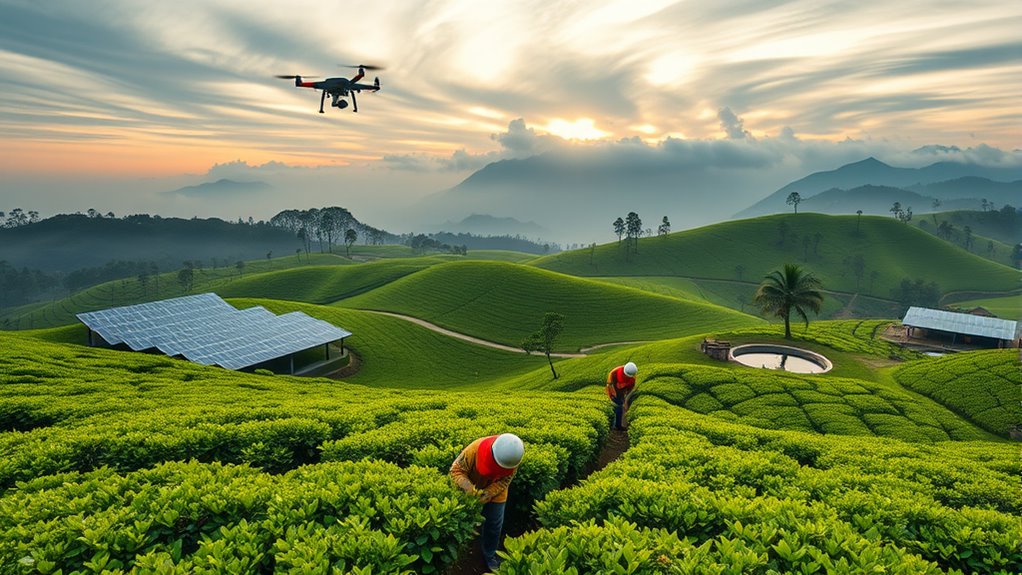
Furthermore, the integration of technology in tea farming offers promising solutions. Precision agriculture tools, satellite monitoring, and soil health assessments enable farmers to optimize resource use, including water. These innovations reduce waste and improve crop yields, making sustainability more attainable and economically viable. For you, supporting companies that invest in such technologies can accelerate the shift toward more sustainable tea production.
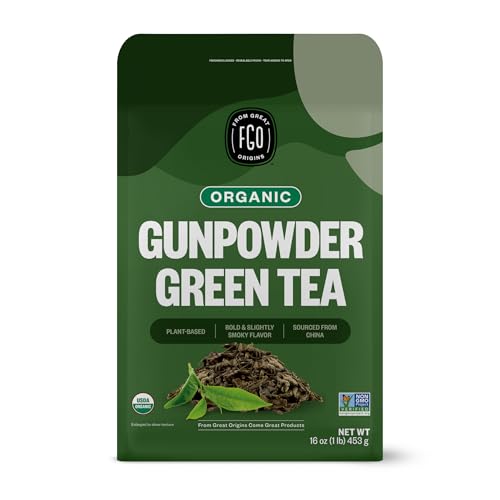
FGO Organic Gunpowder Green Tea, Loose Leaf, 16oz Bulk Resealable Bag, Packaging May Vary (Pack of 1)
SMILE SIP & FEEL GOOD – Brew 200 cups of tea with this premium loose leaf variety!
As an affiliate, we earn on qualifying purchases.
As an affiliate, we earn on qualifying purchases.
Frequently Asked Questions
How Do Climate Change Effects Vary Across Different Tea-Growing Regions?
Climate change impacts tea-growing regions differently; higher altitudes may see less temperature increase but face more unpredictable weather patterns. You’ll notice pest prevalence often rises in warmer, lower-altitude areas, damaging crops. Variable climate conditions cause shifts in harvest times and quality, making it harder for growers to adapt. By understanding these regional variations, you can better support sustainable practices that mitigate climate change effects across diverse tea regions.
What Are the Economic Impacts of Sustainability Practices on Small Tea Farmers?
Embracing sustainability practices can bolster your economic resilience, helping you navigate market shifts more smoothly. While adopting eco-friendly methods might require initial investments, many programs offer financial incentives that ease the progression. Over time, these practices can lead to better yields, improved quality, and access to premium markets, ultimately strengthening your livelihood. By balancing environmental care with economic growth, you create a more sustainable future for your tea farming endeavors.
How Is Consumer Demand Influencing Sustainable Innovations in the Tea Industry?
You influence sustainable innovations in the tea industry when you demand products with organic certification and Fair Trade labels. Your preference encourages companies to adopt eco-friendly farming practices and guarantee fair wages. As a result, producers are motivated to invest in sustainable methods, reducing environmental impact and supporting local communities. Your conscious choices drive the industry toward more ethical and sustainable practices, shaping a greener, fairer tea market for everyone.
What Role Do Government Policies Play in Promoting Eco-Friendly Tea Production?
Think of government policies as the compass guiding eco-friendly tea production. They play a crucial role by offering incentives that fuel sustainable farming practices and ensuring policy enforcement to uphold environmental standards. Your industry benefits when governments create clear regulations and support initiatives that promote responsible cultivation. These measures help growers adopt greener methods, ultimately shaping a future where tea production harmonizes with nature’s rhythms and preserves resources for generations to come.
Are There Any Certifications That Guarantee Sustainable and Ethical Tea Sourcing?
Yes, there are certifications that guarantee sustainable and ethical tea sourcing. Fair Trade certification ensures fair wages and ethical labor practices, while Organic Certification confirms the tea is grown without synthetic chemicals or pesticides. When you see these labels, you can trust that the tea was produced responsibly, supporting environmental health and social equity. Choosing certified teas helps promote sustainable practices across the industry and supports farmers committed to ethical standards.

Flantor Drip Irrigation Kit, Drip Irrigation System for Garden with 1/4" Irrigation Tubing DIY Saving Water Automatic Watering System for Garden, Greenhouse, Flower Bed, Patio, Lawn
Water all your plants at one time. After installing Flantor Watering Equipment, all you need to do is…
As an affiliate, we earn on qualifying purchases.
As an affiliate, we earn on qualifying purchases.
Conclusion
As you explore the tea industry’s future, remember that over 20% of the world’s tea comes from regions facing significant environmental challenges. By supporting sustainable practices and innovative solutions, you can help reduce deforestation, water waste, and carbon emissions. Your choices matter—small actions can lead to big change. Embracing eco-friendly teas not only preserves this cherished tradition but also guarantees a healthier planet for generations to come.

VEVOR Collapsible Rain Barrel, 100 Gallon Portable Rain Water Collection Barrel, 1000D PVC Rainwater Collection System, Garden Water Catcher Tank Storage Container with Spigot & Overflow Kit, Black
Saving Water Bills: This 100-gallon (380 L) collapsible rain barrel meets home and garden needs, reducing reliance on…
As an affiliate, we earn on qualifying purchases.
As an affiliate, we earn on qualifying purchases.
precision agriculture tools for tea farming
As an affiliate, we earn on qualifying purchases.
As an affiliate, we earn on qualifying purchases.