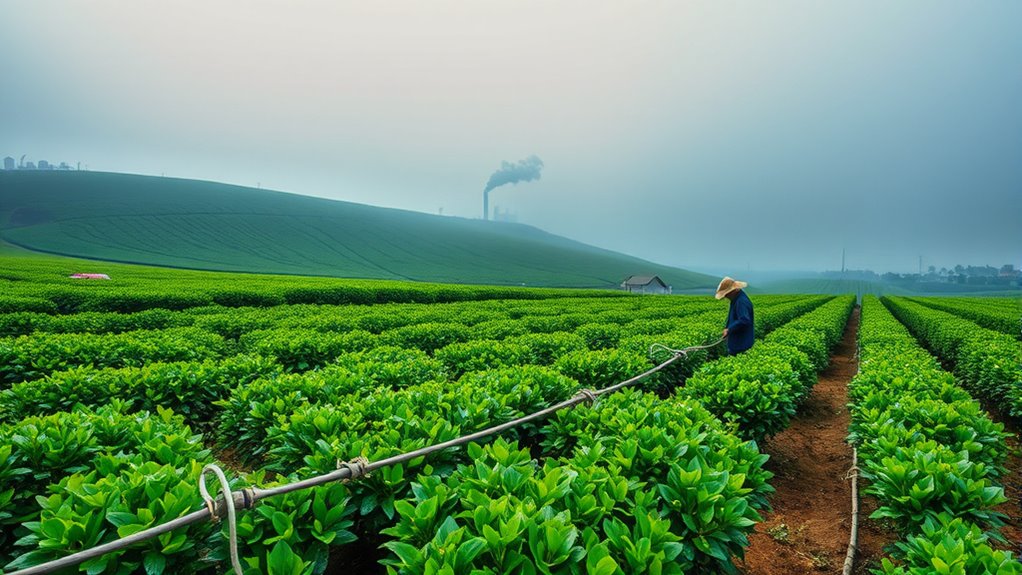

The tea industry faces significant sustainability challenges, such as water shortages, environmental degradation, and certification hurdles like organic standards that increase costs. Water-intensive farming and chemical use threaten ecosystems, but adopting organic practices and efficient water management can help. Consumers and industry players play a crucial role by supporting eco-friendly brands and sustainable farming. To understand how these issues are evolving and what actions are being taken, stay with us to explore more in-depth insights.

Get coffee and tea gear delivered free with Prime
- Fast, free delivery on millions of items
- Prime Video, Amazon Music and more included
- Member-only deals all year
Key Takeaways
- The tea industry faces environmental threats such as water scarcity, soil degradation, and loss of biodiversity, impacting long-term sustainability.
- Organic certification promotes eco-friendly farming, but strict standards and higher costs pose adoption challenges for farmers.
- Water-intensive tea cultivation is increasingly strained by regional water shortages, necessitating efficient irrigation and rainwater harvesting.
- Implementing sustainable practices like drip irrigation and integrated pest management helps reduce environmental impact and conserve resources.
- Consumer demand and industry support for organic and water-saving brands drive positive change toward sustainable tea production.

The tea industry faces significant sustainability challenges that threaten its long-term viability and the environment. As a tea producer or consumer, you should be aware of how these issues impact both the quality of your favorite brew and the health of the planet. One of the key hurdles is maintaining sustainable farming practices, which often involves pursuing organic certification. Organic certification isn’t just about avoiding synthetic chemicals; it’s a mark of commitment to eco-friendly methods that protect soil health, reduce chemical runoff, and promote biodiversity. Achieving and maintaining this certification requires strict adherence to standards, regular audits, and often higher costs, but it’s essential for reducing environmental harm. When farmers embrace organic practices, they help preserve local ecosystems and ensure that future generations can enjoy thriving tea plantations.
Water conservation presents another pressing problem. Tea cultivation is water-intensive, and in many regions, water scarcity is becoming a serious concern. You may not realize that how tea is grown affects local water supplies, especially in areas where water resources are already strained. Water conservation strategies are fundamental to minimize the industry’s environmental footprint. This includes implementing efficient irrigation techniques, such as drip irrigation or rainwater harvesting, which reduce water waste. Additionally, adopting integrated pest management and organic farming methods can lessen the need for water-heavy chemical inputs. By promoting water conservation, you help protect local communities and ecosystems, ensuring that tea production can continue without depleting essential water sources. Supporting sustainable water management also aligns with the importance of environmental stewardship in agriculture.
Yet, despite these solutions, many tea farms struggle to adopt sustainable practices due to economic pressures or lack of access to resources. You should understand that supporting certified organic tea and brands actively working on water conservation isn’t just a personal choice; it’s a way to drive industry change. When consumers demand sustainably produced tea, producers are motivated to invest in better practices, certifications, and technology. This shift benefits everyone — farmers, ecosystems, and you as a conscious consumer. Ultimately, addressing these sustainability challenges requires collaboration across the supply chain, from farm to cup. By prioritizing organic certification and water conservation, the tea industry can move toward a more sustainable future, ensuring that your favorite beverage remains available and environmentally responsible.
As an affiliate, we earn on qualifying purchases.
Frequently Asked Questions
How Does Climate Change Specifically Impact Tea Quality?
Climate change affects tea quality by increasing climate variability, which disrupts ideal growing conditions. You might notice irregular rainfall and higher temperatures, leading to inconsistent leaf development. Additionally, pest outbreaks become more frequent and severe, damaging tea plants and reducing quality. These changes stress tea plants, causing flavor and aroma to decline. To maintain quality, you need to adapt farming practices and monitor environmental conditions constantly.
What Are Innovative Sustainable Farming Techniques in Tea Cultivation?
You might think traditional methods work best, but innovative sustainable farming techniques prove otherwise. You can use organic pest control to keep pests at bay without harmful chemicals, showing you care for the environment. Water conservation methods, like drip irrigation, help you save water and boost efficiency. These techniques not only protect tea quality but also guarantee the land remains healthy, demonstrating that old habits can be replaced with smarter, eco-friendly practices.
How Do Consumer Preferences Influence Sustainable Practices in the Tea Industry?
Your awareness of ethical sourcing and sustainability influences the tea industry profoundly. When you prioritize buying ethically sourced teas, producers are motivated to adopt sustainable practices to meet your expectations. This consumer preference encourages brands to improve their environmental and social standards, fostering sustainable farming techniques. Your choices directly support the growth of eco-friendly practices, ensuring that tea cultivation becomes more sustainable for future generations.
What Policies Support Environmental Conservation in Tea-Producing Regions?
Ironically, policies like certification standards and government incentives are your best bets for environmental conservation in tea regions. These policies promote sustainable farming practices, protect biodiversity, and reduce ecological footprints. Certification standards ensure growers follow eco-friendly methods, while incentives motivate farmers to adopt conservation efforts. By supporting these policies, you help foster a greener tea industry, proving that even in complex systems, targeted policies can make a real difference in preserving the environment.
How Can Smallholder Tea Farmers Adopt Sustainable Methods Effectively?
You can adopt sustainable methods by pursuing organic and Fair Trade certifications, which encourage eco-friendly practices and fair labor conditions. Implement crop diversification and organic fertilizers to reduce environmental impact. Engage with local cooperatives for training and resources, and stay updated on certification requirements. These steps not only improve your farm’s sustainability but also open access to premium markets, helping you grow economically while protecting the environment.
Conclusion
Ultimately, tackling sustainability challenges in the tea industry requires your conscious effort and commitment. As the saying goes, “A journey of a thousand miles begins with a single step.” By supporting eco-friendly practices and staying informed about industry news, you can help nurture a greener future. Remember, small actions add up, and change starts with you. Together, we can guarantee that future generations will enjoy the rich tradition of tea sustainably.
Halloween Picks
halloween
As an affiliate, we earn on qualifying purchases.