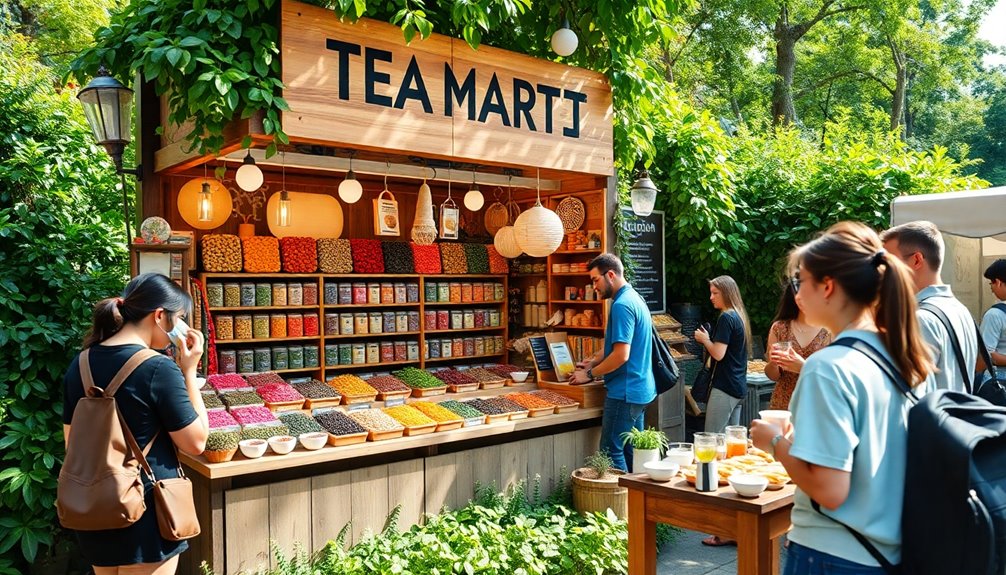
Major players like Starbucks, Lipton, and Tevana are leading the way by investing in sustainable sourcing, ethical practices, and flavor innovations. The industry is shifting toward eco-friendly packaging, organic teas, and new blends infused with herbs and superfoods. Markets in North America, Europe, and Asia are expanding rapidly as consumers seek responsible and exciting tea options. If you want to discover how these companies are transforming the industry further, keep exploring the latest trends and strategies.

Get coffee and tea gear delivered free — and shop member deals
- Fast, free delivery on millions of items
- Access to Prime Big Deal Days deals on October 6–7
- Prime Video, Amazon Music and more included
Key Takeaways
- Major tea brands are investing heavily in sustainable sourcing and eco-friendly packaging to stay competitive.
- Leading companies are expanding into functional and flavored teas aligned with health and wellness trends.
- Key players are forming fair trade collaborations and obtaining certifications to enhance transparency and consumer trust.
- The industry is dominated by large corporations focusing on innovation in flavor, organic options, and socially responsible practices.
- Growing markets include North America, Europe, and Asia, where consumer demand for ethical and premium teas is rising.

The tea industry is experiencing rapid change driven by evolving consumer preferences and technological advancements. As a consumer, you’re likely noticing a shift toward products that prioritize sustainability and unique flavor profiles. Major players are increasingly focusing on sustainable sourcing, ensuring that the tea you enjoy is produced with environmentally friendly and socially responsible practices. This shift isn’t just about corporate responsibility; it’s about delivering a product that aligns with your values. You want to feel good about the tea you drink, knowing it supports ethical farming, fair wages, and eco-friendly cultivation methods. Companies are investing in transparent supply chains, working directly with farmers, and adopting certifications that verify sustainable practices. These efforts help build trust and foster loyalty among consumers who are more conscious than ever about the origins of their tea.
Alongside sustainability, flavor innovation is taking center stage. You’re seeing a wider array of teas infused with natural ingredients, exotic herbs, and even superfoods designed to enhance your experience. Tea brands are experimenting with blends that offer new taste sensations, blending traditional techniques with modern twists. Whether it’s a matcha infused with citrus, a chai with unexpected spices, or herbal teas featuring botanical extracts, the goal is to provide variety and excitement. These innovations cater to your desire for personalized and functional beverages that not only taste good but also offer health benefits. As a result, tea companies are constantly developing new products that challenge conventional expectations and invite you to explore flavors from different cultures and wellness trends.
Major players in the industry are recognizing that both sustainability and flavor innovation are essential to staying competitive. They’re investing in research and development to create teas that meet your demand for quality, ethical sourcing, and unique sensory experiences. You might notice brands highlighting their commitment to eco-friendly packaging or their collaborations with local farmers to promote fair trade. At the same time, they’re expanding their product lines to include functional teas aimed at enhancing focus, relaxation, or immunity—responding directly to your lifestyle needs. This focus on innovation ensures that the industry remains dynamic, constantly adapting to your evolving preferences. Additionally, many companies are exploring high-quality, organic options to meet the increasing consumer demand for pure and unadulterated products. This focus on innovation ensures that the industry remains dynamic, constantly adapting to your evolving preferences. As a consumer, you benefit from a broader selection of teas that are not only better for the planet but also more exciting to taste and explore.
Frequently Asked Questions
How Do Regional Climate Changes Impact Tea Crop Yields Globally?
Regional climate changes substantially impact tea crop yields worldwide. You’ll notice unpredictable weather patterns, like droughts or heavy rains, challenge crop resilience. To adapt, farmers implement climate adaptation strategies, such as selecting resilient tea varieties and altering planting schedules. These efforts help maintain yields despite shifting climates. Ultimately, strengthening crop resilience becomes essential for ensuring sustainable tea production as global temperatures and weather patterns continue to change.
What Are the Latest Biotech Innovations in Tea Cultivation?
Imagine opening a treasure chest—genetic engineering and microbial fermentation are your keys. These biotech innovations revolutionize tea cultivation by enhancing plant resilience and flavor profiles. Genetic engineering allows you to develop drought-resistant, pest-resistant tea plants, ensuring better yields. Microbial fermentation refines tea taste and aroma, creating unique varieties. With these advances, you can sustainably boost quality and productivity, transforming traditional tea farming into a cutting-edge, eco-friendly enterprise.
How Are Consumer Preferences Shifting Toward Organic and Herbal Teas?
You’re noticing a shift in consumer preferences toward organic and herbal teas. People now prioritize herbal blends packed with natural ingredients and seek products with organic certification, ensuring purity and sustainable practices. This trend reflects a growing desire for health benefits and eco-conscious choices. As a result, tea brands are expanding their offerings to include more organic, herbal options, catering to these health-conscious and environmentally aware consumers.
What Role Does E-Commerce Play in Global Tea Sales Expansion?
Imagine your favorite tea shop, now just a click away, riding a digital wave. E-commerce fuels global tea sales by making it effortless to shop online, where digital marketing entices you with irresistible offers. You benefit from logistics optimization, ensuring your favorite brew arrives swiftly. So, you’re not just sipping tea; you’re part of a worldwide tea revolution, all thanks to the power of online platforms and strategic supply chain improvements.
How Are Sustainability Practices Influencing Major Tea Producers’ Strategies?
You’ll notice that sustainability practices like sustainable farming and ethical sourcing are shaping how major tea producers craft their strategies. They prioritize eco-friendly methods, reduce their carbon footprint, and guarantee fair treatment of farmers. This not only boosts their brand reputation but also appeals to conscious consumers. By integrating these practices, they aim to create a more resilient, responsible supply chain, ultimately driving long-term growth and positive environmental impact in the tea industry.
Conclusion
Think of the tea industry like a bubbling kettle—constantly steaming with new trends and innovations. Just last year, a small startup introduced a sustainable tea leaf packaging that reshaped consumer habits worldwide. As you navigate this vibrant market, remember that staying ahead is like keeping the water at just the right boil—adapt quickly and embrace change. The future’s brewed for those who stay innovative and passionate about every leaf poured.
Fall Picks
fall essentials
As an affiliate, we earn on qualifying purchases.