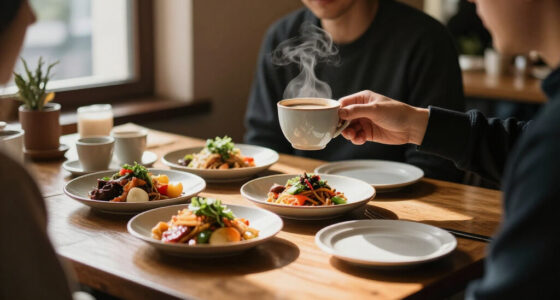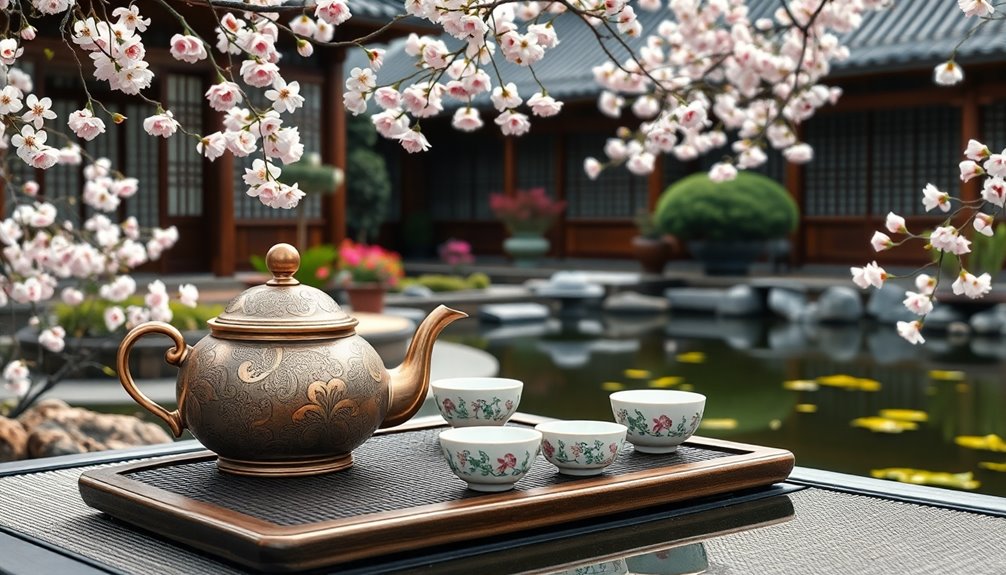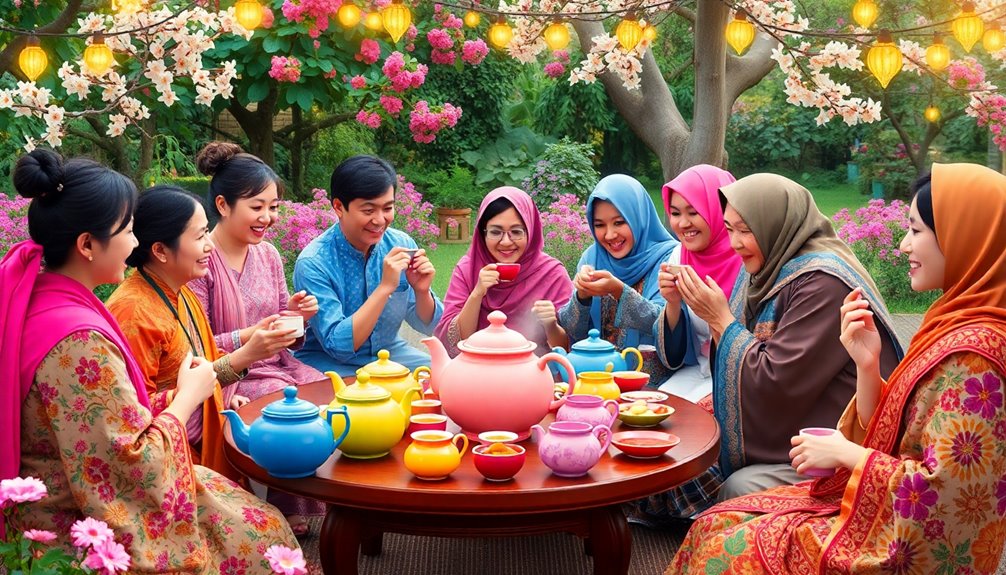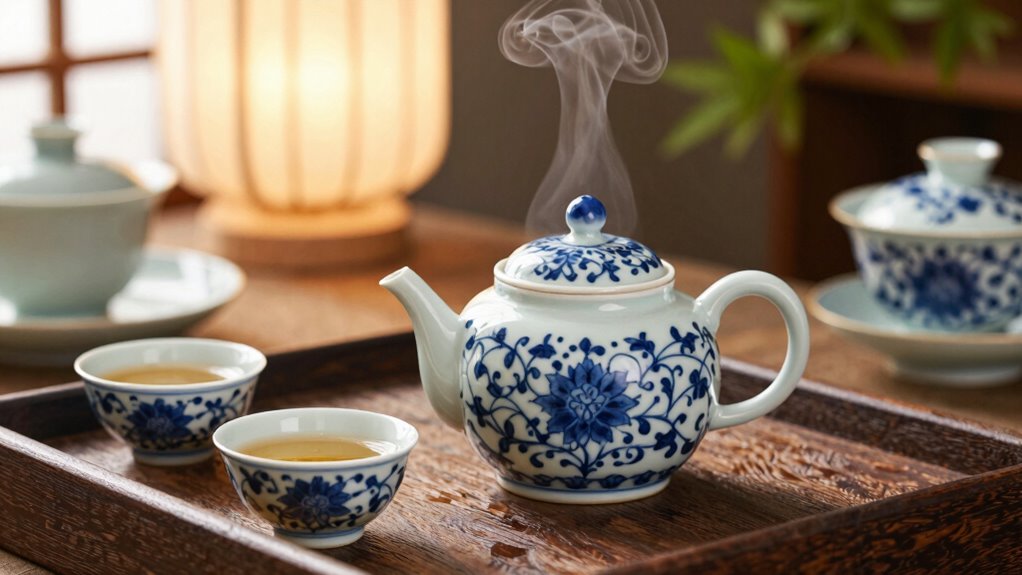

Exploring tea culture and traditions helps you understand the deep values, history, and social bonds of different societies. Tea rituals reflect community identity, respect, and harmony, offering insights beyond just drinking a beverage. Each practice shows unique aesthetic sensibilities and spiritual meanings that connect people across generations. By appreciating these customs, you gain a richer perspective on how cultures express themselves through everyday acts. There’s much more to uncover about tea’s cultural importance—keep exploring to discover its full significance.
Key Takeaways
- Tea ceremonies embody cultural values, rituals, and aesthetic sensibilities unique to each society.
- They serve as symbols of hospitality, social bonding, and respect across diverse cultures.
- Exploring tea traditions reveals deeper insights into community identity and social cohesion.
- Ritual elements in tea practices highlight spiritual depth and cultural preservation.
- Understanding tea culture enriches appreciation of its historical significance and global influence.
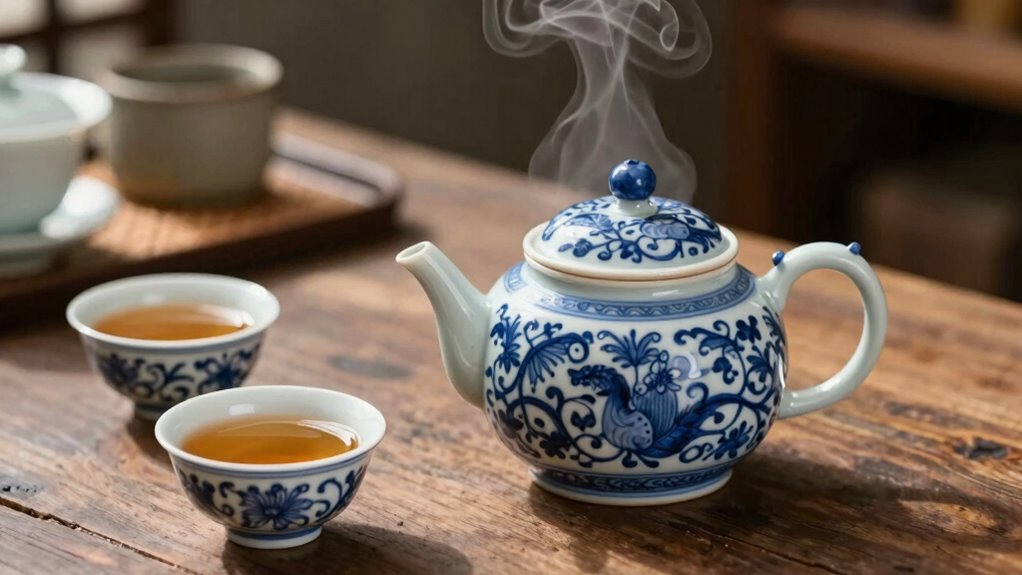
Have you ever wondered how tea has become more than just a beverage, shaping social customs and cultural rituals around the world? It’s a fascinating journey that reveals much about human history and identity. Central to this journey are tea ceremonies, which aren’t merely about drinking tea but are deeply rooted in tradition and meaning. These ceremonies serve as moments of mindfulness, respect, and connection, transforming a simple act into a profound cultural experience. Whether it’s the meticulous Japanese tea ceremony or the relaxed British afternoon tea, each reflects a society’s values and aesthetic sensibilities. You can see how these rituals preserve age-old practices, passed down through generations, emphasizing harmony, discipline, and reverence. Exploring the symbolic meanings of these rituals can deepen your appreciation for their cultural significance. Additionally, many of these traditions incorporate specific ritualistic elements that highlight their spiritual and cultural depth. Understanding the role of tradition in these practices helps to appreciate their significance beyond mere customs.
Tea ceremonies also carry significant cultural symbolism. They often symbolize hospitality, peace, and social bonding, acting as a bridge between individuals and communities. In many cultures, offering tea is a gesture of respect and friendship, signaling a desire to foster trust and understanding. For instance, in Chinese tradition, tea is more than a drink; it’s a symbol of respect and humility, often used in formal and familial settings to honor guests and elders. Similarly, in Morocco, sharing mint tea signifies hospitality and community, reinforcing social bonds. These symbolic gestures elevate tea from everyday refreshment to a meaningful ritual that embodies cultural identity and social cohesion.
As an affiliate, we earn on qualifying purchases.
Frequently Asked Questions
How Did Tea Originally Spread Across Different Countries?
You might find that tea originally spread across countries through the tea trade, which connected China with Central Asia, the Middle East, and eventually Europe. As traders carried tea, cultural diffusion took place, blending local customs with tea-drinking practices. This exchange helped establish diverse traditions worldwide. By following trade routes like the Silk Road, tea’s journey highlights how commerce and cultural interactions fostered its spread, shaping global tea cultures today.
What Are the Health Benefits of Traditional Tea Ceremonies?
Traditional tea ceremonies offer numerous health benefits, such as boosting your intake of tea antioxidants, which help fight free radicals and promote overall wellness. Participating in ceremonial mindfulness allows you to slow down, reduce stress, and enhance mental clarity. This focused, calming practice not only supports your physical health but also nurtures emotional balance, making tea ceremonies a valuable daily ritual for both body and mind.
How Do Tea Rituals Vary Between Cultures?
Imagine delicate tea symbolism blending with ceremonial attire, your experience shifting across cultures. In Japan, you bow and wear traditional kimono, emphasizing harmony. In Morocco, vibrant, intricate teapots symbolize hospitality, with ornate dress reflecting warmth. Meanwhile, Britain’s afternoon tea features refined manners and elegant attire, highlighting tradition. Each ritual highlights unique values, blending visual elements and customs, making every tea ceremony a vivid cultural tapestry worth exploring deeply.
What Are Common Etiquette Rules During Tea Ceremonies?
During tea ceremonies, you should follow specific tea etiquette and ceremonial manners. Always handle teacups gently and avoid pointing the cup’s handle at anyone. When pouring, fill cups modestly and offer the tea with both hands, showing respect. Silence is appreciated to maintain the ceremony’s serenity. Pay attention to the host’s cues, and thank them afterward. Respecting these customs guarantees you honor the tradition and enjoy a harmonious experience.
How Has Modern Society Influenced Traditional Tea Practices?
Modern society has reshaped traditional tea practices like a river carving new paths. Tea commercialization and digital influences flow into these customs, making them more accessible yet at times diluted. You might find trendy tea cafes replacing time-honored rituals or share brewing tips online instead of in person. While these changes can refresh traditions, they also risk watering down their cultural depth, urging you to find a balance between innovation and respect.
Conclusion
Understanding tea culture isn’t just about sipping a warm drink; it’s about appreciating centuries of tradition that shape societies. Did you know that over 2.3 billion cups of tea are consumed worldwide daily? By exploring these customs, you gain insight into different cultures and their values. So, next time you brew a cup, remember you’re joining a global community that cherishes this ancient, meaningful ritual. It’s more than tea—it’s a shared cultural experience.