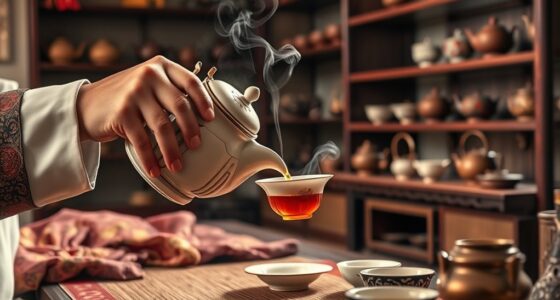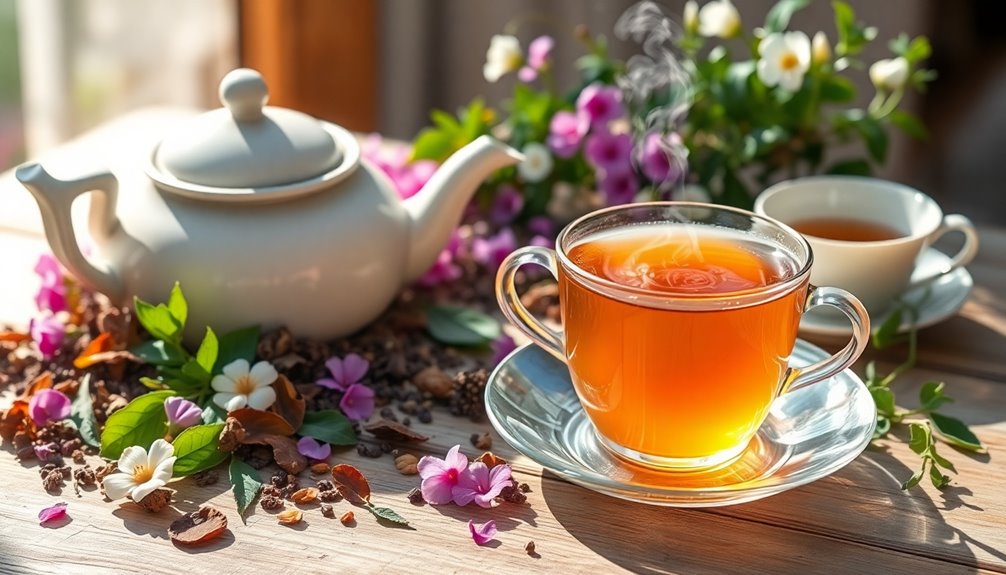
Mastering tea brewing starts with understanding oxidation, which affects flavor; green teas stay fresh, while black teas develop richness. Water quality, especially mineral content, influences taste—filtered water often brings out better nuances. Use the right temperature—160-180°F for green, 200°F for black—and steep times for each tea type. Balancing these factors enhances your brew. Keep exploring these techniques further, and you’ll reveal even deeper flavors and perfect your perfect cup.

Get coffee and tea gear delivered free with Prime
- Fast, free delivery on millions of items
- Prime Video, Amazon Music and more included
- Member-only deals all year
Key Takeaways
- Proper oxidation levels of tea leaves influence flavor, aroma, and brewing temperature requirements.
- Water mineral content significantly affects tea extraction and overall taste profile.
- Precise temperature control optimizes flavor release and prevents over- or under-extraction.
- Steeping time must be carefully managed to balance flavor strength and prevent bitterness.
- Understanding tea chemistry and water quality transforms brewing into a personalized, artful process.
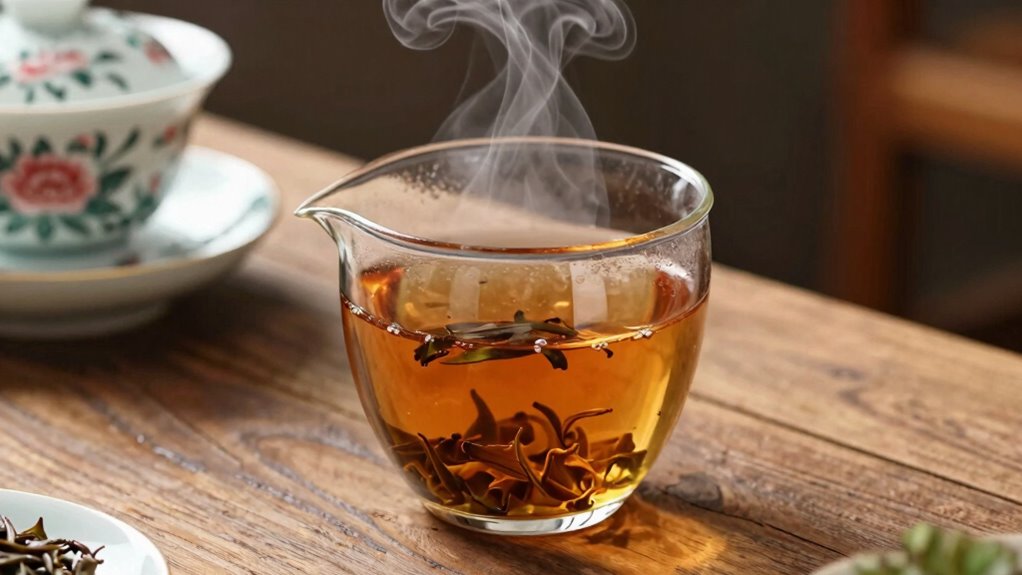
Have you ever wondered how to brew the perfect cup of tea? The secret lies in understanding the subtle science behind tea leaf oxidation and water mineral content. When you steep tea leaves, they undergo oxidation—a natural process where enzymes react with oxygen, transforming the leaves’ chemical structure. Lightly oxidized green teas retain more of their fresh, grassy flavors, while fully oxidized black teas develop richer, malty notes. Knowing how oxidation affects flavor helps you choose the right brewing time and temperature, ensuring you extract the desired taste profile. For instance, over-oxidized leaves brewed too long can turn bitter, while under-oxidized leaves might taste weak or grassy. The key is balancing these factors to match your preferred flavor.
Understanding tea oxidation helps you choose the right brewing time and temperature for perfect flavor.
Equally important is the mineral content of your water. Water isn’t just a medium for extraction; its mineral composition influences how flavors develop. Hard water, rich in calcium and magnesium, can make your tea taste more robust but may also mask delicate nuances. Soft water, with fewer minerals, often produces a cleaner, more refined flavor, but it might sometimes result in a flatter taste. Ideally, use filtered or spring water to strike a balance—enough minerals to enhance the tea without overpowering it. Adjusting your water’s mineral content can significantly improve your brewing results, especially when brewing high-quality or subtle teas. Additionally, understanding the role of mineral content in influencing extraction can help you choose the best water for your preferred teas. Exploring water mineral balance can further refine your brewing process and elevate your tea experience. Recognizing how water quality impacts extraction allows you to optimize each cup even further. Paying attention to water temperature can help prevent over- or under-extraction, ensuring a more consistent flavor profile.
Temperature control also plays a crucial role. Different teas require different steeping temperatures to optimize the release of flavors without over-extracting bitterness. For green teas, keep the water around 160-180°F to preserve freshness. For black or oolong teas, a higher temperature of about 200°F helps unlock deeper aromas. Proper temperature, combined with your understanding of oxidation levels, allows you to fine-tune each brew, making sure you’re not just pouring hot water but crafting a balanced, flavorful cup. Interestingly, water pH levels can also influence how tea flavors develop and should be considered when adjusting brewing conditions.
Timing is just as critical. Steep your tea for the right duration—few seconds too long or short can alter the overall experience. For delicate green teas, a 2-3 minute steep works well, while robust black teas might need 3-5 minutes. Keep an eye on the clock and taste periodically to find your perfect balance. Remember, the interaction of tea leaf oxidation, water mineral content, temperature, and steeping time all work together to create the ideal cup.
In essence, mastering tea brewing isn’t just about following a recipe; it’s about understanding the science behind each step. When you pay attention to how oxidation impacts flavor and how water minerals influence extraction, you gain the ability to customize your brewing process. This knowledge helps you craft a cup that truly reflects your taste preferences, elevating your tea experience from ordinary to extraordinary.
As an affiliate, we earn on qualifying purchases.
Frequently Asked Questions
How Does Water Mineral Content Affect Tea Flavor?
Water mineral content greatly affects your tea’s flavor through mineral interactions. If your water has high mineral levels, it can make the tea taste dull or overly bitter, while soft water enhances delicate flavors. Water composition influences extraction, so choosing water with balanced mineral content guarantees a smoother, more vibrant taste. Adjusting mineral levels or using filtered water helps you control the flavor, making every cup just the way you like it.
Can Brewing Temperature Change the Health Benefits of Tea?
Did you know that brewing temperature can influence tea’s health benefits? When you brew at higher temperatures, you promote tea oxidation, which releases more health antioxidants, enhancing its potential benefits. Conversely, lower temperatures preserve delicate compounds, maintaining subtle flavors and antioxidants. By adjusting your brewing temperature, you can optimize the balance between flavor and health benefits, ensuring you get the most out of every cup.
What’s the Best Way to Store Tea Leaves?
To keep your tea leaf freshness intact, store them in an airtight storage container, preferably made of metal or opaque glass, to protect against light and air. Keep the container in a cool, dry place away from strong odors. Avoid clear plastic containers, as they can let in light and degrade the leaves over time. Proper storage preserves flavor and aroma, ensuring your tea stays fresh longer.
Do Different Cup Materials Impact the Taste of Brewed Tea?
Different cup materials impact the taste of brewed tea by influencing how heat and flavors interact. Ceramic, glass, and metal cups each alter the tea leaf oxidation process differently, affecting aroma and flavor clarity. You notice the subtle nuances more clearly when your cup material impacts the tea’s oxidation, revealing how cup choices shape your tea experience. So, select your cup mindfully to enhance and enjoy every sip’s unique character.
How Does Altitude Influence Tea Brewing Times?
Altitude effects profoundly influence tea brewing times because higher elevations have lower boiling points. You’ll notice that brewing efficiency decreases at higher altitudes, meaning it takes longer for water to reach the ideal temperature. This slower process can result in a more nuanced flavor extraction. To adapt, you might need to increase brewing time slightly, ensuring your tea is properly steeped despite the decreased boiling efficiency caused by altitude.
Conclusion
As you embrace these tea brewing secrets, remember that every sip carries a gentle reminder of patience and care. Each method, subtly woven into your routine, invites a moment of quiet reflection amid life’s rush. Let your brewing be a tender dance, softly revealing the warmth and comfort hidden within each cup. In this delicate ritual, find a gentle escape—where the simple act of making tea becomes a cherished journey, softly guiding you toward serenity.
Halloween Picks
halloween
As an affiliate, we earn on qualifying purchases.