The history and evolution of tea brewing equipment show a journey from ancient ceremonial tools like porcelain teapots, bamboo whisks, and handcrafted cups that emphasized tradition, craftsmanship, and spiritual connection. Over time, industrialization brought mass-produced metal and glass tools, blending tradition with modern appliances like electric kettles and automatic infusers that offer convenience and precise control. If you’re curious about how these tools developed and adapted, exploring the details further will reveal a fascinating story of cultural significance and technological progress.
Key Takeaways
- Traditional tea tools originated in ancient China and Japan, emphasizing craftsmanship, spirituality, and cultural symbolism.
- These tools evolved from handcrafted ceremonial utensils to mass-produced items due to industrialization.
- The advent of metal, glass, and other materials allowed for more durable, precise, and accessible brewing equipment.
- Modern tea appliances like electric kettles and programmable infusers integrate convenience with traditional practices.
- The evolution balances preserving cultural rituals with technological innovation to enhance the tea brewing experience.
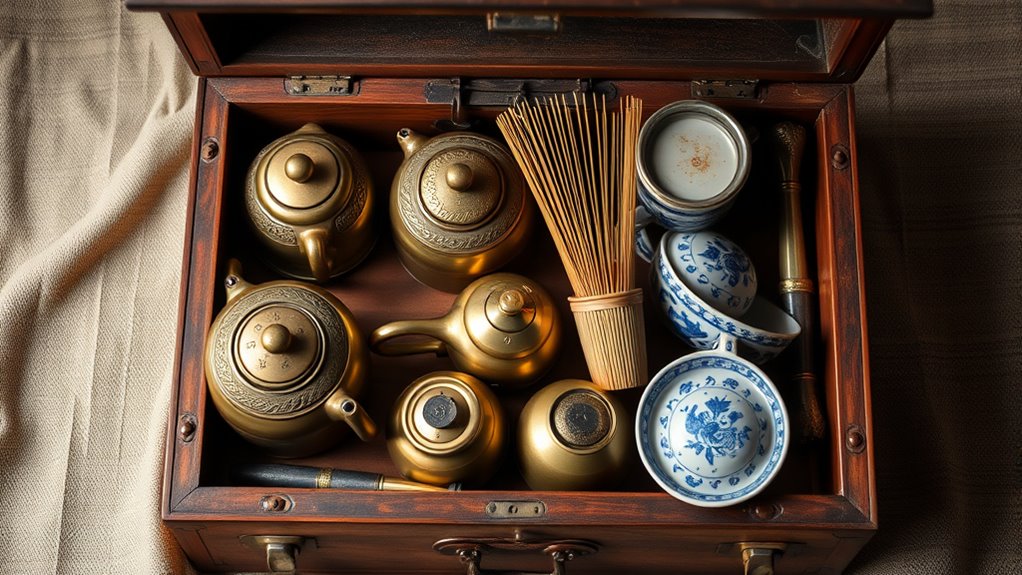
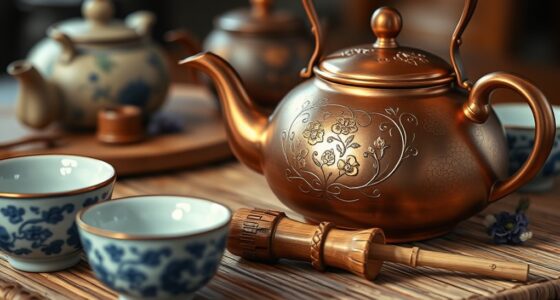
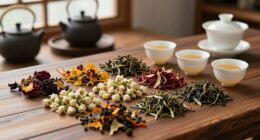
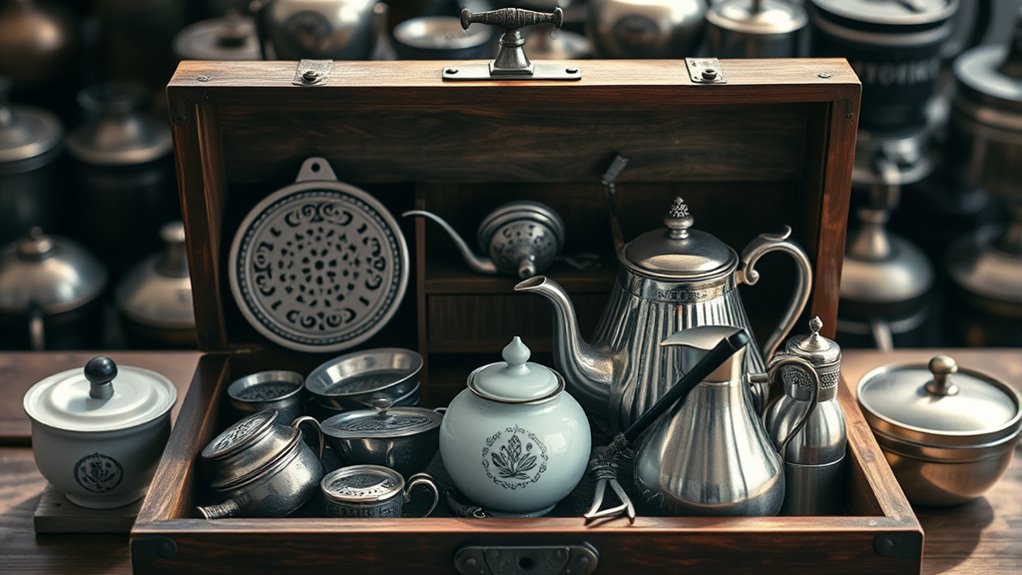
Have you ever wondered how the tools we use to brew tea have evolved over centuries? The journey from traditional ceremonial tools to modern appliances reveals a fascinating story of innovation and cultural significance. In ancient times, tea preparation was deeply rooted in ritual. In China, for example, elaborate ceremonial tools such as porcelain teapots, bamboo whisks, and finely crafted cups played a central role in honoring tea’s cultural importance. These tools weren’t just functional; they symbolized respect, artistry, and spiritual connection. Similarly, in Japan, the tea ceremony involved specific utensils like iron kettles, chasen (bamboo whisks), and chawan (tea bowls), each meticulously designed to enhance the experience. These ceremonial tools emphasized harmony, patience, and mindfulness, reflecting the tea’s role beyond mere consumption. As tea culture spread across Asia, tools became more specialized and refined, often handcrafted and passed down through generations. They embodied tradition, artistry, and social status, all while serving the practical purpose of brewing perfect tea.
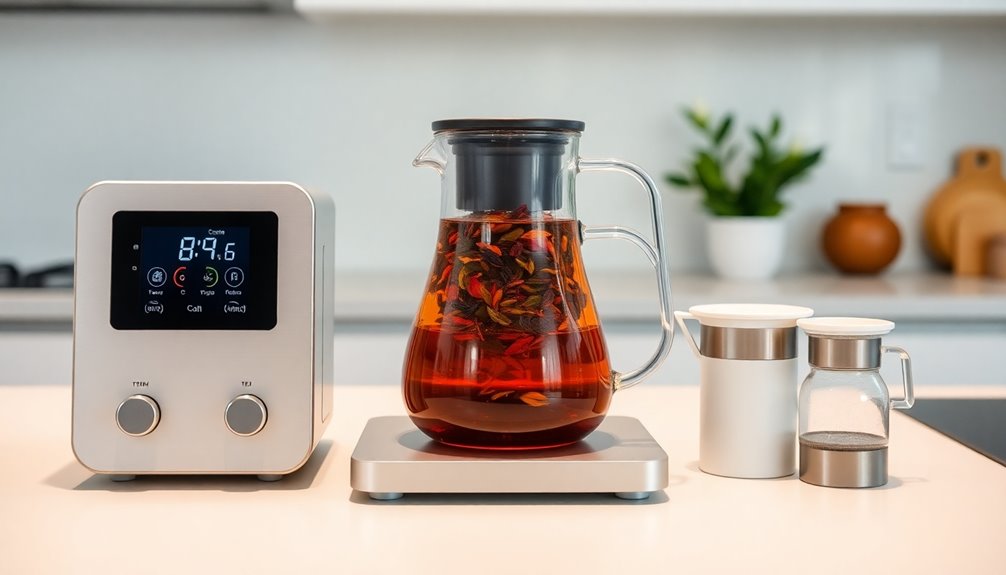
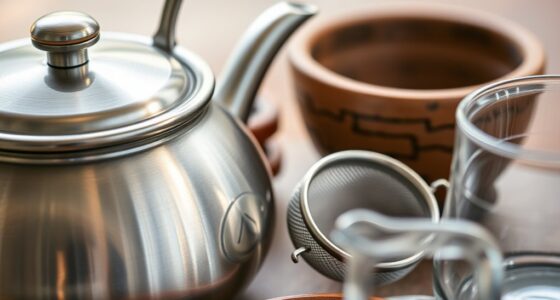
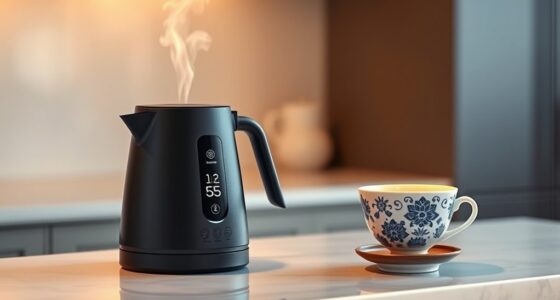
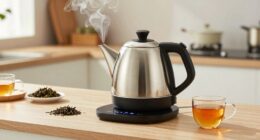
With the advent of industrialization and technological progress, the landscape of tea brewing tools began to shift dramatically. The introduction of metal and glass allowed for mass production and increased accessibility. Yet, even as modern appliances entered homes worldwide, many enthusiasts still cherish traditional ceremonial tools for their cultural value. Today, while you can find sophisticated electric kettles, programmable tea makers, and automatic infusers, the essence of tea preparation often remains rooted in tradition. These modern appliances offer convenience—precise temperature control, timers, and automatic steeping—making it easier to enjoy a perfect cup with minimal effort. They cater to busy lifestyles, ensuring consistency and efficiency that traditional tools couldn’t always provide. Interestingly, the development of specialized tea equipment has further enhanced the brewing experience, blending tradition with innovation. Nonetheless, many tea lovers still appreciate the ritualistic aspect of using ceremonial tools, finding comfort in the tactile process and cultural connection it offers.
Ultimately, the evolution from ceremonial tools to modern appliances highlights a balance between tradition and innovation. Whether you prefer the timeless elegance of a handcrafted porcelain teapot or the convenience of a sleek, automated tea maker, both serve the fundamental purpose of brewing a satisfying cup of tea. The history of tea brewing equipment underscores a broader story of human ingenuity—how we adapt and refine tools to suit our needs while honoring cultural roots. As you enjoy your next cup, consider the centuries of craftsmanship and technological progress that have shaped your experience. From ceremonial ritual to modern convenience, the journey of tea brewing tools reflects our enduring love affair with this ancient beverage.

White Porcelain Teapot, Small Lotus Tea Pot Coffee Tea Water Pot Vintage Ceramic Gooseneck Little Kettle (14oz)
BEST TEAPOTS ARE PORCELAIN! -white teapot is porcelain made in China, because this material is the best for…
As an affiliate, we earn on qualifying purchases.
As an affiliate, we earn on qualifying purchases.
Frequently Asked Questions
What Are the Latest Innovations in Tea Brewing Technology?
You’ll find that the latest innovations in tea brewing technology focus on precision brewing and smart infusion systems. These advancements allow you to customize steeping time, temperature, and infusion strength for a perfect cup every time. Smart infusion devices connect to apps, giving you control and real-time adjustments. This tech guarantees consistent quality, enhances flavor extraction, and makes brewing more convenient, so you can enjoy a personalized tea experience at home or on the go.
How Do Different Cultures Influence Tea Brewing Equipment Design?
You’ll notice that over 80% of traditional tea brewing tools reflect cultural aesthetics and regional materials, shaping their unique designs. Different cultures influence equipment by emphasizing specific aesthetics—like Japanese porcelain or Chinese Yixing clay—integrating regional materials to enhance flavor and tradition. This fusion creates diverse, functional, and visually appealing devices that honor local heritage while enriching your tea experience.
What Are the Environmental Impacts of Modern Tea Brewing Methods?
You should consider that modern tea brewing methods can impact the environment through plastic waste from disposable pods and cups, which often end up in landfills. Additionally, they tend to use more energy, especially with electric kettles and automated machines, increasing overall energy consumption. By choosing reusable equipment and energy-efficient devices, you can reduce plastic waste and lower your environmental footprint while enjoying your tea.
How Has Automation Changed Traditional Tea Brewing Practices?
Automation has revolutionized traditional tea brewing practices, transforming a delicate art into a symphony of efficiency. You now enjoy consistent quality and faster preparation, yet it often comes at the expense of manual craftsmanship. Like a well-oiled machine, automated systems streamline the process, but some tea connoisseurs argue that the soul of brewing lies in hands-on tradition. Embrace the balance—efficiency meets craftsmanship for truly satisfying tea.
What Future Trends Are Anticipated in Tea Brewing Equipment Development?
You can expect future tea brewing equipment to focus on enhancing tea infusion and brewing precision. Smart technology will likely allow you to customize brewing parameters for perfect flavor every time. Automated systems may incorporate sensors to monitor temperature and steeping time, ensuring ideal extraction. As a result, you’ll enjoy consistent quality, convenience, and a more personalized tea experience, making your brewing process simpler and more precise than ever before.

Chefman Electric Kettle with Temperature Control, 5 Presets LED Indicator Lights, Removable Tea Infuser, Glass Tea Kettle & Hot Water Boiler, 360° Swivel Base, BPA Free, Stainless Steel, 1.8 Liters
FAST BOILING: Chefman kettles boil water fast. Boil your water for as little as 3 minutes for tea,…
As an affiliate, we earn on qualifying purchases.
As an affiliate, we earn on qualifying purchases.
Conclusion
As you explore the history of tea brewing equipment, you realize it’s a journey through centuries of innovation and tradition. From ancient clay pots to modern high-tech infusers, each piece tells a story. Imagine holding the most legendary brewing device in your hands—such power to transform simple leaves into a perfect brew. Embrace this evolution and elevate your tea experience; after all, no other craft holds such timeless magic as brewing tea.

HHT Electric Tea Maker with Infuser, ±1℉ Precise Temperature Control, Glass Electric Kettle for Herbal,Flowers,Fruit Tea and Loose Leaf,BPA-Free,Auto Shut-Off,Brewing Program,Keep Warm,0.8L/27oz Grey
±1℉ Accurate Temperature Control: HHT Electric tea maker is built-in intelligent base's to adjust temperature control program from…
As an affiliate, we earn on qualifying purchases.
As an affiliate, we earn on qualifying purchases.

ZENSO Premium Matcha Whisk Set – 10 Piece Japanese Matcha Tea Ceremony Kit | Matcha Bowl, Tea Canister, Purple Bamboo Whisk, Whisk Holder, Sifter, Scoop & Scoop Holder, Tea Cup, Tea Cloth, Tea Spoon
COMPLETE 10-Pcs MATCHA CEREMONY SET – Inspired by the timeless Japanese tea ritual, ZENSO brings you an all-inclusive…
As an affiliate, we earn on qualifying purchases.
As an affiliate, we earn on qualifying purchases.