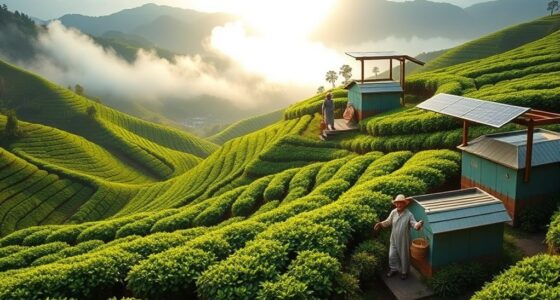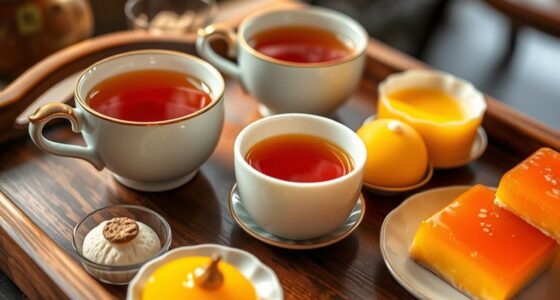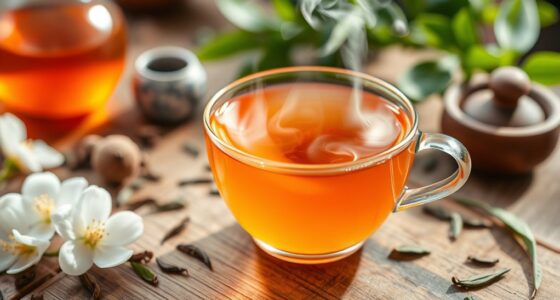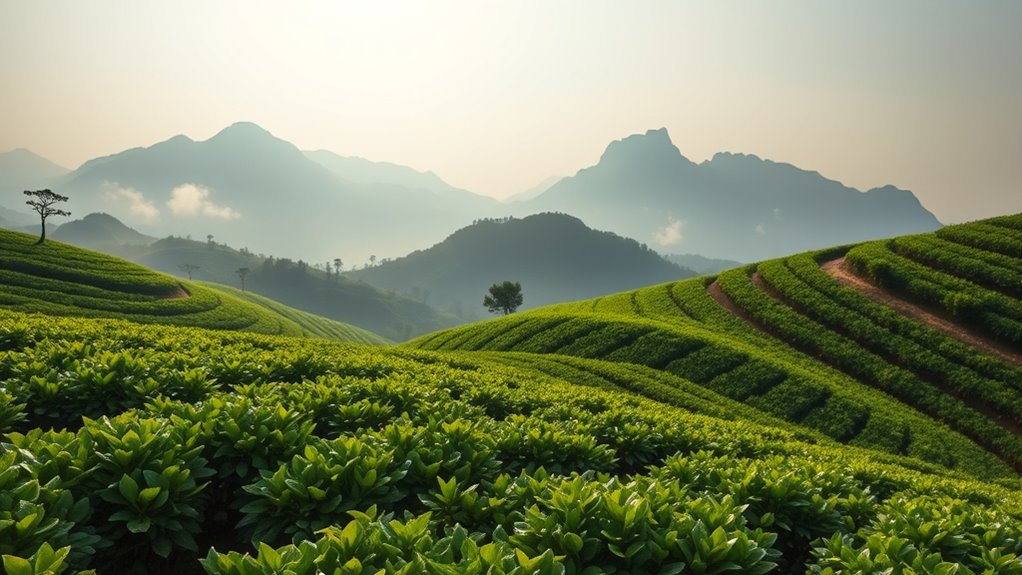

Taiwan’s tea varieties come from diverse regions, each with unique terroirs and climate influences. High-altitude areas like Alishan and Sun Moon Lake produce delicate, floral teas, while lowland plains and coastal zones yield earthy, robust flavors with mineral notes. Cooler temperatures and misty conditions enhance lightness, whereas warmer regions create bolder profiles. Understanding these regional differences helps you appreciate the distinctiveness of Taiwanese teas and the craftsmanship behind them. Explore further to uncover how terroir shapes every cup.
Listen free for 30 days with Audible
Thousands of audiobooks and originals — cancel anytime.
As an affiliate, we earn on qualifying purchases.
Key Takeaways
- Taiwan’s diverse terroirs, including high-altitude mountains and lowland plains, produce distinct tea flavors and profiles.
- High-altitude regions like Alishan create teas with floral aromas and delicate sweetness.
- Lowland areas such as Pingtung yield robust, earthy teas with full-bodied characteristics.
- Coastal regions impart mineral notes, adding complexity to regional tea varieties.
- Processing techniques vary regionally, influencing flavor and aroma based on local traditions and climate.
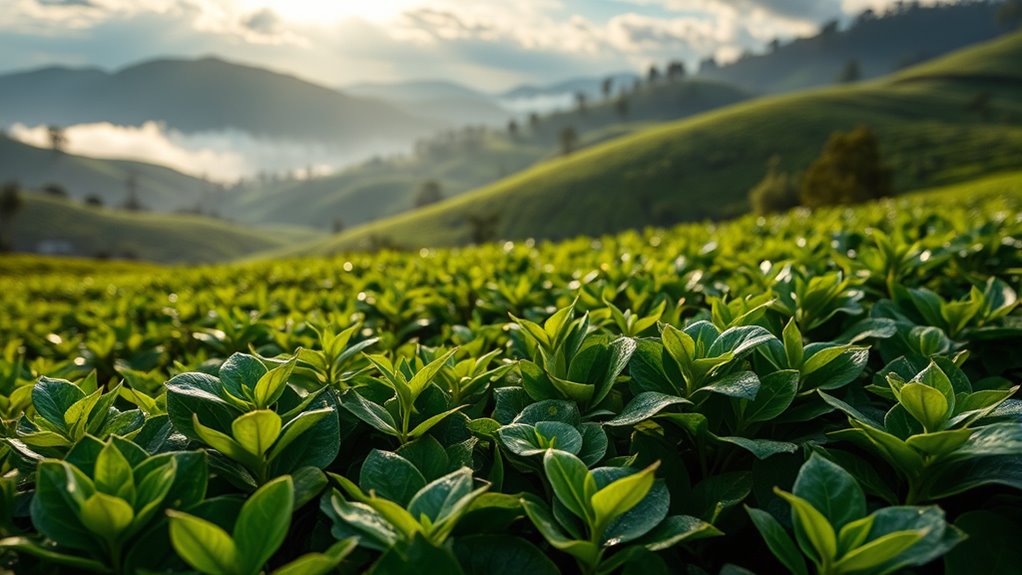
Have you ever wondered what makes Taiwanese teas stand out? It’s a combination of unique regional tea festivals, diverse terroirs, and the meticulous tea processing techniques that transform fresh leaves into exceptional brews. Taiwan’s distinct climate and soil conditions give each region its own flavor profile, making the country a treasure trove for tea lovers. When you explore Taiwanese teas, you’ll notice how local traditions and celebrations, like regional tea festivals, highlight the cultural importance of tea and showcase the craftsmanship behind each variety. These festivals serve as a platform for growers and artisans to display their latest creations, share techniques, and preserve centuries-old traditions. Attending these events gives you a deeper understanding of how regional influences shape the teas, from the cultivation stage to the final processing.
Understanding tea processing techniques is key to appreciating the diversity among Taiwanese teas. For example, oolong teas from the mountainous areas are often semi-oxidized, which balances floral aroma with a smooth, rich taste. In contrast, black teas from the warmer lowlands might undergo full oxidation, resulting in a bold and robust flavor. Green teas, like the famous Alishan varieties, are usually minimally processed to retain fresh, grassy notes. The way leaves are harvested, with attention to picking seasons and leaf maturity, also impacts the final product. Skilled artisans carefully control each step—wilting, rolling, fermenting, and drying—to bring out the best characteristics of the regional terroir. This mastery of tea processing techniques is what elevates Taiwanese teas to international acclaim.
Your experience of Taiwanese tea isn’t complete without recognizing how regional terroir influences flavor. The high-altitude regions, such as Alishan and Sun Moon Lake, produce teas with a delicate sweetness and floral aroma, thanks to cooler temperatures and misty conditions. Lowland areas, like the Pingtung Plain, often yield teas with a more robust, earthy profile because of their warmer climate and richer soil. Coastal regions can impart a slight mineral note, adding complexity to the tea’s character. These regional differences are celebrated during local tea festivals, where growers often demonstrate traditional methods, share stories about their land, and showcase the unique qualities of their harvests. By paying attention to these regional distinctions, you’ll develop a richer appreciation for how terroir shapes Taiwanese teas and why each cup can be so uniquely satisfying.

Xin Qing Taiwan Oolong Tea Taiwanese High Mountain Oolong Tea Taiwan Gaoshan Ulong Tea Loose Leaf Oolong 200g/7.05oz
- Rich Golden Yellow Tea Soup: Natural aroma and sweetness
- Moderate Fermentation: Enhanced flavor strength
- Suitable for Various Oolongs: Green, black, frozen top
As an affiliate, we earn on qualifying purchases.
As an affiliate, we earn on qualifying purchases.
Frequently Asked Questions
How Does Altitude Affect Tea Flavor in Taiwan?
Altitude influences tea flavor markedly, as higher elevations tend to create a cooler climate that slows leaf growth. This slower development enhances flavor development, resulting in a more complex, nuanced taste with brighter, more vibrant notes. You’ll notice that teas from higher altitudes often have a refined aroma and a smoother finish, making them highly prized. So, the altitude influence directly shapes the unique character and quality of Taiwanese teas.
What Are the Traditional Harvesting Methods in Different Regions?
You might think harvesting is just about grabbing leaves, but in Taiwan, it’s a delicate dance. During specific harvesting seasons, farmers use precise picking techniques—hand-plucking only the tender buds and young leaves—ensuring each tea’s unique character. Across regions, timing and skill make all the difference, transforming simple tea leaves into an art form. So, your perfect cup starts with these traditional methods, rooted deeply in centuries of meticulous craftsmanship.
How Do Soil Types Influence Tea Taste Profiles?
Soil types substantially influence your tea’s taste profiles by shaping its mineralogy and microbial diversity. Rich mineral content, like volcanic soil, adds unique umami and depth, while sandy soils may produce lighter, crisper flavors. Microbial diversity in the soil also affects fermentation and aroma development, giving each tea a distinctive character. By understanding these soil influences, you can better appreciate how terroir shapes the nuanced flavors of Taiwanese tea.
Are There Unique Processing Techniques Specific to Certain Areas?
You might think all Taiwanese teas share similar processing methods, but regional craftsmanship truly influences techniques. For example, Alishan teas often undergo gentle withering and hand-rolling, while Sun Moon Lake teas may involve unique roasting steps. These regional processing techniques create distinct flavor profiles, showcasing local expertise. So, yes, certain areas employ specific processing methods that contribute to the unique character of their teas, reflecting both tradition and terroir.
What Role Does Climate Variation Play in Regional Tea Characteristics?
Climate impact profoundly influences the flavor development of Taiwanese tea, shaping its unique regional characteristics. When you consider climate variations like temperature, humidity, and rainfall, you realize how they alter tea leaves’ growth and chemical composition. This, in turn, affects the aroma, taste, and overall quality. You’ll notice that teas from different regions showcase distinct profiles, directly reflecting the climate’s role in their subtle and complex flavor development.
Conclusion
As you savor Taiwanese tea, remember that each sip is a journey through the island’s unique landscapes and rich terroir. Just like a carefully painted masterpiece, its regional varieties tell stories of tradition, climate, and soil. Embrace the depth and diversity, knowing you’re tasting the soul of Taiwan itself. Let each cup be a reminder that great tea is more than just a drink — it’s a living, breathing reflection of its land.
Flea & tick season Picks
flea and tick prevention
As an affiliate, we earn on qualifying purchases.