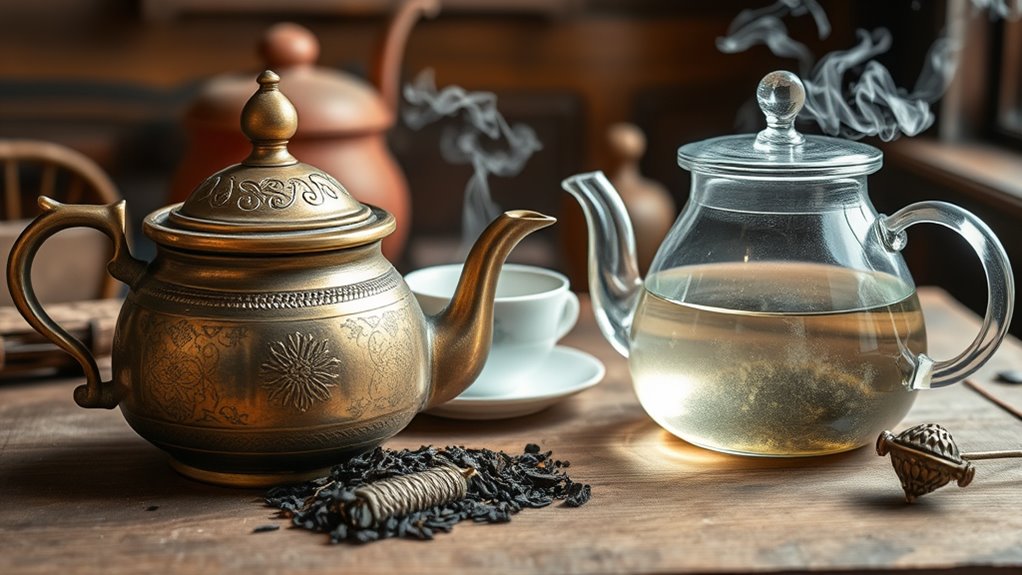

The history and evolution of tea brewing show how cultures have transformed a simple act into an art form. From ancient rituals in Japan and China focusing on mindfulness and harmony, to modern techniques like pour-over and cold brew, technological innovations and cultural exchanges have shaped how we prepare tea. This journey combines tradition with innovation, revealing a rich story of mastery and patience. Keep exploring to uncover more about how tea brewing continues to evolve.
Key Takeaways
- Tea brewing has evolved from simple steeping over open fires to sophisticated techniques like gong fu and pour-over.
- Ancient rituals such as the Japanese chadou and Chinese ceremonies emphasize mindfulness and harmony in preparation.
- Technological advances, including teapots, infusers, and temperature control devices, have refined brewing precision over centuries.
- Trade routes and cultural exchanges introduced new tools, methods, and specialty teas, shaping modern brewing practices.
- Contemporary innovations blend tradition with experimentation, preserving the art while adapting to modern tastes and technologies.
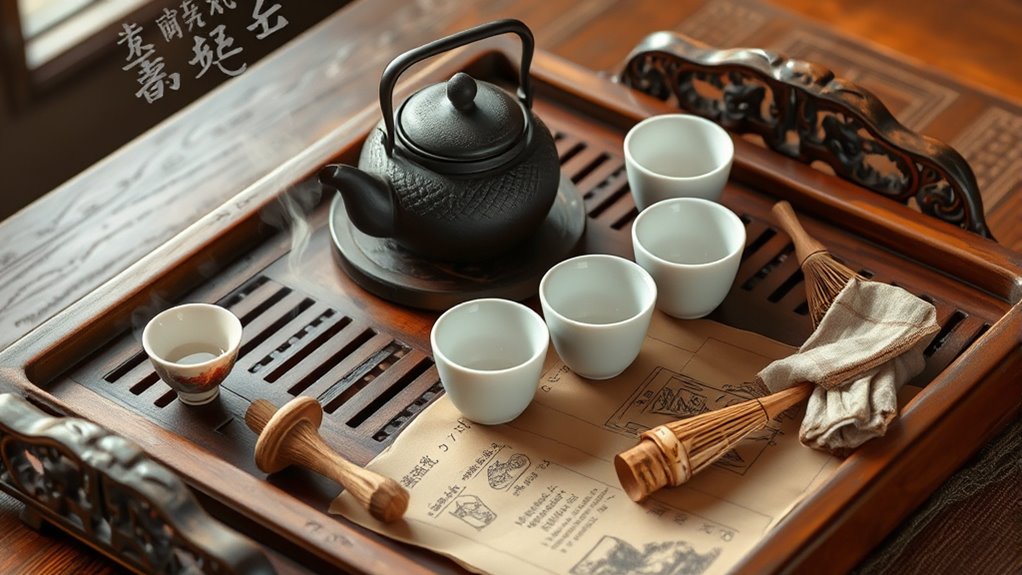
Tea brewing and preparation have a rich history that reflects centuries of cultural innovation and adaptation. Throughout the ages, different societies have developed unique approaches to transforming tea leaves into the comforting beverage we enjoy today. One of the most significant influences on tea preparation is the traditional tea ceremony, a ritual that emphasizes mindfulness, precision, and respect for the process. These ceremonies, whether in Japan, China, or other parts of Asia, highlight the importance of carefully curated brewing techniques that enhance flavor, aroma, and overall experience.
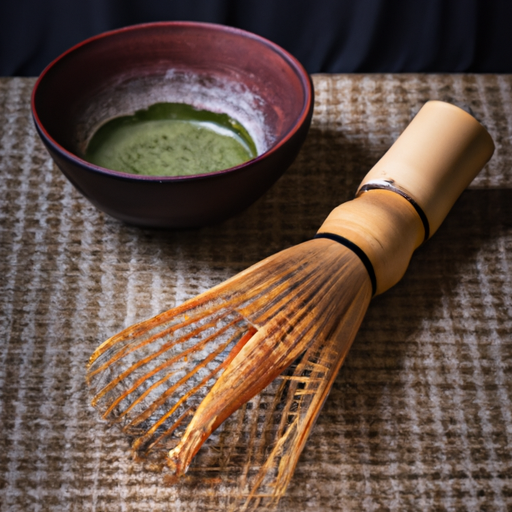
In many cultures, the tea ceremony isn’t just about making tea; it’s a spiritual practice that brings people together, fostering connection and reflection. For example, the Japanese tea ceremony, or “chanoyu,” involves specific steps such as whisking powdered green tea (matcha) with hot water in a bowl, using precise movements that have been refined over centuries. These rituals are designed to create harmony between the host, guest, and the environment, elevating tea preparation from a simple act to an art form. Similarly, Chinese tea ceremonies focus on the delicate balance of temperature, steeping time, and the quality of the leaves, emphasizing brewing techniques that extract the full depth of flavor. These methods often involve multiple infusions, allowing the same leaves to produce a variety of tastes, highlighting the skill and patience required.
Over time, brewing techniques have evolved considerably, influenced by technological advances and cultural exchanges. Early methods relied on boiling water over open fires and steeping loose leaves in simple containers, but as trade routes expanded, so did the sophistication of brewing. The invention of teapots, infusers, and temperature-controlled kettles allowed enthusiasts to perfect their craft, experimenting with steeping times and leaf-to-water ratios. In recent history, the rise of specialty teas and the global tea culture has led to the development of precise brewing techniques aimed at maximizing flavor profiles. Pour-over methods, Gong Fu style brewing, and even cold brew techniques demonstrate how modern enthusiasts continue to refine the art of tea preparation.
Additionally, understanding the contrast ratio of the brewing process is essential, as it affects the clarity and depth of flavor in each cup. No matter the method, the core principle remains: good brewing techniques are essential to reveal the full potential of tea. Each approach reflects a deep understanding of the ingredients and a respect for tradition. As you explore different brewing styles, you’ll notice how each technique influences the taste, aroma, and overall experience of your tea. The evolution of tea preparation showcases a continuous journey of innovation, blending ancient rituals with contemporary practices to create a timeless art that connects past and present in every cup.
Frequently Asked Questions
How Have Modern Technologies Changed Traditional Tea Brewing Methods?
Modern technologies have revolutionized tea brewing by introducing tea automation and enhancing brewing precision. You can now enjoy perfectly brewed tea with just a push of a button, thanks to automated machines that control temperature and steeping time. This reduces guesswork, guarantees consistency, and saves time. With these advancements, you’re able to enjoy a high-quality, tailored tea experience every time, making traditional methods more accessible and convenient.
What Are the Environmental Impacts of Tea Cultivation Throughout History?
Like a ripple in a pond, tea cultivation impacts the environment over time. You might notice that unsustainable farming practices, including excessive pesticide use, harm local ecosystems and soil health. Historically, increased demand led to deforestation and water depletion. Today, embracing sustainable farming methods helps reduce these effects, preserving biodiversity and ensuring that future generations can enjoy their tea without compromising environmental integrity.
How Do Cultural Differences Influence Tea Preparation Techniques Worldwide?
You see that cultural differences shape how you prepare tea worldwide. In some regions, ceremonial rituals dictate precise steps, emphasizing respect and tradition, while others focus on quick, practical brewing methods. Regional ingredients influence flavor and technique, like adding herbs or spices. These customs reflect local values and history, making your tea experience unique depending on where you are. Embracing these differences enriches your appreciation of tea’s diverse cultural significance.
What Role Did Trade Routes Play in Spreading Tea Brewing Practices?
Trade routes like the Silk Road played a crucial role in spreading tea brewing practices by facilitating cultural exchange. As you explore different regions, you’ll notice how merchants and travelers introduced tea traditions to new areas, blending techniques and flavors. This exchange helped shape diverse brewing styles worldwide, making tea more than just a beverage—it’s a symbol of connection, adaptation, and shared cultural history through centuries of trade.
How Might Future Innovations Alter Traditional Tea-Making Processes?
Future innovations like tea brewing automation and smart infusion techniques will revolutionize your tea experience. While traditional methods focus on handcrafting and ritual, these advancements bring precision, consistency, and convenience. You’ll enjoy perfectly brewed cups with minimal effort, blending tradition with technology. As machines adapt to your preferences, the art of tea-making evolves, offering personalized flavors while preserving the essence of timeless practices.
Conclusion
As you’ve seen, the journey of tea brewing has transformed remarkably over centuries. But what if future innovations could change your entire tea experience? Will new methods preserve tradition or redefine it? The story isn’t over yet. The next chapter in tea’s evolution could surprise you, blending ancient practices with cutting-edge technology. Stay tuned—your perfect cup might be just around the corner, waiting to revolutionize the way you enjoy this timeless beverage.