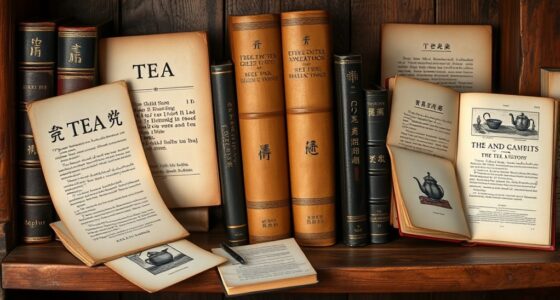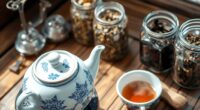
Tea books and literature explore the rich cultural, historical, and symbolic meanings behind tea. They highlight its role as a social ritual, a symbol of mindfulness, and a way to connect with diverse traditions worldwide. Stories and essays often depict tea as a catalyst for meaningful conversations and reflection. If you continue exploring, you’ll uncover deeper insights into how tea shapes cultures, memories, and personal identities across literary works.
Key Takeaways
- Tea literature explores cultural symbolism, sensory experiences, and social rituals across diverse traditions and historical contexts.
- Classic and contemporary works highlight tea’s role in social bonding, mindfulness, and cultural identity.
- Notable texts include stories of trade, tradition, and the ritualistic preparation methods like matcha and Gongfu.
- Tea books often use the beverage as a metaphor for life’s fleeting beauty, reflection, and human connection.
- Understanding tea’s cultural significance enhances appreciation of its themes and symbolism in literature.

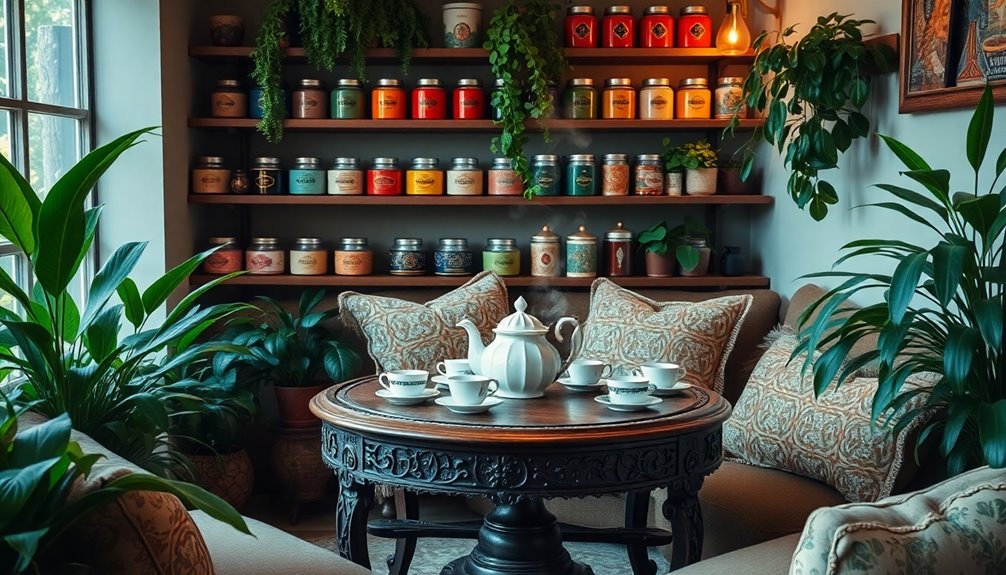
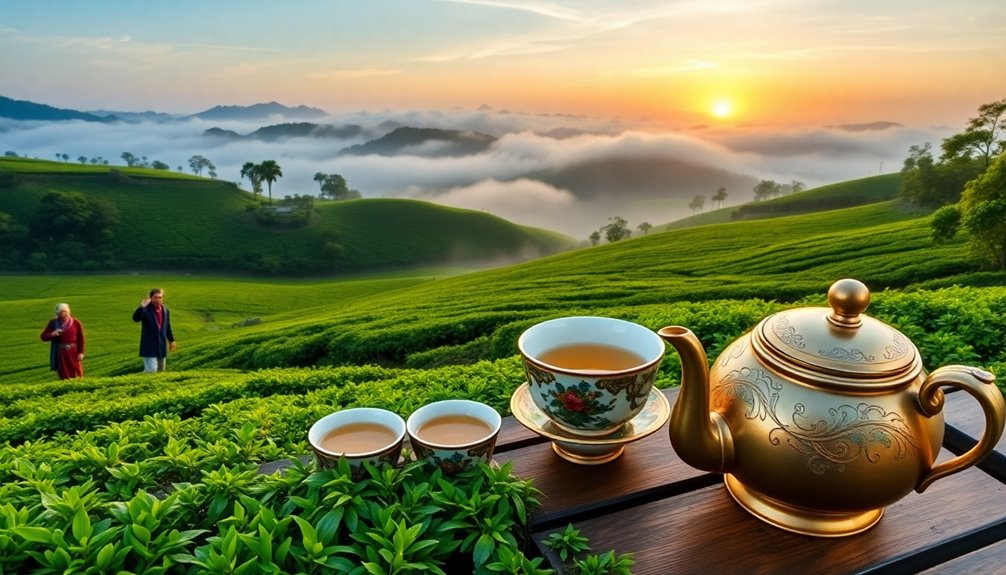
Have you ever wondered how tea has inspired a vast world of literature and books? It’s not just a beverage; it’s a symbol, a muse, and a cultural touchstone woven into countless stories, poems, and essays. When exploring tea-themed literature, you’ll find a rich tapestry that reflects humanity’s long-standing fascination with this ancient drink. To truly appreciate these works, it helps to understand the tea history and brewing techniques that underpin the stories. Knowing how tea traveled across continents, from its origins in China to becoming a global staple, enriches your reading experience, revealing deeper layers of meaning behind each narrative. The history of tea is a saga of trade, tradition, and cultural exchange, which many authors have captured vividly in their writing. From the early days of Chinese imperial ceremonies to the British tea trade that shaped colonial history, these stories often explore the social and political impacts of tea. They also explore into the rituals and customs that have developed around brewing techniques—how a simple act of steeping leaves can evolve into a precise art form. Whether it’s the meticulous preparation of matcha in Japan or the traditional Chinese Gongfu method, these brewing techniques carry symbolic weight, representing patience, discipline, and respect for tradition. As you read about tea in literature, you’ll encounter descriptions of these rituals that evoke sensory experiences—aromas wafting through pages, the warmth of a cup in your hand, and the meditative quality of brewing. Many authors use tea as a metaphor for life’s transient beauty, emphasizing moments of calm amidst chaos or the importance of mindfulness. Classic literature often references tea to symbolize social bonding or to provide a setting for meaningful conversations, while contemporary works might explore its role in identity and cultural exchange. The diverse ways writers incorporate tea into their stories reflect its significance beyond just a drink; it’s a symbol of hospitality, serenity, and tradition. Additionally, the cultural significance of tea varies widely across societies, adding depth to literary narratives. By understanding the roots of tea history and the nuances of brewing techniques, you gain a deeper appreciation for the references and symbolism embedded in these literary works. Each mention of tea invites you to reflect on its cultural journey and the universal themes it embodies. Whether you’re reading poetry, historical accounts, or novels, tea’s presence in literature offers a unique lens into human connection and cultural identity. So, next time you sip your favorite brew, remember that this simple act connects you to centuries of tradition and storytelling, making every cup a literary journey in itself.

Novel Teas Book Lover's Tea contains 25 teabags individually tagged with literary quotes from the world over, made with the finest English Breakfast tea, for the book lover
#14 of Oprah's List – 50 Gifts the Book Lover will Adore!
As an affiliate, we earn on qualifying purchases.
As an affiliate, we earn on qualifying purchases.
Frequently Asked Questions
Who Are the Most Influential Authors in Tea Literature?
You’ll find that authors like Kakuzo Okakura, who wrote *The Book of Tea*, are highly influential in tea literature. Their works blend tea poetry and cultural insights, inspiring enthusiasts worldwide. Additionally, authors like William H. Ukers and Jane Pettigrew shape your understanding with detailed brewing guides and historical narratives. These writers help you appreciate tea’s cultural depth and practical aspects, making them essential in the world of tea literature.
How Has Tea Literature Evolved Over Centuries?
You see that tea literature has evolved considerably over centuries, shaped by historical influences like trade and cultural exchanges. You notice that early works focused on the medicinal and ritualistic aspects of tea, while modern texts explore themes like mindfulness, social connection, and sustainability. This progression reflects changing societal values, and you can trace how literary themes adapt as tea’s cultural significance deepens across different eras.
What Are Rare or Collectible Tea Books?
Imagine holding a rare gem of tea history—collectible tea books that whisper stories of tea symbolism and ancient traditions. These treasures, often limited editions or first prints, include works like early Chinese tea treatises or vintage English guides. Their rarity makes them invaluable for collectors, offering a window into the rich tapestry of tea’s cultural evolution. Such books are true alchemy, blending history and symbolism in every page.
Are There Digital or Online Tea Literary Resources?
Yes, you can find digital and online tea literary resources easily. Many tea blogs offer in-depth articles, reviews, and historical insights, serving as valuable literary resources for tea enthusiasts. You can explore e-books, digital archives, and online forums that provide access to classic and contemporary tea literature. These resources help deepen your understanding and appreciation of tea culture, making it convenient to learn anytime, anywhere.
How Do Cultural Differences Influence Tea Writing Styles?
Cultural differences profoundly shape tea writing styles, as they influence tea customs and writing traditions. You’ll notice that Japanese texts often emphasize harmony and ritual, reflecting their tea ceremonies, while British literature highlights social etiquette and tradition. These cultural nuances guide authors, shaping descriptions, tone, and focus, making each style unique. As you explore different works, you’ll see how local tea customs deeply inform the way writers depict tea’s significance.

The Illustrated Guide to the Zen Tea Ceremony: Achieving Mindfulness and Calm the Japanese Way
As an affiliate, we earn on qualifying purchases.
As an affiliate, we earn on qualifying purchases.
Conclusion
Exploring tea books and literature is like opening a window to a world steeped in tradition and culture. As you turn each page, you’ll find yourself sipping from a well of knowledge, tradition, and stories that brew together to create a rich tapestry. So, keep your curiosity steeping and let these books be your guide on a flavorful journey. After all, tea literature is the bridge that connects you to centuries of shared wisdom and delight.

Buucup Matcha Whisk Set, Ceramic Matcha Kit Set Includes Matcha Bowl, Matcha Whisk and Holder, Bamboo Scoop, Scoop Rest, Sifter and Tea Towel – 7 Pcs Matcha Kit for Matcha Lovers (Mottled Green)
Design Concept: This matcha kit is inspired by spring cherry blossoms. We have fused the delicate beauty of…
As an affiliate, we earn on qualifying purchases.
As an affiliate, we earn on qualifying purchases.

ZENS Modern Glass Tea Infuser Teapot, Smart One Touch Tea Maker for Loose Tea Diffusers with Insulated Mug and Portable Tea Kits, Cool Gongfu Tea Pot for Black Tea Lover Gifts
Effortless One-Touch Brewing: Say goodbye to the hassle of traditional tea strainers, experience seamless tea brewing with the…
As an affiliate, we earn on qualifying purchases.
As an affiliate, we earn on qualifying purchases.