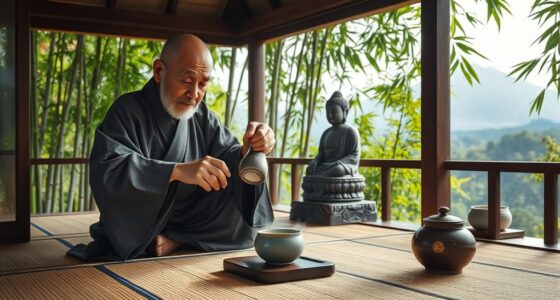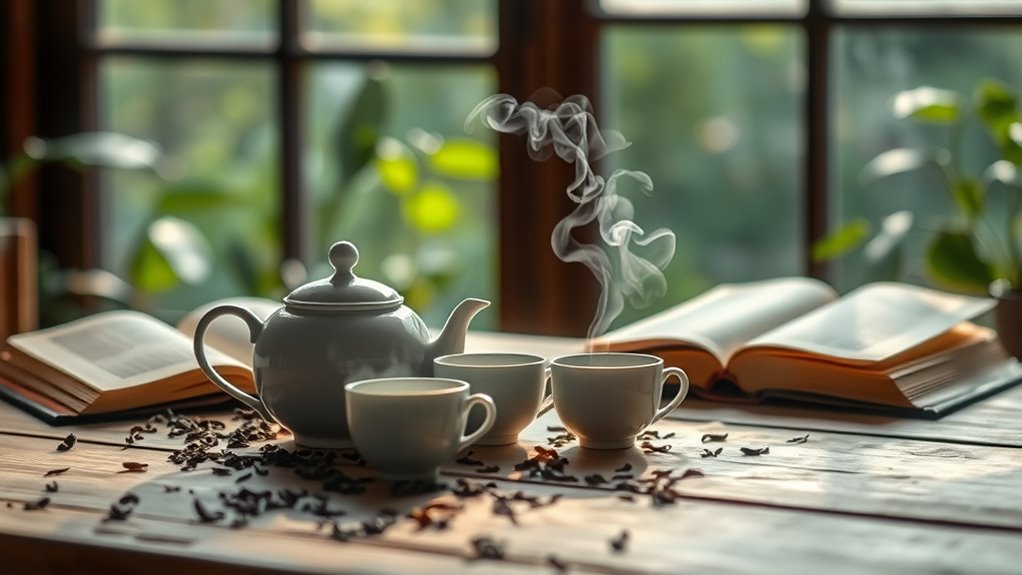
Begin by setting a calm space where you can focus on the present moment. As you prepare and pour your tea, engage all your senses—notice the aroma, texture, and warmth. Savor each sip slowly, using it as a meditation on impermanence and interconnectedness. Throughout the process, observe your thoughts and feelings without judgment, cultivating mindful awareness. Continuing this practice reveals deeper insights into life’s rhythms and your own nature.
Key Takeaways
- Begin with mindful preparation, focusing on each step intentionally to cultivate presence and appreciation.
- Engage senses during tea brewing and pouring to deepen awareness and connection.
- Use the act of drinking tea as a meditative practice, observing thoughts and feelings non-judgmentally.
- Reflect on the cultural and philosophical significance of tea as a symbol of harmony and impermanence.
- Incorporate pauses and silence to foster patience, humility, and insight into life’s transient nature.
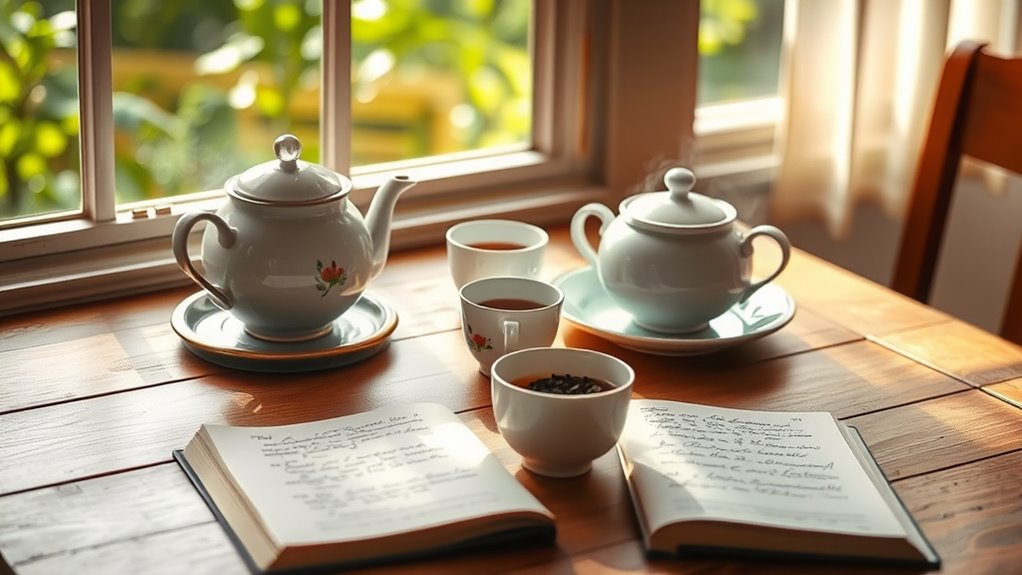
Have you ever wondered how a simple cup of tea can open the door to profound philosophical insights? When you take this moment to focus on your tea, you engage in a mindfulness practice that transcends the act of drinking. It’s not just about quenching your thirst; it’s about being fully present. As you hold the warm cup, feel its weight, notice the aroma, and observe the gentle swirl of the liquid. This deliberate attention helps quiet your mind and cultivates a sense of awareness, a core aspect of mindfulness practice. In many cultures, tea isn’t just a beverage—it’s a symbol of harmony, respect, and reflection. Recognizing its cultural symbolism allows you to appreciate the deeper significance behind the ritual, connecting you to centuries of tradition and philosophy. By understanding the cultural roots of tea, you realize that each sip carries more than flavor; it embodies a worldview that values balance, patience, and mindfulness.
As you prepare to enjoy your tea, consider the philosophy behind the ritual. Whether it’s the Japanese tea ceremony or Chinese gongfu cha, these practices emphasize mindfulness and intentionality. You’re encouraged to slow down, to savor each step, and to reflect on the transient nature of life. The act of steeping tea becomes a meditation on impermanence, reminding you that everything is in constant flux. This awareness can deepen your understanding of your own existence and foster a sense of acceptance. Additionally, understanding personality traits such as patience and resilience can enrich your appreciation of the mindful qualities cultivated through tea rituals.
Taking your first sip, you’re invited to observe your thoughts and feelings without judgment. This simple act can become a metaphor for how you approach life—by being present and accepting each moment as it is. The philosophy embedded in tea teaches patience and humility, encouraging you to let go of control and embrace the flow of life. As you continue this practice, you might find yourself contemplating larger questions about the self, existence, and interconnectedness—all inspired by the humble act of drinking tea. The ritual becomes a daily reminder that mindfulness and cultural symbolism are powerful tools for philosophical exploration. In this way, a cup of tea isn’t just a drink; it’s a gateway to understanding yourself and the world around you more deeply.

Artcome 12Pcs Japanese Matcha Tea Set – Bowl, Bamboo Whisk, Holder, Brush and Screen – Handmade Ceremony Kit for Traditional Tea Ceremony
COMPELETE SET: Matcha bowl, matcha whisk, whisk holder, traditional scoop, tea spoon, tea cloth, bamboo holder, scoop holder,…
As an affiliate, we earn on qualifying purchases.
As an affiliate, we earn on qualifying purchases.
Frequently Asked Questions
How Does Tea Influence Philosophical Thinking?
Tea influences your philosophical thinking by encouraging mindfulness cultivation and sensory awareness. When you focus on each sip, you become more present and reflective, which deepens your understanding of life’s simple moments. The ritual of brewing and drinking tea invites you to pause, fostering clarity and insight. This mindful practice helps you connect with philosophical ideas about existence, consciousness, and inner peace, shaping your perspectives through everyday experience.
Can Tea Rituals Vary Across Philosophical Traditions?
Yes, tea rituals vary across philosophical traditions, reflecting different tea symbolism and ritual significance. In Zen Buddhism, you focus on mindfulness and simplicity, with precise, meditative preparation. In Chinese philosophy, tea embodies harmony and balance, emphasizing social harmony and respect. Japanese tea ceremonies highlight purity and tranquility, emphasizing ritual precision. You notice how each tradition’s rituals mirror its core philosophical values, making tea a meaningful expression of cultural and spiritual beliefs.
What Types of Tea Best Enhance Meditative Practices?
Imagine a quiet moment, sipping on calming chamomile or gentle green tea during your meditation. These teas, with their soothing flavor profiles, help you focus and relax. Tea ceremonies often feature subtle, mindful brewing that enhances meditation. Choose teas like white, green, or herbal blends for their calming effects, making your practice more mindful and centered. Their delicate flavors support a peaceful, meditative state.
Is There a Historical Link Between Tea Culture and Philosophy?
Yes, there’s a strong historical link between tea culture and philosophy. You’ll find that tea symbolism often reflects deeper spiritual meanings, emphasizing harmony, respect, and mindfulness. Cultural rituals around tea, especially in China and Japan, serve as expressions of philosophical beliefs, encouraging reflection and tranquility. These rituals help you connect with tradition and inner peace, making tea more than just a beverage; it becomes a path to philosophical understanding.
How Can I Incorporate Tea Into Daily Philosophical Reflections?
You can incorporate tea into your daily philosophical reflections through mindful sipping and contemplative brewing. Ironically, slowing down with a warm cup makes your thoughts sharper. As you prepare your tea, focus on each step, embracing the present moment. This ritual transforms ordinary tea time into a meditation, encouraging deeper insights and calm clarity. So, brew intentionally, sip mindfully, and let the serenity inspire your reflections.
gongfu cha tea brewing kit
As an affiliate, we earn on qualifying purchases.
As an affiliate, we earn on qualifying purchases.
Conclusion
As you savor each cup, remember that tea is more than just a drink—it’s a mirror to life’s deeper questions. Just like the Zen monk who found clarity in a single sip, you can discover insight in simple moments. Embrace tea as a daily ritual, and you’ll find that every steep, like every thought, unfolds a little more understanding. Let each brew remind you that philosophy isn’t distant; it’s right in your hands.

Korean Food Devarotea Handcrafted Whole Blossom Tea Set, Mindfulness Collection Tea, Total 15 count
Handcrafted Whole Blossom Tea – A cup of nature, art, and mindfulness
As an affiliate, we earn on qualifying purchases.
As an affiliate, we earn on qualifying purchases.
ceremonial matcha tea bowl
As an affiliate, we earn on qualifying purchases.
As an affiliate, we earn on qualifying purchases.