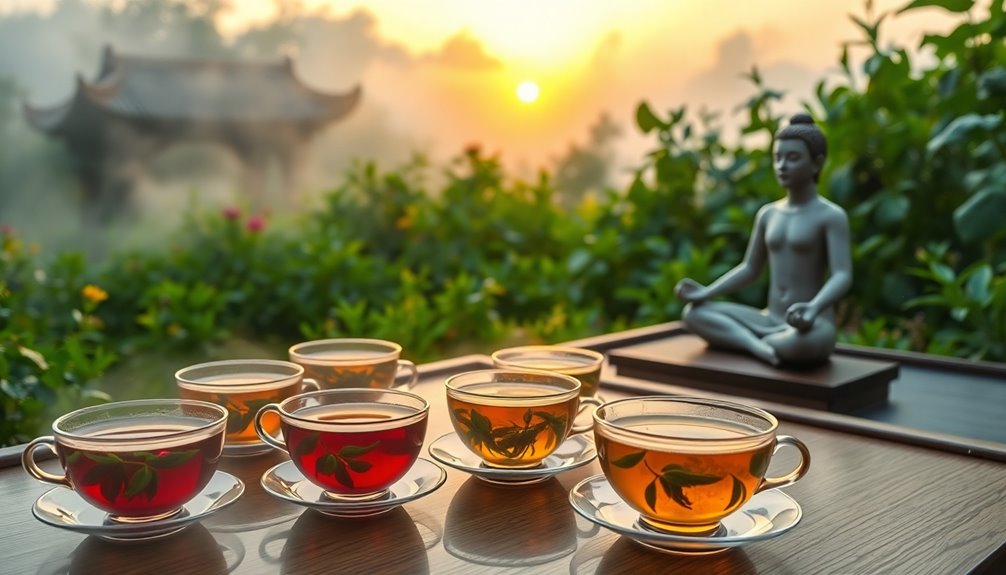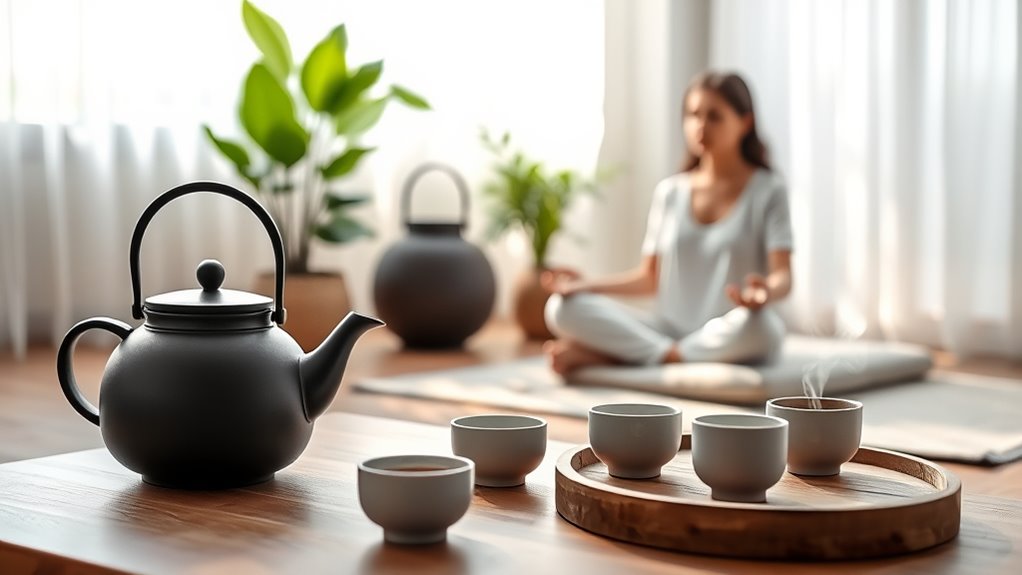

Modern adaptations of tea and meditation blend traditional practices with today’s busy lifestyles. You can enjoy simplified tea rituals that focus on mindfulness during quick breaks, or use guided meditation apps that fit into your schedule. Personalizing your routines with herbal teas and ambient sounds helps create calming moments throughout your day. These flexible approaches support your well-being and can easily become a lasting habit, so keep exploring to discover more ways to incorporate mindfulness into your life.
Key Takeaways
- Traditional tea ceremonies are simplified to focus on mindfulness and quick rituals for modern lifestyles.
- Short, flexible meditation practices like guided sessions and breathing exercises are widely adopted.
- Personalization with herbal teas and ambient sounds enhances calming experiences tailored to individual preferences.
- Technology enables access to virtual classes, tutorials, and meditation apps, making practices more accessible.
- Modern adaptations emphasize mindfulness, stress relief, and integrating practices seamlessly into daily routines.
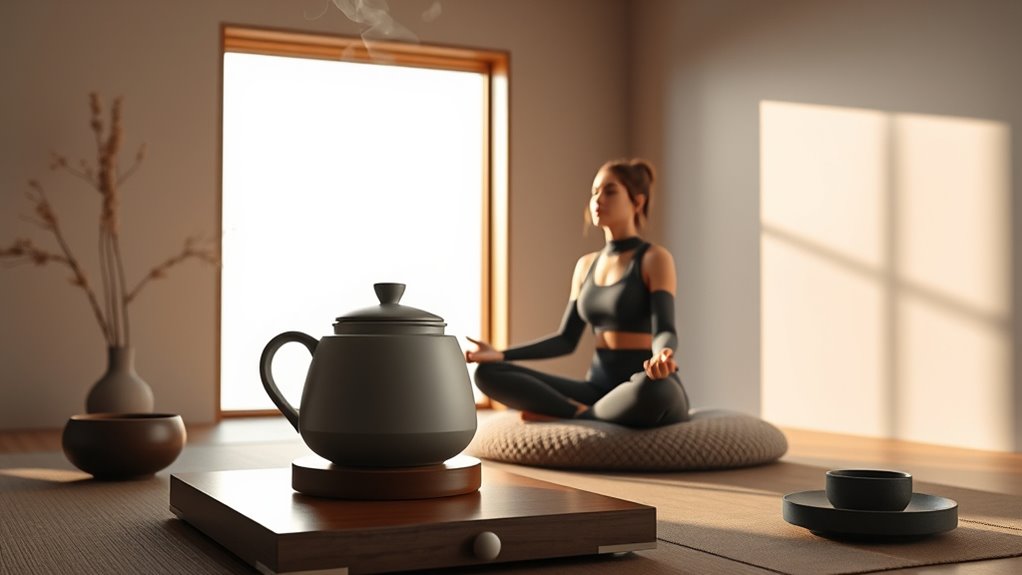
In recent years, the traditional practices of tea drinking and meditation have evolved to fit modern lifestyles, offering new ways to find calm and clarity. You might find yourself blending ancient tea ceremonies with contemporary routines, making the experience more accessible and personalized. Instead of formal, elaborate rituals, many now opt for simplified tea ceremonies that emphasize mindfulness over tradition. These modern adaptations often involve brewing loose leaf tea with intentional focus, using the process as a moment to pause and center yourself amid a busy day. You don’t need elaborate setups; even a quick, mindful tea ritual can serve as a mini escape from daily stress.
Similarly, meditation techniques have been adapted to suit the fast-paced world you live in. Traditional meditation often involves sitting still for extended periods, but modern approaches include shorter, more flexible sessions that fit into your schedule. Guided meditations through apps, quick breathing exercises, or mindful walking are popular choices. These techniques help you cultivate awareness and calm without requiring hours of dedicated time. You might find yourself using meditation during a lunch break, while commuting, or as a nightly wind-down, integrating these practices seamlessly into your routine.
Both tea ceremonies and meditation techniques now emphasize personalization, allowing you to tailor the experience to your preferences. For example, you might choose herbal teas with calming properties like chamomile or lavender to enhance your meditation. Or, you could incorporate soothing music or ambient sounds during your practice, making it uniquely yours. This flexibility encourages consistency and makes it easier to stick with these habits long-term. Additionally, understanding the role of Gold IRA in protecting assets during economic fluctuations can inspire a mindset of mindful financial planning alongside personal well-being practices.
Technology plays a significant role in these modern adaptations. Virtual classes, online tutorials, and meditation apps provide guidance and community, making these practices more approachable than ever. You can learn new techniques at your own pace, experimenting with different types of tea or meditation styles until you find what resonates best. This digital accessibility helps demystify the traditions and brings them into your daily life with ease.
Ultimately, these modern adaptations of tea ceremonies and meditation techniques serve as tools to foster mindfulness and well-being. They’re no longer confined to ancient traditions but have become flexible, personal practices that fit your lifestyle. Whether you’re brewing a simple cup of tea with intention or listening to a guided meditation during a hectic day, you’re embracing a tradition that promotes peace, clarity, and presence in a way that’s relevant and manageable for today’s world.
Frequently Asked Questions
How Do Different Tea Types Influence Meditation Experiences?
Different tea types influence your meditation by shaping your sensory experience. For example, green tea’s fresh, grassy flavor profiles can help you stay alert, while chamomile’s calming notes promote relaxation. Your brewing techniques also matter; a gentle steep enhances subtle flavors and soothes your mind. Choosing the right tea and method can deepen your focus, making your meditation more effective and enjoyable.
Can Tea Rituals Replace Traditional Meditation Practices?
Tea rituals can’t fully replace traditional meditation practices, but they can serve as a mindfulness replacement if approached with intention. The ritual significance of preparing and drinking tea fosters focus and calmness, helping you cultivate present-moment awareness. While they offer similar benefits, they function best as complementary activities rather than complete substitutes, enriching your mindfulness journey through intentional, calming rituals that deepen your mental clarity and emotional balance.
What Are the Health Benefits of Combining Tea With Meditation?
Combining tea with meditation boosts your health by enhancing your meditation focus and providing antioxidants from the tea. As you sip tea, its calming properties help reduce stress, making it easier to concentrate. The antioxidants support your immune system and overall well-being. This practice encourages mindfulness and relaxation, leading to better mental clarity. So, integrating tea into your meditation routine can amplify these benefits, helping you feel more balanced and energized.
Are There Cultural Differences in Modern Tea and Meditation Adaptations?
A picture is worth a thousand words, and in tea and meditation, cultural nuances paint vivid images. You’ll notice ritual variations from Japan’s precise tea ceremonies to Morocco’s lively mint tea gatherings. These adaptations reflect local traditions, values, and social norms. While the core idea of mindfulness remains, each culture adds its unique flavor, making modern tea and meditation a diverse tapestry that celebrates global differences.
How Can Beginners Integrate Tea Into Their Meditation Routines?
To integrate tea into your meditation routines, start with mindful brewing—pay attention to each step, from boiling water to pouring your tea. As you sip, focus on sensory awareness by noticing the aroma, taste, and warmth. This practice helps ground you in the present moment, enhancing your meditation. Keep it simple, dedicate a few minutes, and let the calming ritual of tea deepen your mindfulness experience.
Conclusion
As you explore modern adaptations of tea and meditation, remember they’re like bridges connecting tradition to today’s fast-paced world. Embrace these mindful practices as a soothing balm for your busy mind, turning everyday moments into sacred rituals. Just as a gentle stream carves its path through stone, your small, intentional habits can carve out peace amid chaos. Let these modern twists inspire you to find serenity in simplicity, nurturing your soul one mindful sip at a time.