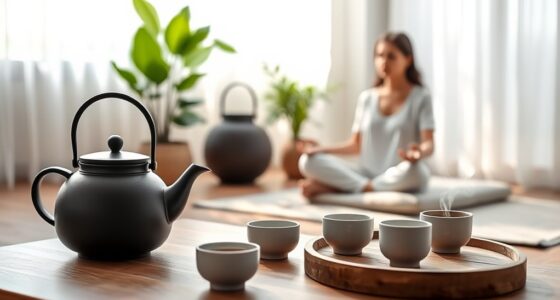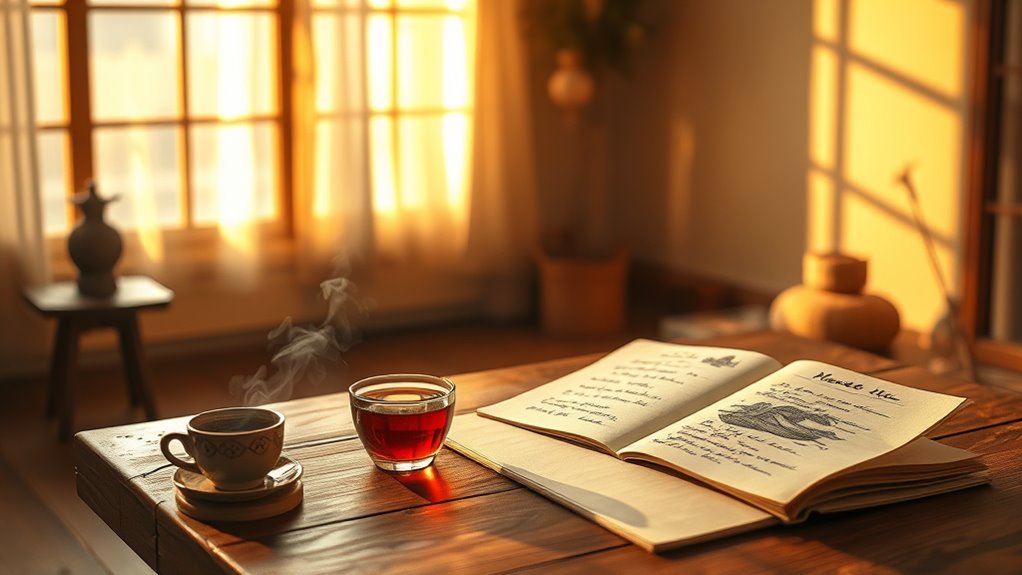
Tea and meditation deeply influence your art and literature by inspiring reflection, fostering mindfulness, and infusing your work with cultural symbolism. These practices help you gain clarity, unleash creativity, and connect with deeper spiritual themes. By incorporating these traditions, you can create more authentic, meaningful expressions that resonate with audiences. If you continue exploring, you’ll discover how these timeless practices can enrich every aspect of your creative journey.
Key Takeaways
- Tea and meditation foster mindfulness, enhancing artistic focus and inspiring creative insights in art and literature.
- These practices embed cultural symbolism, enriching motifs and narratives within creative works.
- Quiet reflection during tea rituals and meditation cultivates mental clarity, fueling originality and depth in artistic expression.
- Engaging with these traditions connects artists and writers to cultural heritage, adding authenticity to their work.
- Incorporating tea and meditation promotes inner focus, helping creators access subconscious ideas and spiritual themes.

Throughout history, tea and meditation have served as powerful catalysts for creativity, shaping the way artists and writers approach their craft. These practices aren’t just about relaxation; they carry deep cultural symbolism that influences artistic expression and fuels creative inspiration. When you sip tea, especially varieties like green or matcha, you’re engaging with centuries-old traditions that symbolize hospitality, tranquility, and reflection. This cultural symbolism transforms a simple beverage into a conduit for introspection, inspiring you to tap into deeper layers of your imagination. The ritual of preparing and drinking tea encourages mindfulness, helping you quiet external distractions and focus inward, where fresh ideas often reside. It’s in these quiet moments that your mind becomes receptive to new perspectives, sparking innovative concepts for your art or writing.
Similarly, meditation acts as a bridge connecting you to your subconscious mind, enabling a clearer channel for creative inspiration. As you meditate, you detach from everyday noise and mental clutter, creating space for intuitive insights to surface. This state of heightened awareness allows you to observe your thoughts with detachment, fostering originality and authenticity in your work. Many artists and writers have historically turned to meditation to access a deeper well of inspiration, viewing it as a sacred practice that aligns their inner world with their creative pursuits. The symbolism embedded in meditation—centeredness, balance, and spiritual awakening—resonates deeply with those seeking to infuse their art with meaningful intent. These symbolic themes often manifest in the motifs and narratives you develop, giving your work a richer, more layered quality.
The connection between tea, meditation, and cultural symbolism reinforces your role as a creator. By integrating these practices into your routine, you create a sacred space where your ideas can flourish without distraction. They serve as reminders of a broader cultural heritage that values mindfulness, introspection, and the pursuit of harmony—principles that can profoundly shape your artistic voice. As you embrace tea and meditation, you’re not just seeking relaxation; you’re immersing yourself in traditions that honor the artistic process itself. This alignment with cultural symbolism and the pursuit of creative inspiration can elevate your work, making it more authentic and resonant. Ultimately, these practices help you forge a deeper connection with your craft, enabling you to craft art and literature that reflect both personal and cultural narratives in a meaningful way.
Frequently Asked Questions
How Do Different Types of Tea Influence Artistic Inspiration?
Different tea varieties can markedly influence your artistic inspiration. For example, green tea boosts focus and clarity, helping you generate new ideas, while chamomile calms your mind, fostering creativity and reflection. Black tea energizes you, sparking bold ideas, and herbal teas like peppermint stimulate your senses. By choosing the right tea, you can enhance your creative flow, making each sip a catalyst for artistic expression and fresh perspectives.
Can Meditation Techniques Enhance Creativity in Writers and Painters?
Meditation techniques can definitely boost your creativity, like how a painter found new inspiration through mindfulness techniques. When you practice creative visualization, you clear mental clutter, allowing fresh ideas to flow freely. Just as a clear pond reflects the sky perfectly, your mind, when focused, captures vivid imagery and innovative thoughts. Incorporating these techniques helps you tap into your inner muse, making your art and writing more inspired and authentic.
What Historical Figures Credited Tea or Meditation for Their Artistic Breakthroughs?
You’ll find that historical figures like Zen monks and Chinese poets credited tea and meditation for their artistic breakthroughs. Their practices fostered deep reflection and calm, fueling creative inspiration. Tea’s soothing properties and meditation’s clarity enhanced their focus, leading to innovative art and poetry. This historical influence shows how these rituals could serve as powerful catalysts for artistic inspiration, helping creators access new depths of expression and insight.
Are There Specific Meditation Practices Linked to Literary or Artistic Innovation?
Think of your mind as a garden, ripe for discovery through specific meditation practices. Visual meditation, where you focus on vivid images, can spark artistic inspiration. Mindfulness techniques help you stay present, opening pathways to creative insights. These practices act like a gentle breeze, clearing mental clutter and nurturing your artistic flow. By regularly practicing, you cultivate innovation and deepen your connection to your craft, opening new domains of artistic and literary expression.
How Does the Cultural Context Affect the Impact of Tea and Meditation on Art?
You see, cultural context shapes how tea and meditation influence art by embedding cultural symbolism and ritual traditions into creative practices. When you engage with these traditions, you tap into shared meanings and historical significance, which inspire your work. In cultures where tea and meditation hold deep spiritual or social value, they often lead to richer, more nuanced artistic expressions, connecting personal insight with collective cultural identity.
Conclusion
As you embrace tea and meditation, you tap into a wellspring of inspiration akin to the muses of old. Just as the Renaissance masters found clarity in their quiet moments, you too can unbar new depths of creativity. Remember, it’s in these tranquil rituals that your inner Da Vinci or Shakespeare awakens, transforming simple moments into masterpieces. Let these ancient practices guide your artistic journey, turning everyday serenity into timeless art.