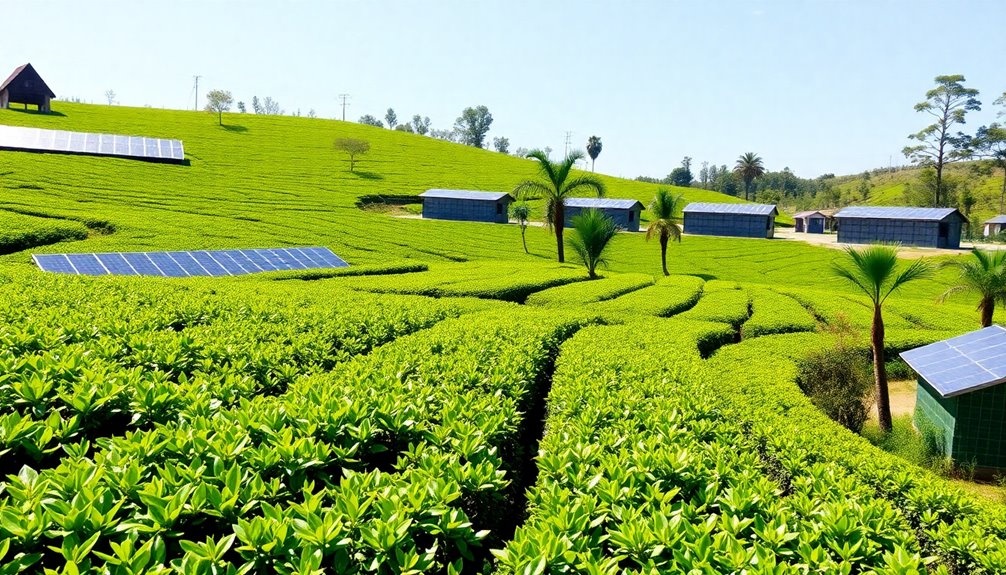
Sustainable and ethical tea sourcing means your tea is produced with respect for the environment, fair labor practices, and community support. Farmers who follow these methods protect ecosystems, reduce chemicals, and use eco-friendly techniques, while workers earn fair wages and work in safe conditions. This approach helps break cycles of poverty and promotes social justice. If you want to understand how your choices can make a real difference, there’s more to uncover about this essential movement.

Get coffee and tea gear delivered free with Prime
- Fast, free delivery on millions of items
- Prime Video, Amazon Music and more included
- Member-only deals all year
Key Takeaways
- Sustainable and ethical tea sourcing ensures fair wages, safe working conditions, and community development for farmers and workers.
- It promotes eco-friendly farming practices that preserve soil, conserve water, and reduce chemical use.
- Certification programs like Fair Trade verify responsible labor practices and environmental standards in tea production.
- Consumer support of ethically sourced tea encourages industry-wide adoption of sustainable and transparent supply chains.
- Ethical sourcing contributes to environmental conservation, social justice, and long-term resilience of tea-growing communities.
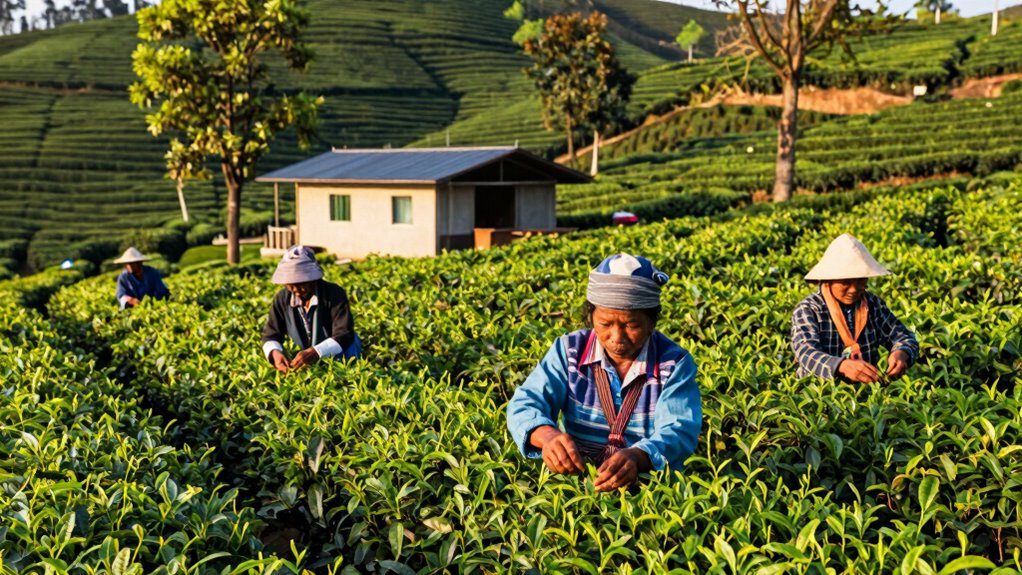
When you choose tea that’s sustainably and ethically sourced, you’re supporting farmers who prioritize environmental health and fair labor practices. This decision directly impacts the way tea is cultivated, harvested, and processed. Many tea plantations commit to sustainable farming methods that preserve soil quality, conserve water, and reduce chemical use. These practices help protect local ecosystems and ensure that the land remains fertile for future harvests. When you buy from a tea plantation certified by fair trade organizations, you’re also ensuring that the farmers and workers receive fair wages, safe working conditions, and community development support. Fair trade standards promote transparency and accountability, making sure that everyone along the supply chain benefits equitably.
Choosing ethically sourced tea supports fair wages, sustainable farming, and protects ecosystems for a healthier future.
Understanding the significance of a tea plantation’s practices reveals how much your choice matters. In traditional plantations, workers might face low wages, long hours, and unsafe environments. But in ethically managed plantations, workers are treated with dignity and respect, with access to healthcare and education. By supporting these practices, you’re helping to break cycles of poverty and exploitation. Fair trade certifications serve as a guarantee that the tea you enjoy has been produced with these principles in mind. They also encourage farmers to adopt eco-friendly methods, such as organic cultivation, which reduces reliance on harmful chemicals and protects biodiversity. Sustainable farming practices are essential for maintaining environmental balance and supporting local communities. Additionally, these sustainable approaches often include biodiversity conservation, which helps maintain the ecological health of tea-growing regions. Incorporating indigenous knowledge into farming methods can further enhance sustainability and resilience against climate challenges. Embracing eco-friendly farming methods can significantly reduce the carbon footprint associated with tea production.
The story behind sustainable and ethical tea sourcing is rooted in the idea that consumers can influence change through their purchasing choices. When you opt for tea from responsible sources, you’re endorsing a system that values environmental preservation and social justice. Many fair trade tea plantations work closely with local communities, investing in infrastructure, education, and healthcare, which benefits everyone involved. This in turn creates a more resilient and sustainable industry. You may not see these impacts directly, but every cup of tea you drink made from sustainably sourced leaves supports a movement toward more ethical farming practices worldwide.
Ultimately, choosing tea from a reputable tea plantation that adheres to fair trade principles means you’re not just enjoying a comforting beverage—you’re actively participating in a global effort to promote fairness, environmental stewardship, and community well-being. Your conscious choice encourages more growers to adopt sustainable methods, fostering a healthier planet and better lives for the people who grow your favorite tea. So, next time you brew a cup, remember that your decision carries meaning far beyond the flavor—it’s a step toward a more ethical and sustainable future.
organic ethically sourced loose leaf tea
As an affiliate, we earn on qualifying purchases.
As an affiliate, we earn on qualifying purchases.
Frequently Asked Questions
How Do Certifications Like Fair Trade Ensure Ethical Practices?
Certifications like Fair Trade guarantee ethical practices by setting strict certification standards that producers must meet. These standards promote ethical labor, ensuring fair wages, safe working conditions, and respect for workers’ rights. By choosing certified products, you support producers who adhere to these practices, helping to create a more sustainable and just supply chain. This guarantees that your tea consumption contributes to fair treatment and ethical labor practices worldwide.
What Are the Environmental Impacts of Tea Cultivation?
Did you know that tea cultivation can considerably impact the environment? You might not realize it, but soil degradation occurs when plantations deplete nutrients, harming ecosystems. Additionally, water pollution from pesticide runoff and improper waste disposal affects nearby water sources. These practices threaten biodiversity and water quality, making it essential for tea producers to adopt sustainable methods that protect the environment while maintaining quality.
How Can Consumers Verify the Sustainability Claims of Tea Brands?
You can verify a tea brand’s sustainability claims by researching their sourcing practices, looking for certifications, and reading reviews. Pay attention to their tea flavor and harvesting techniques, which reflect quality and ethical standards. Brands committed to sustainability often share transparent information about their farming methods, environmental impact, and fair labor practices. Trust those that provide detailed, credible evidence of their efforts to guarantee your tea choice supports eco-friendly and ethical practices.
Are Small-Scale Tea Farmers Better off With Sustainable Practices?
You can see that small-scale tea farmers benefit from sustainable practices. For example, a small farm adopting eco-friendly methods not only boosts crop yields but also empowers the community by creating jobs and improving local infrastructure. Sustainable practices foster community empowerment, helping farmers access fair markets and better prices. This approach guarantees their long-term viability, making small-scale farming more profitable and resilient against climate change challenges.
What Challenges Do Tea Producers Face in Implementing Ethical Sourcing?
You face several challenges in implementing ethical sourcing, mainly fighting labor exploitation and ensuring supply chain transparency. It’s tough to monitor every step, especially with complex, global supply chains. You might encounter resistance from suppliers unwilling to change or reveal fair labor practices. Balancing cost, quality, and ethics requires constant effort, transparency, and strong relationships to uphold your commitment to sustainable, ethical tea production.
Conclusion
By choosing sustainably and ethically sourced tea, you’re supporting farmers who care for the environment and their communities. Did you know that over 70% of the world’s tea comes from smallholder farms, many of which face climate challenges? When you buy consciously, you help guarantee fair wages and better living conditions. Every cup you enjoy can make a difference, fostering a future where tea cultivation benefits everyone involved—plant, planet, and people alike.
Halloween Picks
halloween
As an affiliate, we earn on qualifying purchases.