Sri Lankan tea has a rich history rooted in the island’s lush landscapes and centuries-old cultivation traditions. Originally introduced by the British in the 19th century, it quickly became a essential part of the country’s economy and culture. The ideal climate and fertile soil on highlands and rolling hills support high-quality leaves, creating distinct regional flavors. Exploring further reveals how Sri Lankan tea continues to evolve while maintaining its centuries-old craftsmanship.
Key Takeaways
- Sri Lankan tea has a rich history rooted in the island’s lush landscapes, dating back centuries.
- It was introduced by the British in the 19th century, replacing coffee cultivation.
- The favorable climate and fertile soil in Sri Lanka foster high-quality tea cultivation.
- Different regions like Nuwara Eliya and Uva produce distinct flavor profiles due to microclimates.
- The country has established a strong global export infrastructure, maintaining high standards for its tea.

Sri Lankan tea, renowned worldwide for its quality and flavor, has a rich history rooted in the island’s lush landscapes. You might not realize it, but the journey of Sri Lankan tea begins with careful tea cultivation, which is central to both the island’s economy and its global reputation. The island’s unique climate and fertile soil create ideal conditions for growing high-quality tea leaves, and over the years, Sri Lanka has perfected its methods to produce a diverse range of teas, from robust breakfast blends to delicate white teas. When you think of Sri Lankan tea, you’re thinking of more than just a beverage—you’re thinking of a centuries-old tradition of meticulous cultivation and craftsmanship.
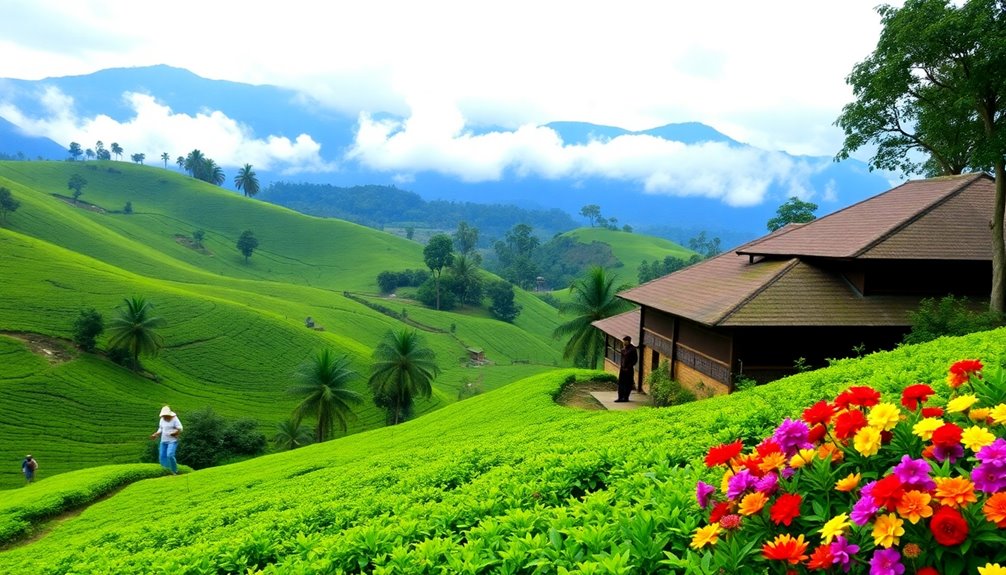
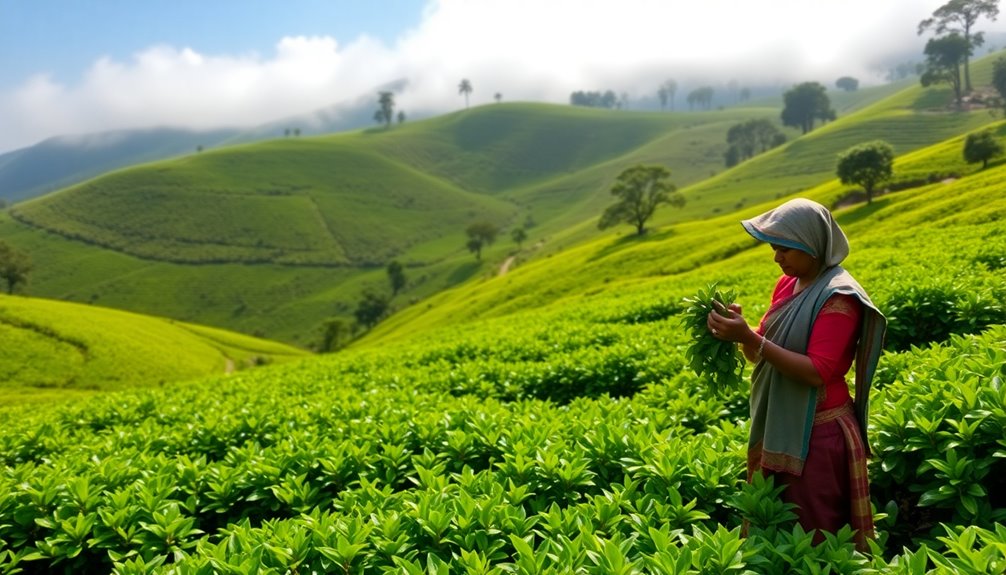
As you explore the origins of Sri Lankan tea, it’s important to understand how its cultivation has evolved. The British introduced tea planting in the 19th century to replace coffee, which was devastated by disease. Since then, tea cultivation has become a cornerstone of the island’s economy, with sprawling plantations nestled on the highlands and rolling hills. These plantations are meticulously maintained, with workers hand-picking the tender tea leaves to guarantee only the best quality makes it to your cup. This dedication to quality control is part of what makes Sri Lankan tea stand out globally. The island’s diverse microclimates allow for different flavor profiles, giving each region its distinct character. From the bright and brisk teas of the Nuwara Eliya region to the bold, full-bodied varieties from Dimbula and Uva, each sip tells a story of its unique origin.
The export markets play an essential role in shaping Sri Lankan tea’s global presence. When you buy a package of Ceylon tea, you’re participating in a trade that reaches across continents, from Europe to Asia and beyond. Sri Lanka’s strategic location and well-established export infrastructure facilitate the distribution of millions of kilograms annually. The country’s tea industry has built a reputation for reliability and quality, making Sri Lankan tea a preferred choice for importers and consumers worldwide. The government and private sector work together to maintain strict export standards, guaranteeing that the tea arriving at your local store meets the highest quality expectations. Whether it’s a premium single estate or a standard blend, Sri Lankan tea continues to dominate international markets, thanks to its rich history of cultivation, expert craftsmanship, and commitment to excellence. When you brew a cup, you’re enjoying a product that’s been carefully cultivated and globally celebrated for generations. Additionally, ongoing advancements in tea cultivation techniques ensure that Sri Lanka remains at the forefront of the global tea industry.
Frequently Asked Questions
How Did Sri Lanka Become a Leading Tea Exporter?
You see, Sri Lanka became a leading tea exporter thanks to its thriving tea plantation industry and an export boom in the mid-19th century. The climate and fertile soil created ideal conditions for high-quality tea production. As demand grew worldwide, local farmers and planters expanded their plantations, boosting exports considerably. This strategic growth and quality focus helped Sri Lanka secure its position as a top global tea exporter today.
What Are the Unique Flavor Profiles of Sri Lankan Teas?
Like a symphony, Sri Lankan teas offer a rich tapestry of flavor nuances. You’ll notice bright, citrusy notes in Ceylon teas, complemented by earthy, woody undertones in high-grown varieties. Some teas reveal sweet, floral tasting notes, while others have a bold, brisk character. These unique flavor profiles make Sri Lankan teas versatile, allowing you to enjoy a diverse range of sensory experiences with every cup.
How Does Climate Affect Sri Lankan Tea Cultivation?
Climate profoundly influences Sri Lankan tea cultivation through microclimate variations and monsoon influence. You’ll notice that different regions experience distinct microclimates, affecting the tea’s flavor and quality. The monsoon seasons bring essential rainfall, shaping leaf growth and flavor development. These climate factors create diverse growing conditions, allowing you to enjoy a wide range of tea profiles. Proper understanding of these influences helps farmers produce high-quality teas that reflect Sri Lanka’s unique climate.
What Traditional Methods Are Used in Sri Lankan Tea Processing?
You employ traditional Sri Lankan tea processing methods that highlight craftsmanship and heritage. Plucking methods involve careful hand-picking of young leaves, ensuring quality. Fermentation techniques are delicately monitored, allowing the leaves to develop their unique flavors naturally. These time-honored practices, combined with gentle withering and rolling, preserve the tea’s rich character. Embracing these methods, you maintain the authenticity and distinguished profile that set Sri Lankan tea apart globally.
Which Regions in Sri Lanka Produce the Most Renowned Teas?
You’ll find the most renowned teas come from regions like Nuwara Eliya, Kandy, and Dimbula. These areas boast ideal climates and high-altitude Tea estates, where skilled farmers use cultivation techniques that enhance flavor. The cool, misty environment and rich soil help produce teas with unique character. By focusing on these regions, you can experience some of Sri Lanka’s finest teas, crafted with precision and tradition.
Conclusion
Now that you know the rich history and origins of Sri Lankan tea, you can appreciate why it’s considered one of the world’s finest. Did you know that Sri Lanka produces over 300,000 metric tons of tea annually? This impressive figure highlights its global significance. So, next time you enjoy a cup, remember the centuries of tradition and dedication behind each sip, making Sri Lankan tea truly special and worth savoring.