To brew a perfect cup of Sri Lankan tea, start with high-quality, loose whole leaves from regions like Nuwara Eliya or Dimbula. Use water heated to about 90–96°C (194–205°F), ensuring it’s hot enough to extract maximum flavor without burning the leaves. Pre-warm your cup or teapot, then pour the hot water over the leaves and steep for 3–5 minutes. Proper technique and quality leaves bring out the rich aroma and balanced flavor—learn more to master every sip.

Get coffee and tea gear delivered free with Prime
- Fast, free delivery on millions of items
- Prime Video, Amazon Music and more included
- Member-only deals all year
Key Takeaways
- Use high-quality, whole loose tea leaves from regions like Nuwara Eliya or Dimbula for rich flavor.
- Brew at a temperature of 90–96°C (194–205°F) for optimal extraction without bitterness.
- Pre-warm your teapot or cup to maintain consistent temperature during brewing.
- Steep the tea for 3–5 minutes to develop flavor without over-extracting tannins.
- Pour and serve promptly to enjoy the full aroma, body, and balanced taste of your Sri Lankan tea.
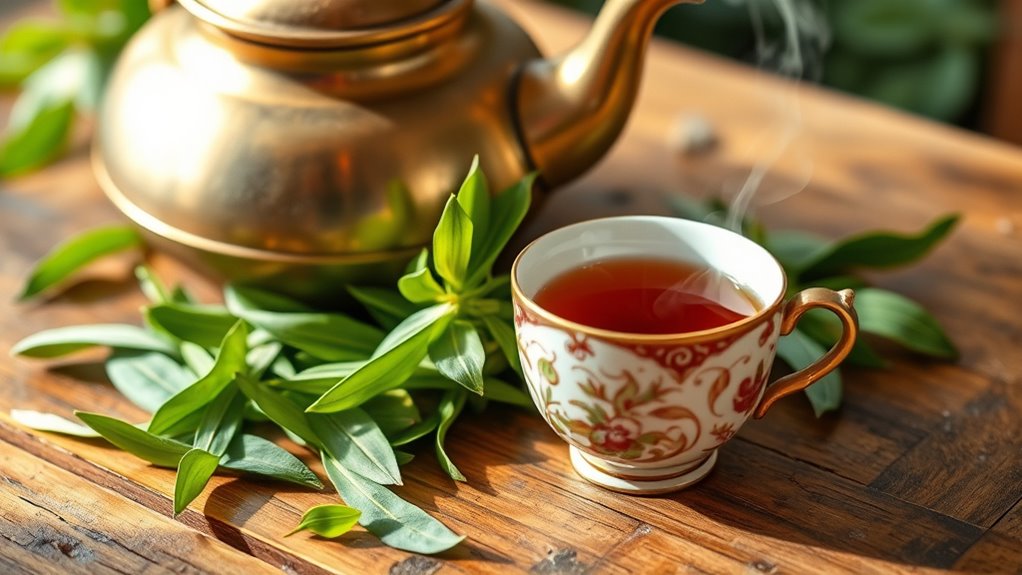
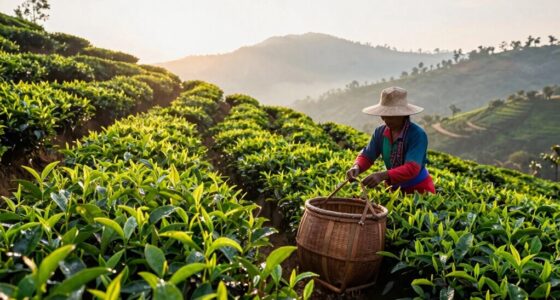
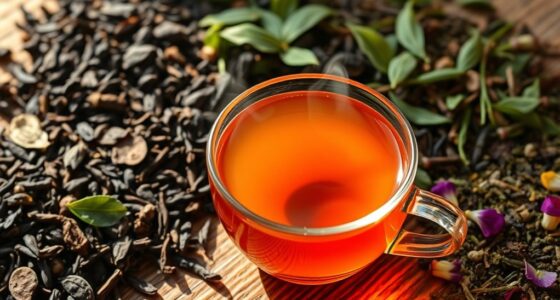
Ever wondered what makes Sri Lankan tea so unique and flavorful? It all begins with the tea leaf quality. When you start with high-quality tea leaves, you’re setting yourself up for a rich, aromatic cup. Sri Lankan teas, especially from regions like Nuwara Eliya or Dimbula, are prized for their well-rolled, fresh leaves that retain their essential oils and natural flavors. The freshness of the leaves impacts the overall taste, so always choose loose, whole leaves over tea bags. Freshness guarantees a more vibrant infusion, allowing the subtle floral, citrus, or malty notes characteristic of Sri Lankan teas to shine through. Additionally, the leaf size and processing method—whether orthodox or CTC—play roles in how the tea interacts during brewing, but quality remains the foundation.
Once you’ve selected top-tier leaves, the next vital element is brewing temperature. Sri Lankan teas are best brewed at the right temperature to reveal their full potential. Too hot, and you risk burning the leaves, which can produce a bitter, harsh taste; too cool, and you won’t extract enough of the rich flavors. Generally, for black teas from Sri Lanka, the ideal brewing temperature hovers around 90 to 96 degrees Celsius (194 to 205 degrees Fahrenheit). If you’re using a kettle with a temperature control, aim for that range. If not, bring the water to a boil and then let it sit for a moment—about 30 seconds—before pouring over your leaves. This slight cooling guarantees maximum extraction without overdoing it. Remember, the brewing temperature affects how the essential oils and tannins are released, influencing the aroma, strength, and flavor profile of your tea.
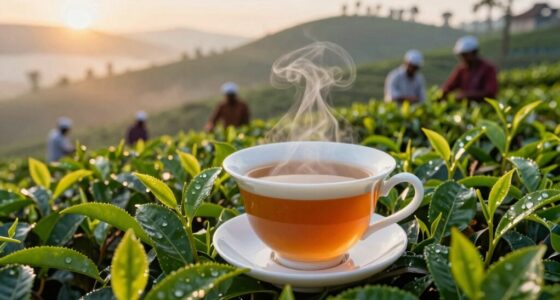
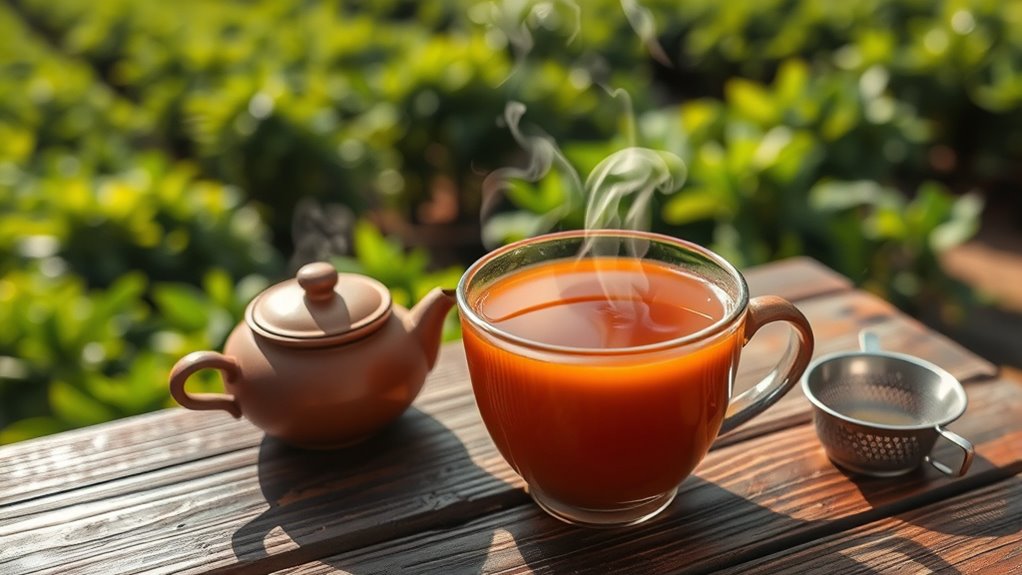
Another tip is to pre-warm your teapot or cup with hot water before steeping. This small step maintains the temperature during brewing, helping extract the best flavors from the leaves. Once you pour the hot water over your tea leaves, give it a gentle swirl to submerge all the leaves evenly. Proper brewing temperature and quality leaves work hand-in-hand to produce that balanced, full-bodied flavor that’s characteristic of Sri Lankan tea. Pay attention to steeping time as well—usually around 3 to 5 minutes—since over-steeping can turn your tea bitter, especially if the leaves are of high quality.
Additionally, understanding the Worth of premium teas can help you appreciate the value of investing in high-quality leaves for an optimal brewing experience.
high-quality loose leaf Sri Lankan black tea
As an affiliate, we earn on qualifying purchases.
As an affiliate, we earn on qualifying purchases.
Frequently Asked Questions
Which Sri Lankan Tea Variety Is the Most Popular?
You’ll find that Ceylon Tea, especially from renowned tea plantations, is the most popular Sri Lankan variety. Its rich flavor profile, with bright citrus and floral notes, appeals to many tea lovers. You can visit tea plantations to see how it’s grown and harvested, which enhances your appreciation. This variety’s versatility and vibrant taste make it a favorite worldwide, offering a perfect balance of strength and delicacy.
How Long Should I Steep Sri Lankan Tea?
You should steep Sri Lankan tea for about 3 to 5 minutes. This steeping duration allows for ideal flavor extraction, balancing strength and aroma without turning bitter. If you prefer a bolder taste, extend the steeping time slightly, but avoid over-steeping, which can spoil the delicate flavors. Keep an eye on the clock to enjoy a perfectly brewed cup that highlights the tea’s rich, vibrant notes.
What Water Temperature Is Best for Brewing Sri Lankan Tea?
Think of brewing Sri Lankan tea as tuning a musical instrument; the right temperature sets the perfect tone. Use water heated to about 90-96°C (194-205°F) for ideal extraction. Consider the water’s pH and mineral content, as they influence flavor clarity and brightness. Slightly acidic water with balanced minerals enhances the tea’s natural richness, ensuring each sip hits the right note without bitterness or dullness.
Can I Reuse Tea Leaves for Multiple Brews?
Yes, you can reuse tea leaves for multiple brews, but keep in mind that tea leaf reuse affects flavor preservation. For the best taste, reuse leaves 1-2 times and adjust brewing time accordingly. As you do this, you’ll notice a milder flavor in each subsequent brew. To enjoy the full richness of Sri Lankan tea, it’s ideal to use fresh leaves for each steep, but reusing can be a good option if you want a lighter flavor.
What Are Traditional Sri Lankan Tea Accompaniments?
You’ll find traditional Sri Lankan tea accompaniments like shortbread biscuits, milk to enhance the flavor, and local sweets that mirror the rich tea leaf harvesting and processing techniques. As you enjoy your brew, you might notice how the aroma pairs perfectly with crispy snacks or fresh tropical fruits. These accompaniments reflect the country’s vibrant tea culture, tying together the meticulous tea leaf harvesting and processing methods with delightful, aromatic accompaniments.
Conclusion
Now that you know the art of brewing Sri Lankan tea, remember that patience and attention to detail make all the difference. Let each cup remind you that “a well-brewed tea is like a good conversation,” enriching your day with warmth and flavor. So take your time, savor every sip, and enjoy the journey in every cup. After all, the best things in life are worth waiting for.
Halloween Picks
halloween
As an affiliate, we earn on qualifying purchases.