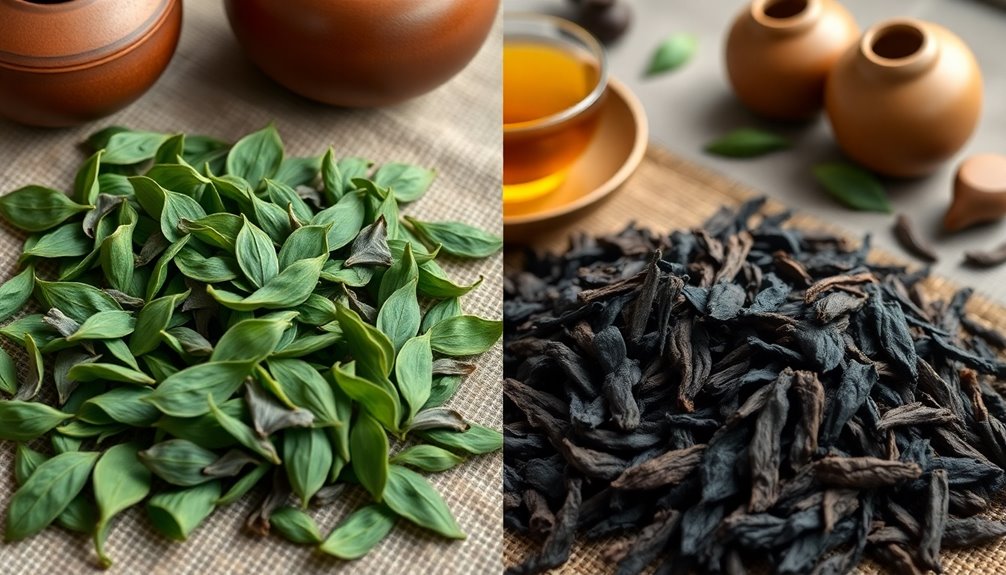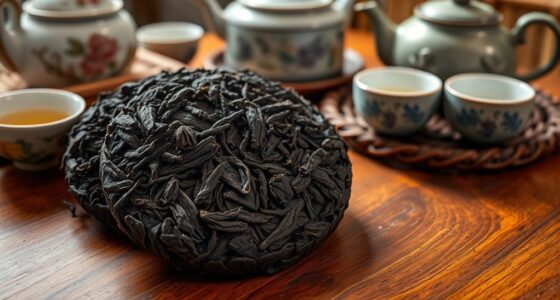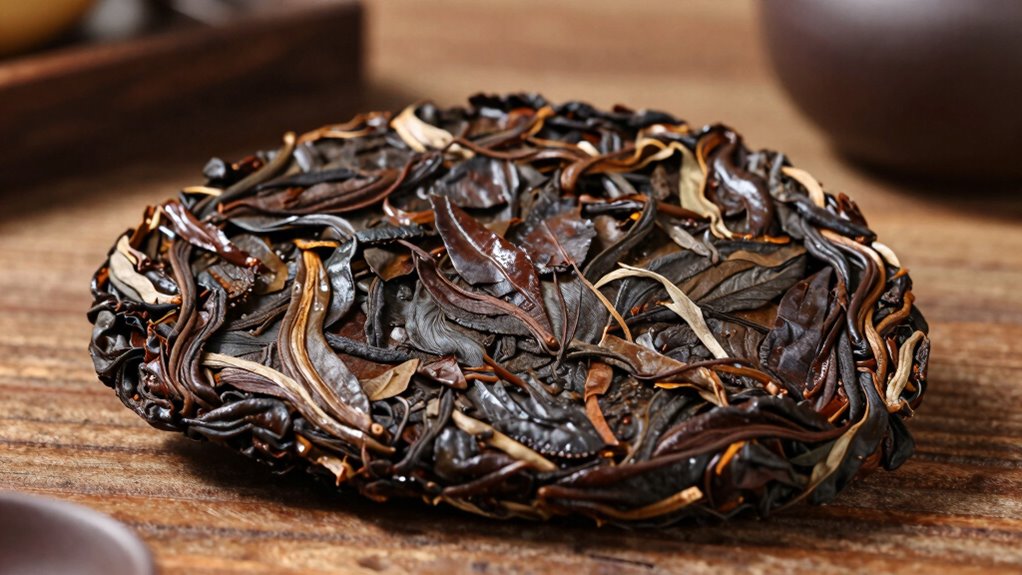

The real story behind Pu-erh tea is rooted in centuries of traditional fermentation and careful aging, where microbes and enzymes break down the leaves to develop rich, earthy flavors. This process, carried out in controlled environments, connects you to ancient craftsmanship and Chinese cultural heritage. Over time, the flavor deepens and evolves, making each cup a reflection of history and patience. If you keep exploring, you’ll discover even more about its fascinating transformation.

Get coffee and tea gear delivered free with Prime
- Fast, free delivery on millions of items
- Prime Video, Amazon Music and more included
- Member-only deals all year
Key Takeaways
- Pu-erh tea undergoes a unique fermentation and aging process that develops its distinctive earthy and mellow flavors.
- Traditional methods of fermentation and aging are rooted in centuries-old Chinese craftsmanship and cultural heritage.
- Microbial activity during fermentation influences chemical changes, enhancing flavor complexity over time.
- Proper storage in controlled environments is crucial for optimal aging, affecting taste, aroma, and value.
- Modern science helps explain microbial roles, emphasizing Pu-erh as a living tradition reflecting patience, precision, and history.

Pu-erh tea has long fascinated tea enthusiasts with its rich history and unique aging process, but there’s more to its story than just tradition. At the heart of its allure is the complex process of tea fermentation, which transforms the leaves and develops its distinctive flavor profile. Unlike most teas that are simply dried and brewed, Pu-erh undergoes a fermentation stage that can last months or even years, allowing microbes and enzymes to break down the tea leaves’ cellular structures. This fermentation isn’t just a modern technique; it’s rooted in ancient brewing practices that date back centuries in China. The traditional methods of aging and fermenting Pu-erh are part of a cultural heritage that has been carefully preserved and passed down through generations.
When you brew Pu-erh, you’re experiencing more than just a beverage — you’re participating in an ancient brewing ritual that connects you to centuries of tradition. The fermentation process is what gives Pu-erh its earthy, mellow, and sometimes woody notes. This transformation occurs because the microbes involved, including various fungi and bacteria, interact with the tea leaves, altering their chemical composition. Over time, these microbial actions enhance the depth and complexity of the tea, making each brew a unique experience. The aging process, often conducted in controlled environments, allows the tea to develop nuanced flavors that can’t be replicated with fresh leaves alone. As you store and age your Pu-erh, you’re engaging in a practice rooted in ancient wisdom — a tribute to the longevity of traditional Chinese tea craftsmanship.
This ancient brewing technique has evolved over centuries, but its core remains focused on patience and precision. The fermentation process is carefully managed, and the environment plays a vital role in shaping the final product. Whether pressed into cakes or bricks or stored loose, Pu-erh’s age and fermentation level influence its taste, aroma, and even its value. The microbial activity involved is a key component of fermentation that defines its unique qualities. A significant aspect of this process is the microbial activity, which continues to influence the tea’s flavor even after brewing. Interestingly, modern scientific research has helped deepen our understanding of how these microbes contribute to the chemical changes in the tea leaves. As a drinker, you benefit from this historical process by tasting the layers of time in each cup. The tradition of aging Pu-erh not only preserves its cultural significance but also creates a dynamic beverage that improves with age. When you sip Pu-erh, you’re experiencing a living piece of history, crafted through ancient brewing techniques that continue to captivate and intrigue.
As an affiliate, we earn on qualifying purchases.
Frequently Asked Questions
How Long Does Pu-Erh Tea Naturally Ferment?
Pu-erh tea naturally ferments for varying durations, typically ranging from several months to many years. The fermentation duration depends on factors like storage conditions and desired flavor profile. During natural aging, the tea undergoes microbial activity that enhances its taste and value. As you store it properly, Pu-erh continues to improve over time, making the fermentation process a key part of its unique character and appeal.
Is Aged Pu-Erh More Valuable Than Fresh?
Aged Pu-erh is generally more valuable than fresh because it develops richer flavor complexity over time. In fact, the market demand for well-aged Pu-erh has doubled in the last decade, reflecting its desirability among connoisseurs. This aging process enhances the tea’s depth, making it a prized collector’s item. If you’re considering investing or collecting, aged Pu-erh offers a unique blend of rarity and sophisticated taste.
Can Pu-Erh Tea Help With Weight Loss?
Yes, pu-erh tea can aid with weight management. Its fermentation process enhances the absorption of beneficial compounds, which may boost metabolism. Drinking pu-erh regularly can help curb appetite and promote fat breakdown. The tea’s unique fermentation process creates antioxidants and compounds that support digestion. Incorporate pu-erh into your routine as part of a balanced diet to potentially enhance your weight loss efforts naturally.
What Are the Health Risks of Drinking Pu-Erh?
Although tea fermentation is generally safe, drinking too much pu-erh can pose health risks. You might worry about caffeine, which can cause insomnia or increased heart rate, especially if you have sensitivities. Excessive consumption could also lead to digestive issues or liver strain. Always consider health considerations, and enjoy pu-erh in moderation to avoid potential side effects while benefiting from its unique fermentation process.
How Should Pu-Erh Tea Be Stored Properly?
You should store pu-erh tea in a cool, dry, and well-ventilated place to maintain its quality. Keep it away from strong odors to prevent absorption. Wrap it in paper or breathable material, avoiding plastic, to allow airflow. Proper tea storage supports the fermentation process, helping it age gracefully. Store it away from direct sunlight and moisture, which can spoil the tea or hinder the fermentation process.
Conclusion
Next time you sip on pu-erh, remember it’s like uncovering a hidden treasure chest—each cup holds a story, aged like fine wine. Just as a master craftsman carefully ages his work, the tea’s rich history unfolds with every brew. So, savor every sip, knowing you’re partaking in a centuries-old tradition. Like discovering a secret garden, pu-erh invites you to explore its depths and appreciate the journey behind each leaf.
Fall Picks
fall essentials
As an affiliate, we earn on qualifying purchases.