
In local traditions, oolong tea symbolizes respect, harmony, and mindfulness. You’ll see it at ceremonies and gatherings where every step reflects patience and reverence. Sharing this tea fosters social bonds and cultural unity, highlighting values like humility and sincerity. Its rituals embody philosophies of balance and craftsmanship, helping preserve cultural identity through meaningful practices. If you want to explore these rich traditions further, you’ll find more fascinating insights ahead.
Key Takeaways
- Oolong tea symbolizes respect, harmony, and mindfulness in Asian cultural rituals and social customs.
- Participating in tea ceremonies reinforces social bonds and community cohesion during significant events.
- The deliberate preparation and serving of oolong tea reflect values of patience, reverence, and artistic craftsmanship.
- Sharing oolong tea during ceremonies signifies unity, humility, and sincerity among participants.
- These traditions preserve cultural identity and foster continuity through meaningful, centuries-old practices.
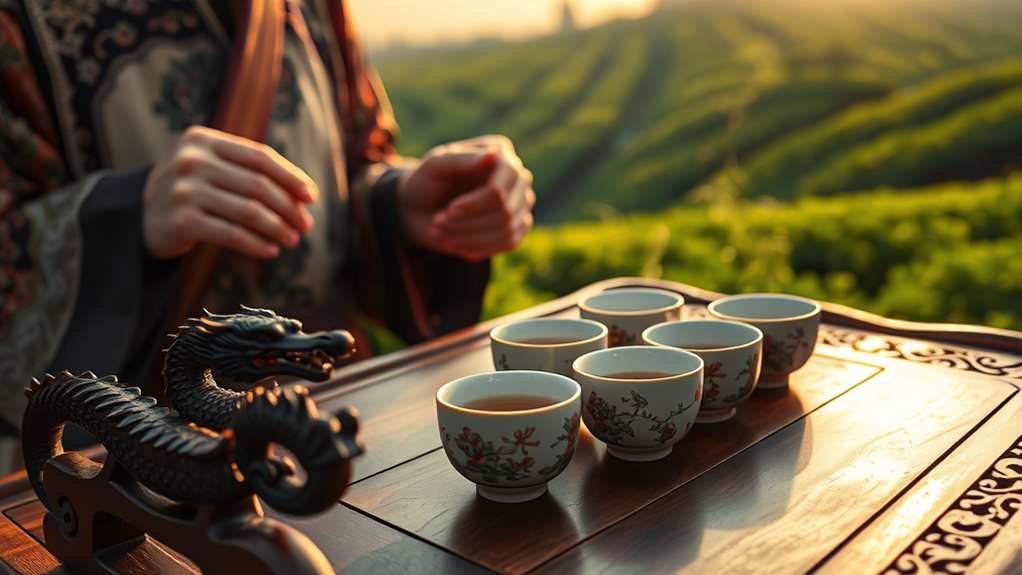
Oolong tea holds a special place in many Asian cultures, symbolizing more than just a favorite beverage. It’s deeply intertwined with traditional rituals and social customs that reflect respect, harmony, and mindfulness. When you participate in a tea ceremony, you’re engaging in a centuries-old practice that emphasizes patience, precision, and reverence for the process. These traditional rituals aren’t just about drinking tea—they’re about cultivating a sense of calm, building relationships, and honoring cultural heritage.
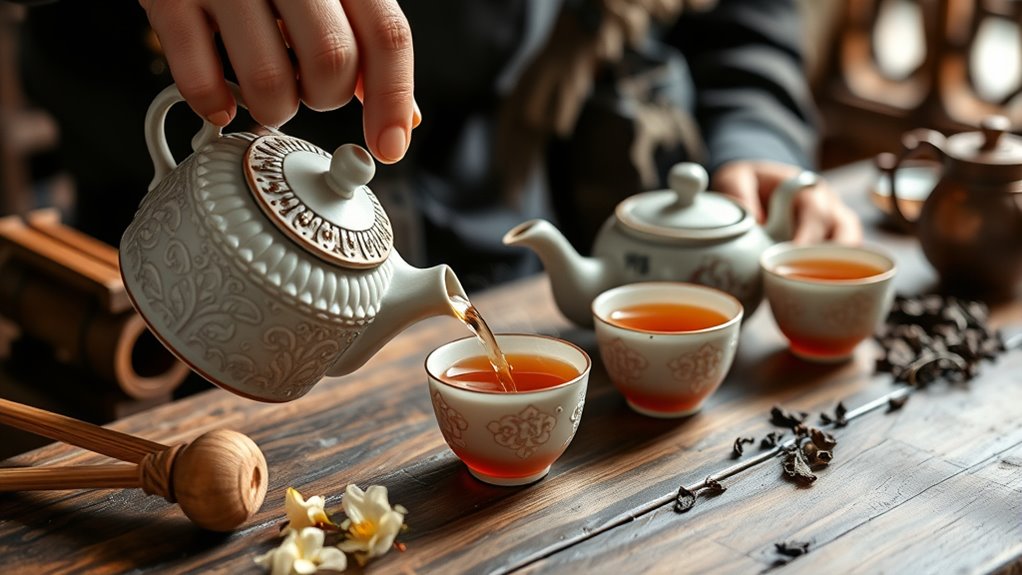
During a typical tea ceremony, every movement is deliberate. You’ll notice how the tea master carefully prepares the tea, paying close attention to the temperature, the timing, and how the tea leaves are handled. This ritual isn’t hurried; it’s a meditative act that encourages mindfulness and appreciation for the present moment. As you observe or take part, you begin to understand that each step has symbolic meaning—such as the way the tea is poured or the way you hold the cup. These gestures foster a sense of respect toward the host, the guests, and the tradition itself.
Traditional rituals surrounding oolong tea serve to reinforce social bonds. They’re often performed during significant events, like weddings, festivals, or family gatherings, where the act of sharing tea signifies unity and harmony. Participating in these rituals, you’re not just drinking tea—you’re engaging in a cultural dialogue that values humility, sincerity, and community. The ceremonial aspect elevates the simple act of pouring a cup into a meaningful experience that connects you to generations past.
Furthermore, the tea ceremony embodies the core principles of many Asian philosophies, such as balance and harmony. The precise movements and the careful selection of high-quality oolong tea reflect a respect for nature and craftsmanship. When you take part in these traditional rituals, you’re embracing a cultural practice that encourages mindfulness and appreciation for the artistry behind each cup. It’s about more than flavor; it’s about honoring a tradition that has been passed down and cherished through centuries.
In essence, the cultural significance of oolong tea and its associated rituals offers you a window into the values of respect, harmony, and mindfulness. Participating in these traditional practices allows you to connect with a rich cultural history while experiencing the calming and unifying power of a simple yet profound act—sharing a cup of tea. Additionally, these rituals highlight the importance of traditional practices in preserving cultural identity and fostering community bonds.
Top picks for "cultural significance oolong"
Open Amazon search results for this keyword.
As an affiliate, we earn on qualifying purchases.
Frequently Asked Questions
How Is Oolong Tea Traditionally Prepared in Different Regions?
You’ll find that traditional preparation of oolong tea varies by region through unique tea processing and brewing techniques. In Taiwan, you might perform multiple steepings to extract complex flavors, while in China, you could use the Gongfu method for precise control. These regions emphasize specific tea processing steps like partial oxidation, and brewing techniques that highlight the tea’s aroma, flavor, and texture, making each experience distinct and culturally meaningful.
What Are the Health Benefits Associated With Oolong Tea?
Drinking oolong tea can boost your health with its antioxidant properties, which help fight free radicals. For example, a study shows it may support weight management by increasing metabolism. You might notice improved digestion and reduced cholesterol levels. Regularly enjoying oolong tea helps protect your cells and promotes overall well-being, making it a tasty and beneficial addition to your daily routine.
How Does Oolong Tea Influence Local Festivals and Ceremonies?
You’ll notice that oolong tea influences local festivals and ceremonies through tea symbolism, which emphasizes harmony and respect. During festival rituals, serving oolong tea signifies unity and hospitality, often marking important moments or changes. Its aroma and flavor enhance the atmosphere, helping participants connect spiritually and culturally. By incorporating oolong tea, you participate in a tradition that celebrates community values, making festivals more meaningful and memorable.
Are There Specific Oolong Tea Varieties Linked to Particular Traditions?
Yes, certain regional varieties of oolong tea are deeply linked to specific traditions. For example, Tieguanyin from Fujian is often used in tea customs during celebrations, symbolizing hospitality and respect. Similarly, Da Hong Pao from Wuyi Mountain is reserved for special ceremonies. These varieties are integral to local practices, enhancing the cultural significance of tea customs and reinforcing regional identities through their unique flavors and historical importance.
How Has Modern Culture Impacted Oolong Tea’s Traditional Significance?
Like the whisper of a classic story, modern culture has shifted oolong tea’s role from tradition to trend. You see tea commercialization and social media influence turning it into a fashionable accessory, often overshadowing its deep-rooted significance. While some still cherish its cultural roots, many now consume it for aesthetic appeal or health claims, diluting its traditional meaning and making it more about image than ceremony.
Conclusion
As you embrace the rich history of oolong tea, you realize it’s more than just a beverage—it’s a bridge to traditions, community, and shared moments. Sipping this tea, you’re part of a story that spans generations, like a thread woven into the fabric of local culture. So, when you enjoy oolong, remember it’s not just a drink, but a window into a world where every cup tells a story worth savoring.