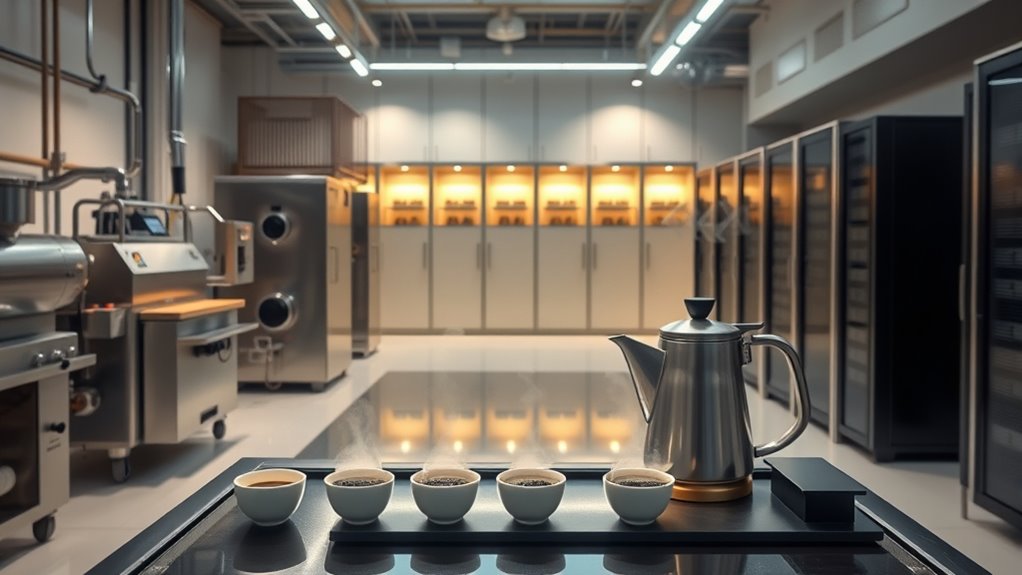

Modern innovations in Chinese tea production and preparation blend traditional techniques with advanced technology. You’ll find precision farming methods, controlled environments, and soil management improving leaf quality. Modern machinery ensures consistent processing, from rolling to drying, preserving delicate flavors. Quality control uses sensors and AI to monitor safety and consistency. Innovations in fermentation and oxidation allow for a diverse range of flavor profiles. Exploring these advancements reveals how technology enhances every step of Chinese tea craftsmanship—there’s more to uncover if you keep exploring.

Get coffee and tea gear delivered free with Prime
- Fast, free delivery on millions of items
- Prime Video, Amazon Music and more included
- Member-only deals all year
Key Takeaways
- Integration of precision farming techniques improves tea plant health and yield quality.
- Advanced processing machinery ensures uniform drying, rolling, and flavor preservation.
- AI-powered quality control systems monitor chemical composition and safety standards in real-time.
- Controlled oxidation chambers enable the creation of complex, layered tea flavors.
- Modern environmental controls optimize growth conditions, enhancing aroma and overall tea quality.
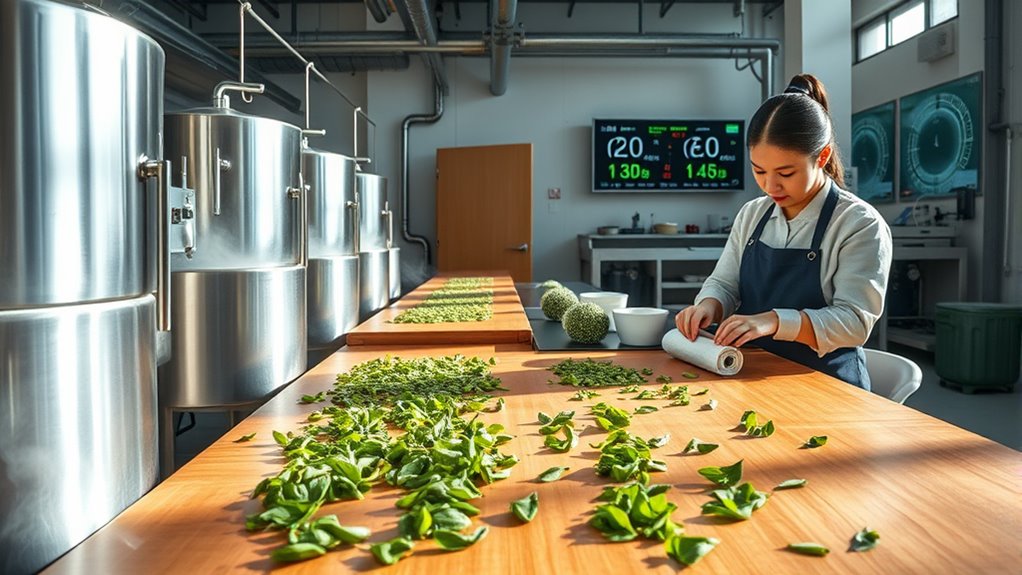
Chinese tea production has a long-standing tradition rooted in meticulous craftsmanship and natural harmony. As someone interested in the art of tea, you’ll find that the journey from fresh leaves to the final brew hinges on both time-honored practices and innovative methods. Central to this process is tea cultivation, where modern techniques blend seamlessly with traditional knowledge to enhance leaf quality. Farmers now use advanced agricultural practices, including precision farming and controlled environments, to guarantee ideal growth conditions. This allows them to manage factors like soil health, water supply, and climate with greater accuracy, resulting in healthier plants and higher-quality leaves. These improvements in tea cultivation not only boost yield but also elevate flavor profiles, making each cup more vibrant and nuanced.
Once the leaves are harvested, processing techniques come into play. You’ll notice that traditional methods like pan-firing, sun-drying, and rolling still form the backbone of Chinese tea processing. However, modern innovations have introduced machinery and controlled environments that bring consistency and efficiency. For example, some producers use specialized dryers that precisely control temperature and humidity, ensuring uniform drying and reducing the risk of spoilage. Similarly, modern rolling machines mimic manual techniques but with greater speed and uniformity, which helps preserve the delicate aroma and texture of the tea leaves. These advancements mean you get a more consistent product, whether it’s a fragrant green tea or a robust black tea. Additionally, the integration of AI safety measures and sensors in quality control systems helps monitor moisture content, chemical composition, and microbial activity more accurately, ensuring every batch meets strict standards and maintaining consumer trust.
Furthermore, innovations in fermentation and oxidation are transforming how teas are produced. Controlled oxidation chambers allow producers to fine-tune flavor development, creating teas with complex, layered tastes that were harder to achieve with traditional methods alone. This precision not only improves quality but also expands the variety of teas available to you, from lightly oxidized greens to fully oxidized blacks. The integration of technology also extends to quality control, where sensors and analytical tools monitor moisture content, chemical composition, and microbial activity. These measures help guarantee every batch meets strict standards, giving you confidence in the authenticity and safety of your tea.
precision tea leaf harvesting machine
As an affiliate, we earn on qualifying purchases.
As an affiliate, we earn on qualifying purchases.
Frequently Asked Questions
How Has Automation Impacted Traditional Chinese Tea Craftsmanship?
Automation has considerably impacted traditional Chinese tea craftsmanship by introducing robotic harvesting and automated fermentation processes. You’ll notice these innovations speed up production and ensure consistency, but some might worry about losing the artisanal touch. While robots handle labor-intensive tasks, skilled artisans still oversee quality. This mix of technology and tradition helps meet demand without compromising the essence of Chinese tea, blending innovation with age-old craftsmanship.
What Are the Latest Sustainable Practices in Tea Cultivation?
You can embrace the latest sustainable practices by using organic fertilizers that improve soil health without harmful chemicals. Additionally, implementing water conservation techniques, like drip irrigation and rainwater harvesting, helps reduce water waste. These methods not only protect the environment but also enhance tea quality, ensuring your cultivation remains eco-friendly and sustainable for future generations. Staying updated on these practices allows you to grow tea responsibly and responsibly meet consumer demand.
How Do Modern Innovations Affect Tea Flavor Profiles?
Modern innovations profoundly influence tea flavor profiles by enabling precise flavor enhancement techniques. You can experience more nuanced tastes as advanced processing methods preserve or amplify natural aromas. Sensory analysis tools help producers fine-tune flavor attributes, ensuring consistency and richness. These innovations allow you to enjoy a broader, more refined range of flavors, making every cup more satisfying and tailored to your preferences.
Are New Tea Processing Technologies Eco-Friendly?
Yes, new tea processing technologies are often eco-friendly. They focus on organic certification standards, reducing harmful chemicals, and emphasize water conservation to minimize resource use. By adopting energy-efficient machinery and sustainable practices, you help protect the environment while producing high-quality tea. These innovations promote eco-conscious production, ensuring your tea remains flavorful and environmentally responsible, aligning with growing consumer demand for sustainable, health-conscious products.
How Is AI Used in Tea Quality Control?
Think of AI as the vigilant guardian in your tea journey, symbolizing a watchful eye that never rests. It uses quality sensors to scan each leaf, ensuring perfect tea grading. AI detects subtle differences in aroma, color, and texture, providing precise assessments. This technology streamlines quality control, helping you enjoy consistently high-quality tea, while reducing waste and enhancing flavor with every sip.
Conclusion
As you embrace modern innovations in Chinese tea, you’ll find yourself blending tradition with technology, much like a startup in a Ming dynasty scroll. From automated rolling machines to precision climate control, these advancements elevate your tea experience. So, next time you sip that perfect brew, remember you’re part of a centuries-old journey—just with a 21st-century twist—making every cup a harmonious fusion of history and innovation.
Halloween Picks
halloween
As an affiliate, we earn on qualifying purchases.