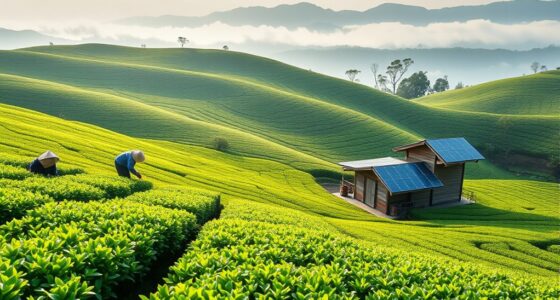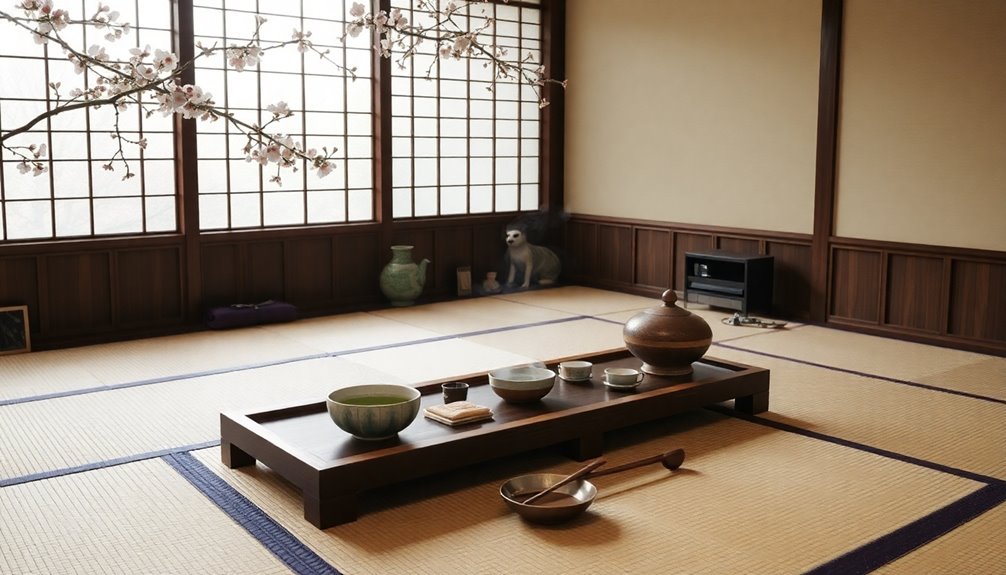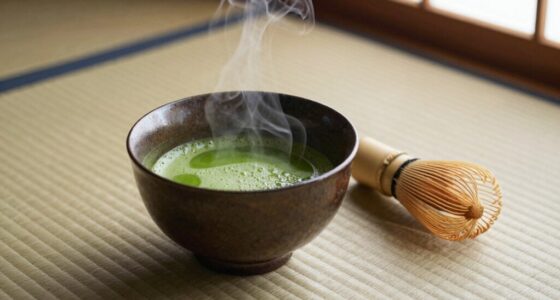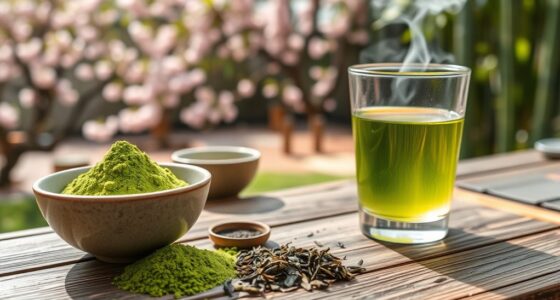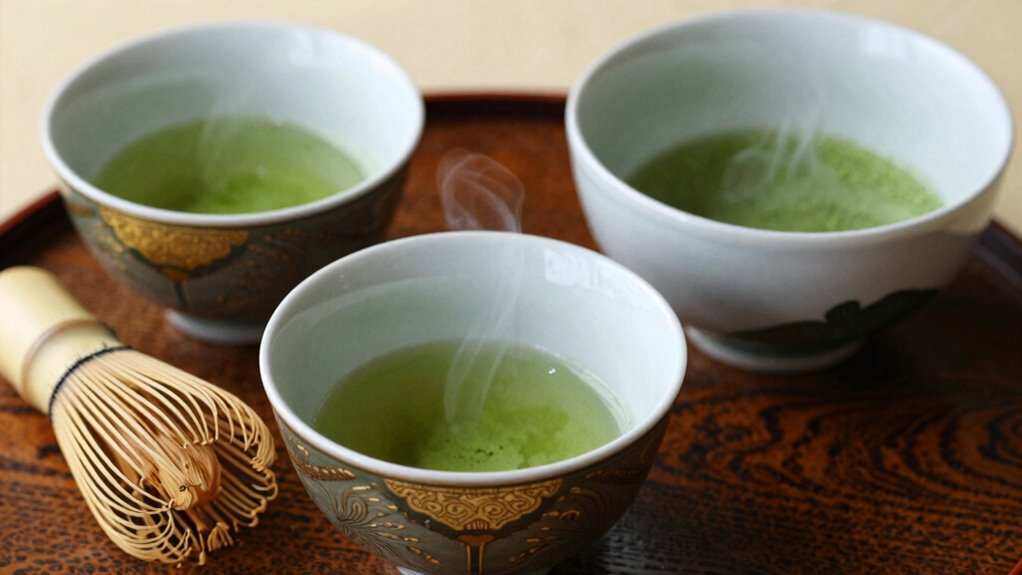

Japanese tea culture influences modern tea practices by emphasizing mindfulness, tradition, and artisanal techniques. You’re encouraged to approach tea with respect and intention, whether in traditional ceremonies or casual settings. This cultural focus fosters a deeper appreciation for the craft behind each cup and promotes slower, more thoughtful consumption. As you explore further, you’ll discover how these practices shape global appreciation for tea and inspire contemporary ways to enjoy it.

Get coffee and tea gear delivered free with Prime
- Fast, free delivery on millions of items
- Prime Video, Amazon Music and more included
- Member-only deals all year
Key Takeaways
- Japanese tea traditions, like the tea ceremony, promote mindfulness and deliberate, respectful tea consumption worldwide.
- The emphasis on regional varieties showcases unique flavors, influencing global appreciation and diversity in tea culture.
- Techniques such as whisking matcha inspire modern cafés and home practices emphasizing ritual and aesthetics.
- Core principles like harmony and respect shape contemporary practices, fostering a mindful and cultural approach to tea drinking.
- Preservation of traditional processing methods underscores the artisanal quality valued in global tea appreciation.

Japanese regional varieties of tea, such as matcha, sencha, and gyokuro, have profoundly influenced how tea is enjoyed globally. Matcha, a powdered green tea, is perhaps the most recognizable export, especially thanks to its integral role in traditional tea ceremonies. Its vibrant color and rich flavor have inspired countless modern beverages, from lattes to desserts, demonstrating how regional varieties can adapt to new contexts without losing their cultural roots. Sencha, a steamed green tea, offers a more everyday experience and has become popular worldwide for its invigorating taste and health benefits. Gyokuro, a shade-grown tea, provides a more nuanced, umami-rich profile that has cultivated an appreciation for high-quality, artisanal teas beyond Japan’s borders. These regional differences highlight the importance of tea cultivation and processing methods in shaping distinct flavors and traditions. Recognizing these differences also deepens your understanding of the cultural heritage embedded in each variety, enriching your appreciation for the diverse ways tea can be enjoyed. Additionally, the unique processing techniques used for each type influence not only flavor but also the cultural significance associated with them. Moreover, understanding the historical development of Japanese tea helps to contextualize these regional differences within broader cultural practices. Your understanding of Japanese tea influences modern tea culture by encouraging a more mindful approach to drinking tea. The emphasis on regional varieties teaches you to appreciate the diverse flavors, preparation methods, and cultural significance behind each type. As you explore different teas, you begin to see their stories—how they are cultivated, processed, and traditionally enjoyed. This knowledge fosters a deeper respect for the craft and heritage behind each sip.
Furthermore, the principles of the tea ceremony—harmony, respect, purity, and tranquility—resonate with contemporary tea drinking habits. They inspire a slower, more intentional way of savoring tea, whether you’re brewing matcha at home or visiting a café. The influence of Japanese tea culture encourages you to see tea not just as a beverage but as a ritual that promotes mindfulness and connection. Through this lens, your modern tea experience becomes a reflection of centuries-old traditions that continue to shape how the world engages with tea today.
As an affiliate, we earn on qualifying purchases.
Frequently Asked Questions
How Did Japanese Tea Origins Differ From Chinese Tea Traditions?
Japanese tea origins differ from Chinese traditions mainly through their focus on specific cultural rituals and tea cultivation methods. You’ll notice that Japan emphasizes the ceremonial aspect of tea, like the Tea Ceremony, highlighting mindfulness and aesthetics. In contrast, Chinese tea traditions prioritize diverse tea types and brewing techniques. These distinctions shape how tea is cultivated, prepared, and appreciated in each culture, reflecting their unique historical and cultural values.
What Are the Health Benefits Uniquely Associated With Japanese Tea?
You’ll love how Japanese tea, especially matcha, uniquely boosts your health. Thanks to traditional tea ceremonies, you get a calming ritual packed with health antioxidants. These antioxidants help fight free radicals, slow aging, and boost your immune system. Plus, the calming effect from the ceremonies reduces stress. So, sipping Japanese tea isn’t just cultural; it’s a tasty, healthful way to stay energized and balanced—no fancy gadgets required!
How Has Japanese Tea Influenced Global Tea Preparation Techniques?
Japanese tea has profoundly shaped global tea preparation techniques through its emphasis on tea ceremonies and precise brewing methods. You might notice that many cultures adopt the meticulous steps of Japanese tea ceremonies, like whisking matcha or controlling water temperature. These brewing techniques emphasize mindfulness and craftsmanship, inspiring modern tea enthusiasts worldwide to refine their preparation methods, ensuring better flavor extraction and a more respectful, ritualistic experience.
Are There Regional Variations in Japanese Tea Customs?
You’ll notice regional flavors and unique customs in Japanese tea ceremonies across the country. Each area adds its own subtle touch, like a painter’s brushstroke, shaping local traditions. In Kyoto, you experience refined, meditative rituals, while in Shizuoka, the focus shifts to vibrant, fresh flavors. These regional variations create a rich tapestry, inviting you to explore diverse customs and deepen your appreciation for Japan’s nuanced tea culture.
What Role Does Japanese Tea Play in Contemporary Japanese Society?
You see that Japanese tea still plays a crucial role in contemporary society, especially through the tea ceremony, which embodies cultural symbolism and tradition. It’s more than just drinking tea; it’s a mindful practice that fosters harmony and respect. Many people participate in tea ceremonies during special occasions, keeping this cultural heritage alive. Japanese tea continues to connect modern society with its rich history and spiritual values.
Conclusion
While ancient Japanese tea rituals emphasize serenity and tradition, modern tea culture thrives on innovation and global influence. You might sip matcha in a tranquil tea room or enjoy a trendy bubble tea on busy city streets. It’s fascinating how Japan’s rich history shapes today’s diverse tea experiences, blending the old with the new. In this way, Japanese tea remains a timeless bridge—connecting centuries of tradition with the ever-evolving tastes of today’s world.
Fall Picks
fall essentials
As an affiliate, we earn on qualifying purchases.