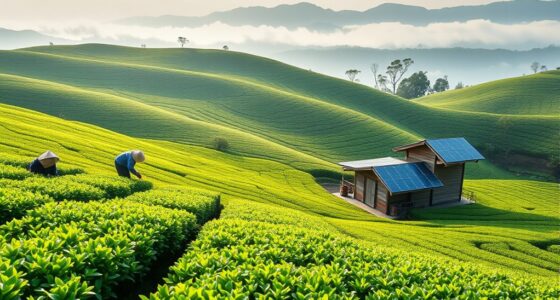
Many believe Japanese tea is simple or always health-boosting, but it’s actually rich in tradition, with varied flavors and preparation methods that influence taste and benefits. Some think special equipment is necessary, yet you can brew authentic tea easily at home. The idea that tea ceremonies are outdated overlooks their cultural significance and mindfulness. Exploring these myths reveals that understanding Japanese tea’s diversity and etiquette deepens your appreciation—keep exploring to discover its true story.

Get coffee and tea gear delivered free with Prime
- Fast, free delivery on millions of items
- Prime Video, Amazon Music and more included
- Member-only deals all year
Key Takeaways
- Japanese tea ceremonies are intricate rituals emphasizing mindfulness, respect, and aesthetics, contrary to the misconception that they are simple or outdated.
- Not all Japanese teas taste the same; each variety like matcha, sencha, or gyokuro has unique flavors and preparation methods.
- Health benefits depend on consistent, proper preparation and moderation; overconsumption or improper brewing can negate benefits.
- Authentic Japanese tea experience requires proper storage, quality leaves, and traditional techniques, but complex equipment isn’t always necessary.
- The richness of Japanese tea culture dispels myths that it is overly formal or purely for tradition, highlighting its role in promoting cultural understanding.

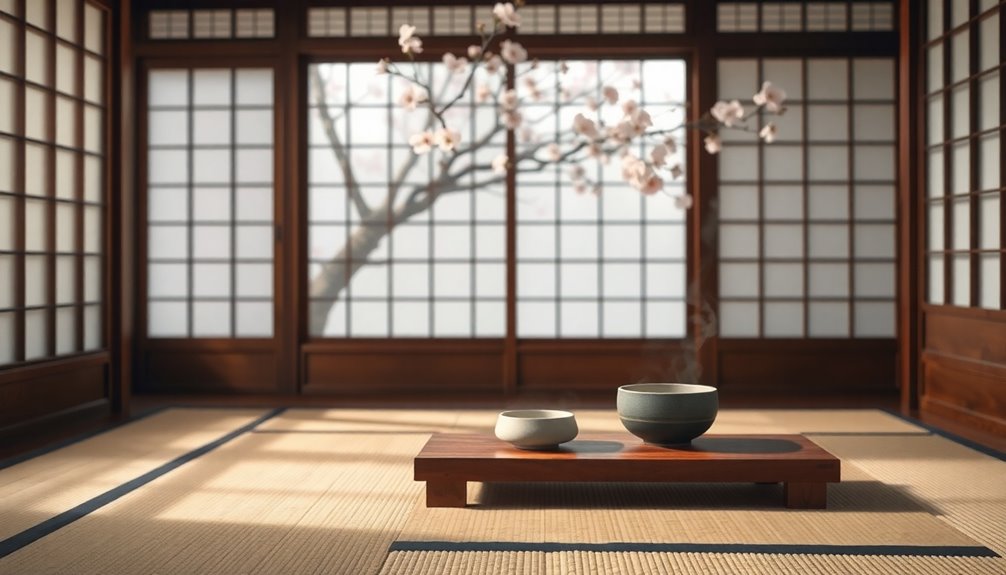
Japanese tea has long been celebrated worldwide, but many people hold misconceptions about its origins, preparation, and health benefits. One common myth is that tea ceremonies are simple affairs, but in reality, they are intricate rituals that embody centuries of tradition. When you participate in a tea ceremony, you’re engaging in more than just drinking tea; you’re experiencing a cultural practice that emphasizes mindfulness, respect, and harmony. These ceremonies aren’t hurried events—they involve precise steps, from preparing the tea to serving it with grace. People often think that tea ceremonies are outdated or overly formal, but they actually serve to deepen your appreciation for the tea itself and the moment you’re sharing. They also highlight the importance of aesthetics and etiquette, enriching your understanding of Japanese culture.
Many believe that the health benefits of Japanese tea, especially matcha and sencha, are exaggerated. While it’s true that these teas are packed with antioxidants, vitamins, and minerals, you shouldn’t assume that drinking tea alone is a cure-all. The health benefits come from consistent consumption as part of a balanced lifestyle, not from a single cup. Matcha, for instance, contains high levels of catechins that can help boost your immune system, improve metabolism, and support heart health. However, it also contains caffeine, so overconsumption can lead to jitters or sleep disturbances. Some think that because Japanese tea is often consumed in traditional ways, it automatically guarantees health perks. In reality, how you prepare and consume it makes a difference. Using high-quality leaves, avoiding excessive sugar, and drinking it in moderation are key to maximizing its benefits.
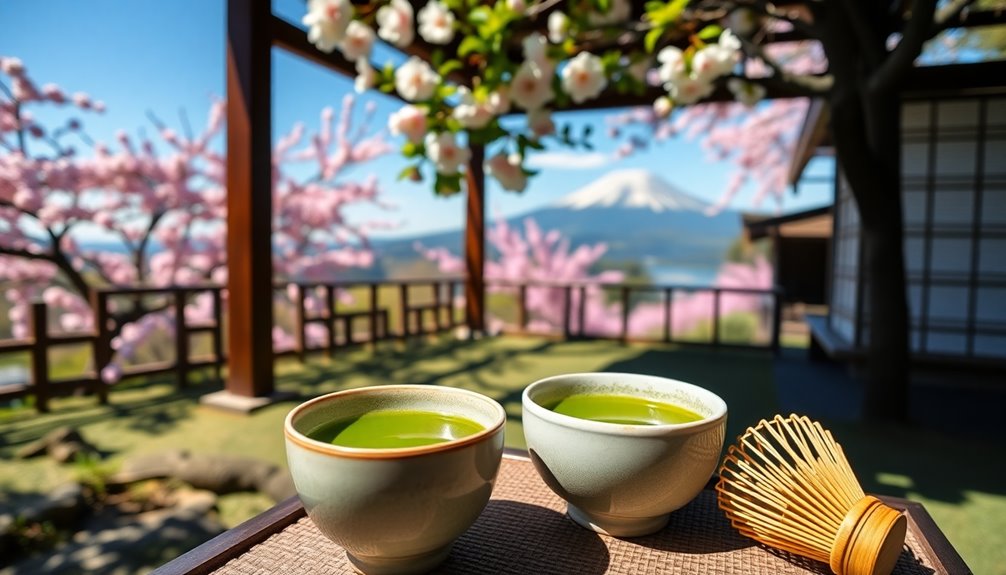
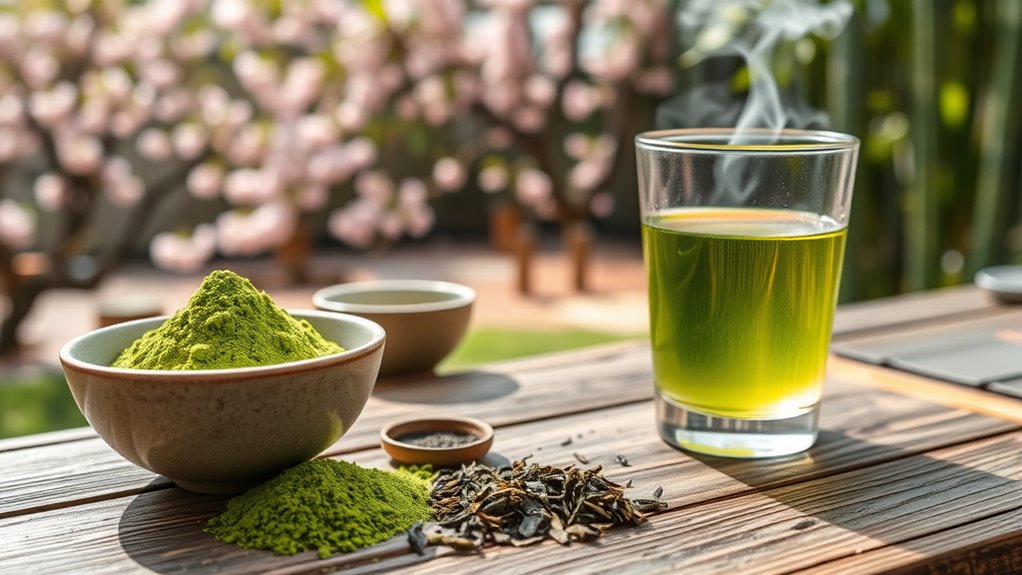
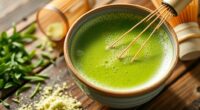
Another misconception is that all Japanese teas taste the same or are prepared identically everywhere. In truth, there’s a rich variety of teas like matcha, gyokuro, sencha, and houjicha, each with distinct flavors, aromas, and preparation methods. For example, matcha is whisked into a frothy drink, while sencha is brewed like typical green tea. The preparation process, water temperature, and steeping time influence the flavor and health effects, so you should approach each type with an understanding of its unique qualities. Additionally, proper storage methods are essential to preserve the freshness and flavor of Japanese teas. Many assume that you need special equipment or skills to enjoy authentic Japanese tea, but with a little guidance, you can easily brew a perfect cup at home. Recognizing these differences helps you appreciate the nuances that make Japanese tea a truly diverse and enriching beverage.
As an affiliate, we earn on qualifying purchases.
Frequently Asked Questions
Is Japanese Tea Always Brewed at Specific Temperatures?
Japanese tea isn’t always brewed at a specific temperature, but proper temperature control is essential for maximum flavor. Different teas, like green or matcha, require specific brewing techniques, including precise temperature ranges. For example, green teas are best brewed around 70-80°C to prevent bitterness, while others may need hotter water. Adjusting the temperature helps you reveal the full aroma and taste of each tea type.
Are All Japanese Teas Made From the Same Tea Leaves?
You might think all Japanese teas come from the same tea leaves, but that’s a coincidence. Different tea leaf varieties grow in various cultivation regions, giving each tea its unique flavor and aroma. Sencha, matcha, and genmaicha all use distinct leaves, harvested and processed differently. So, your tea experience varies depending on the regional cultivation and the specific tea leaf varieties used, making each sip delightfully unique.
Does Japanese Green Tea Contain Caffeine?
Yes, Japanese green tea contains caffeine. During tea processing, the leaves are steamed or pan-fired, which preserves caffeine levels. The caffeine content varies depending on factors like leaf type and brewing method, but generally, you get a caffeine boost similar to other green teas. If you’re sensitive to caffeine, you might want to limit your intake or opt for lighter brews, knowing that caffeine remains present in Japanese green tea.
Are There Health Risks Associated With Drinking Japanese Tea?
You might worry about health risks when drinking Japanese tea, but it’s generally safe. However, if you’re sensitive, a tea allergy could cause reactions like headaches or nausea. Pesticide residues are a concern; opt for organic varieties to minimize exposure. Drinking in moderation reduces potential risks, and washing or choosing certified teas helps guarantee safety. Overall, Japanese tea offers health benefits when consumed responsibly.
Can Japanese Tea Be Enjoyed Iced or Only Hot?
You can definitely enjoy Japanese tea iced, especially through cold brewing, which enhances its smooth flavor and reduces bitterness. Cold brewing involves steeping tea in cold water for several hours, resulting in a invigorating drink perfect for hot days. This method also preserves delicate flavors and antioxidants. So, whether hot or iced, Japanese tea offers versatile ways to enjoy its unique taste and health benefits.
Conclusion
Now that you’ve uncovered the myths and facts about Japanese tea, you can sip with confidence, appreciate with understanding, and share with enthusiasm. Embrace the tradition, enjoy the health benefits, and dispel the misconceptions. Let your knowledge deepen your experience, your curiosity grow stronger, and your love for Japanese tea become more genuine. Because when you know the truth, every cup becomes a moment to cherish, a story to tell, and a tradition to honor.
Halloween Picks
halloween
As an affiliate, we earn on qualifying purchases.